
















IRON & STEEL ·
06.09.2026




END-TO-END INDUSTRIAL SOLUTIONS
Every layer of industrial transformation
with one solution partner
We combine automation, intralogistics and digitalisation within one engineering approach.
400+
Completed projects
360+
Satisfied customers
80+
Team members
25+
Years of experience
/ FEATURED SOLUTIONS
Smart mobile robot systems
Smart mobile robot systems
for every scenario.
Transform warehouse and internal logistics with scalable, safe and high-performance robotic systems.
01AMR
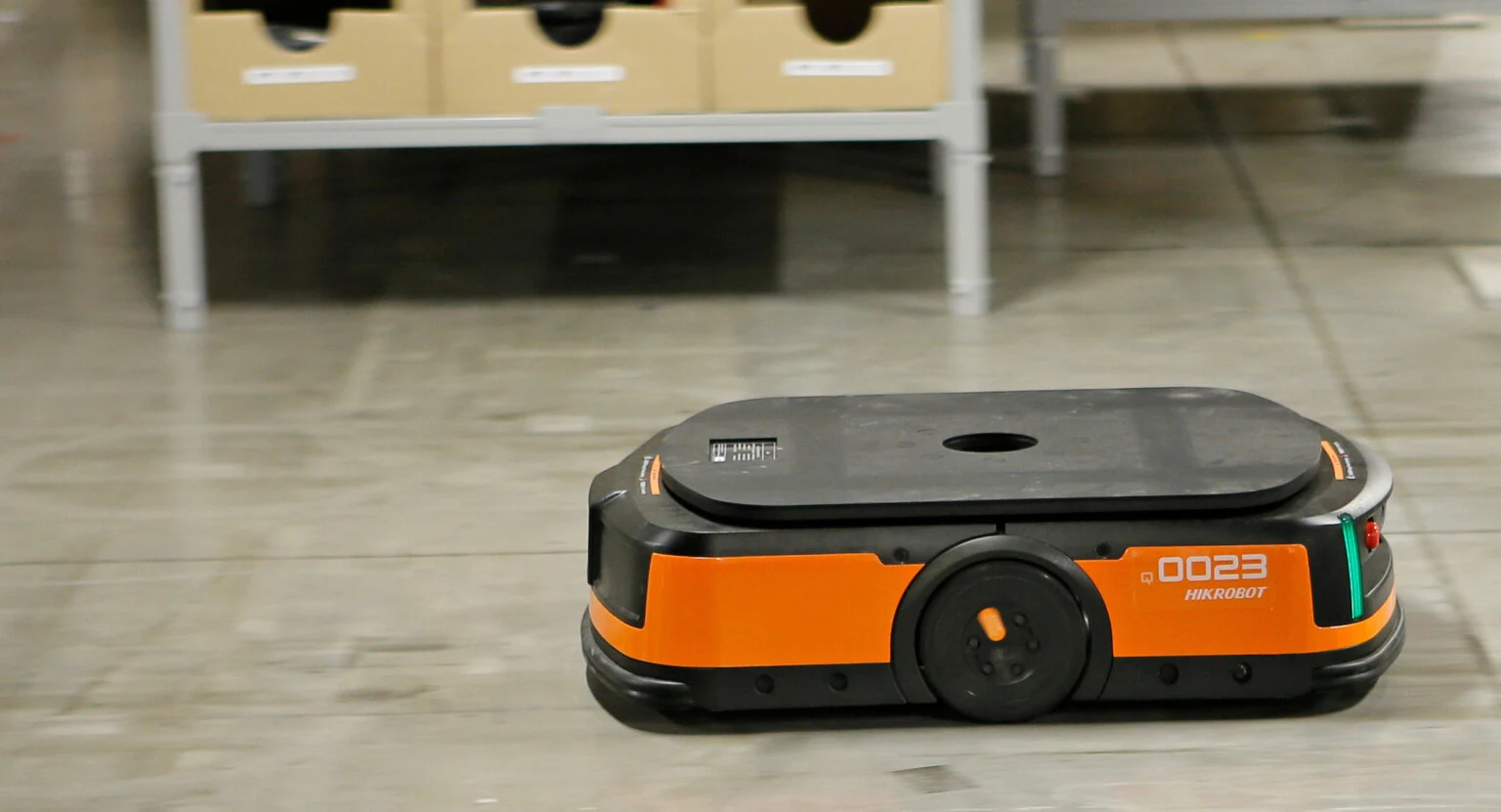
Smart Mobile Robot and System Platform
A flexible robot fleet for transport, picking and line-feeding operations.
Explore the solution →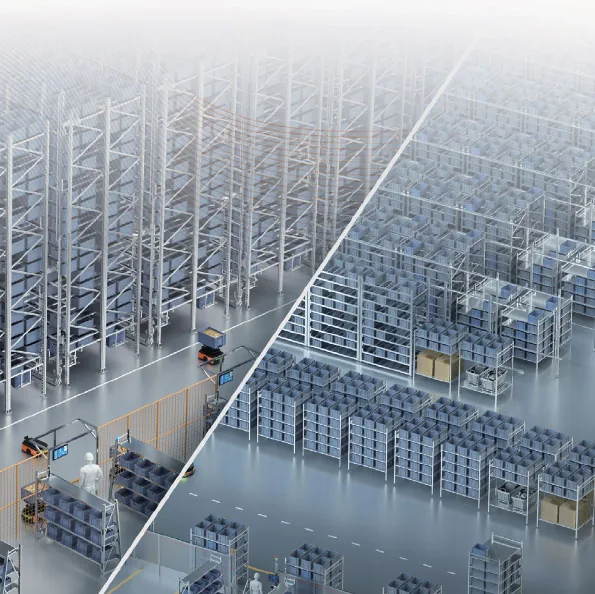
02STRP
Vertical Storage Mobile Robots (STRP-Q1P)
Higher storage density, fast transfer and easy scalability.
Explore the solution →
03MES
Manufacturing Operations Management and MES/MOM Platform
Unify planning, traceability and quality data on a single platform.
Explore the solution →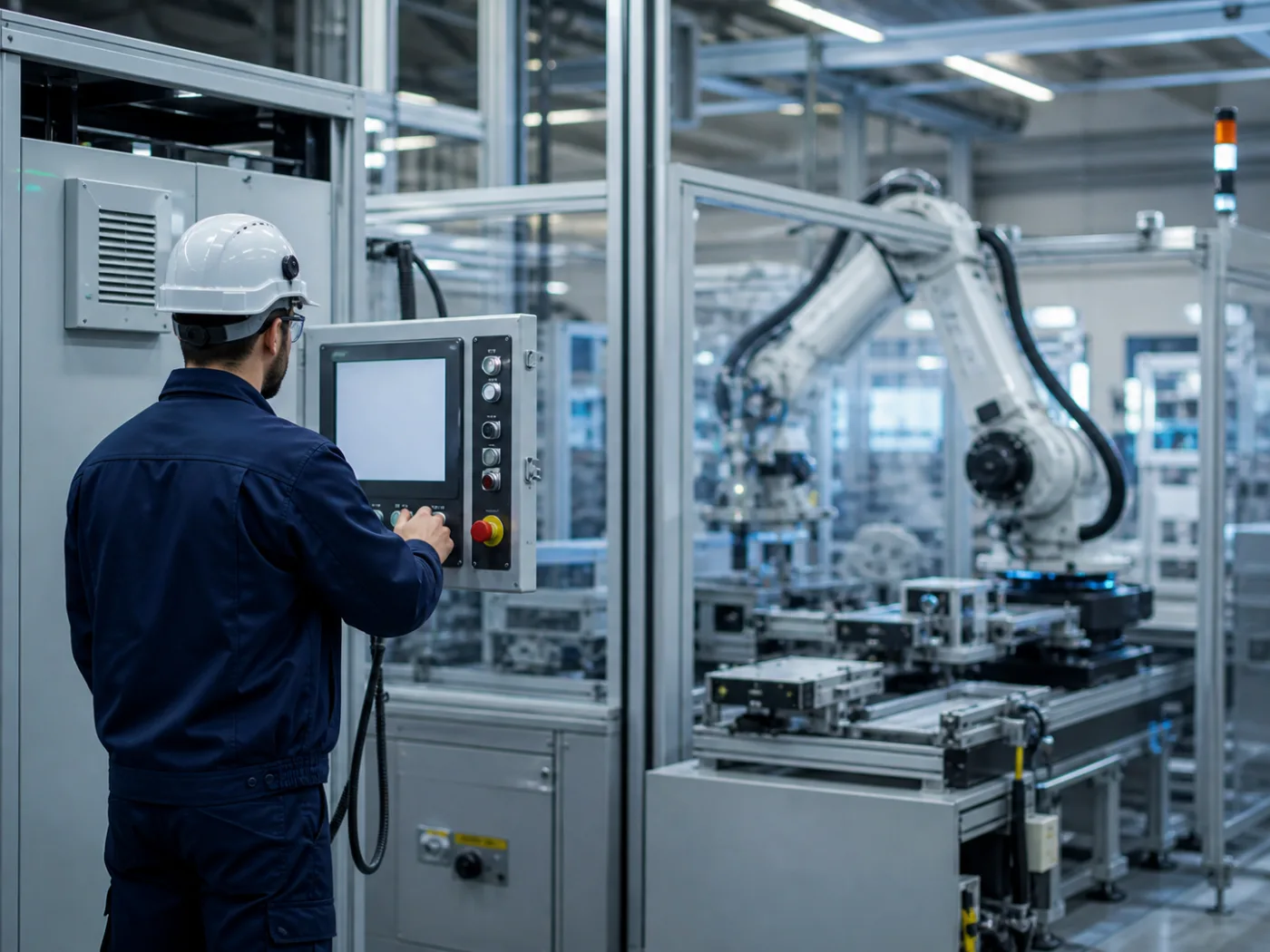
LIVE SYSTEM
99.8%
Operational uptime
/ END-TO-END CAPABILITY
One partner.
One partner.
Unlimited possibilities.
We are with you at every step, from concept and commissioning to after-sales support and optimisation.
/ INDUSTRY EXPERIENCE
Every industry speaks differently.
Every industry speaks differently.
We speak them all.
/ TECHNOLOGY ECOSYSTEM
Working toward the same goal
Working toward the same goal
with global technology leaders.
We combine global technology strength with local engineering and field experience.
/ CERTIFIED QUALITY
Trust is not only our promise.
Trust is not only our promise.
It is our standard.
Marka Tescil
CE Uygunluk
TSE / 2015
ISO 9001 / 2015
ISO 10002 / 2018
/ FIELD RESULTSNot technology alone.
All success stories →Not technology alone.
We deliver business outcomes.
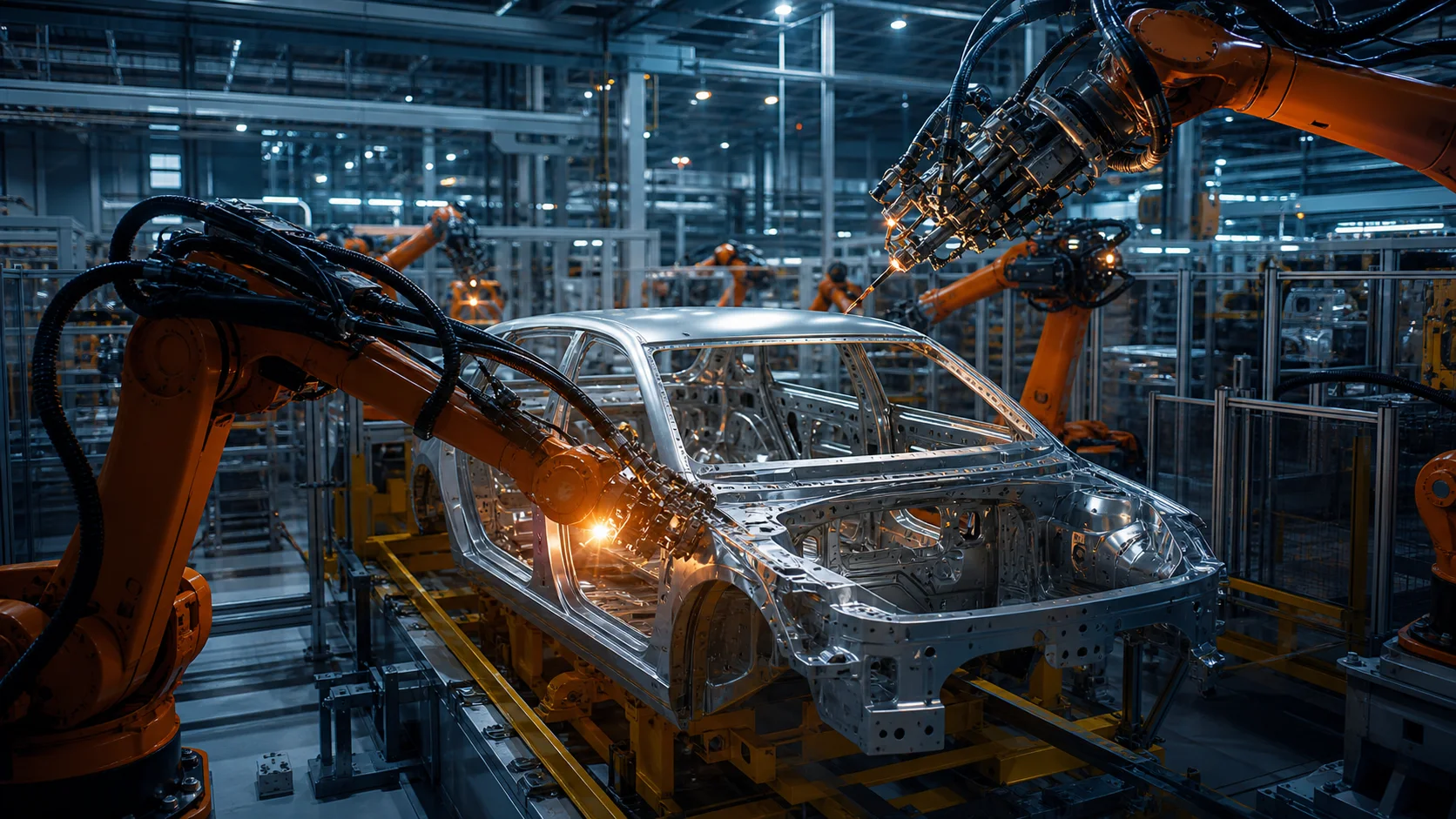 01Automotive
≈ %22Reduction in unplanned downtime
Integrated Automation and Safety Transformation on an Automotive Production Line
↗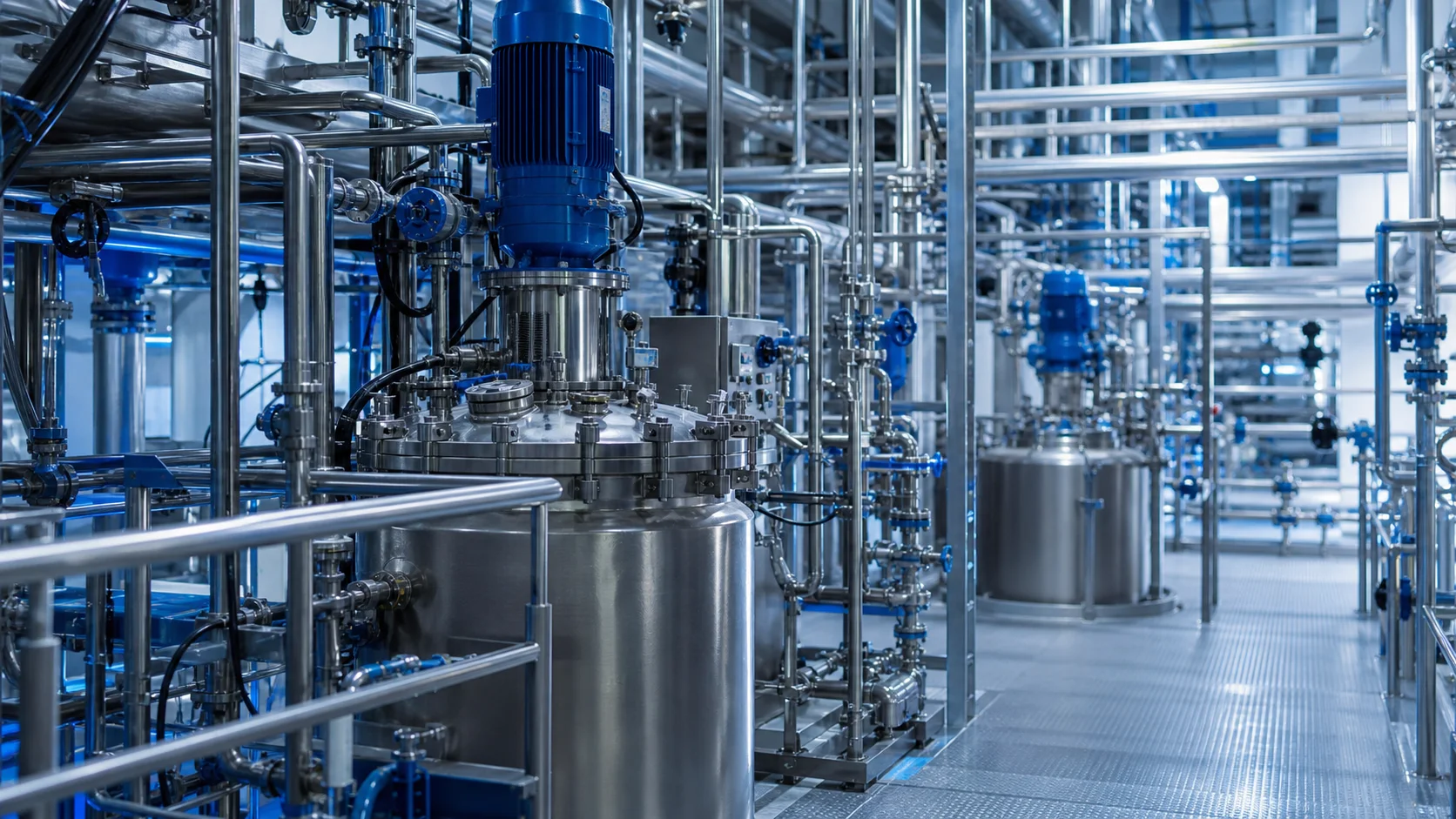 02Chemical
≈ %18Reduction in batch time variation
Recipe, Material Tracking and Process Safety in a Chemical Plant
↗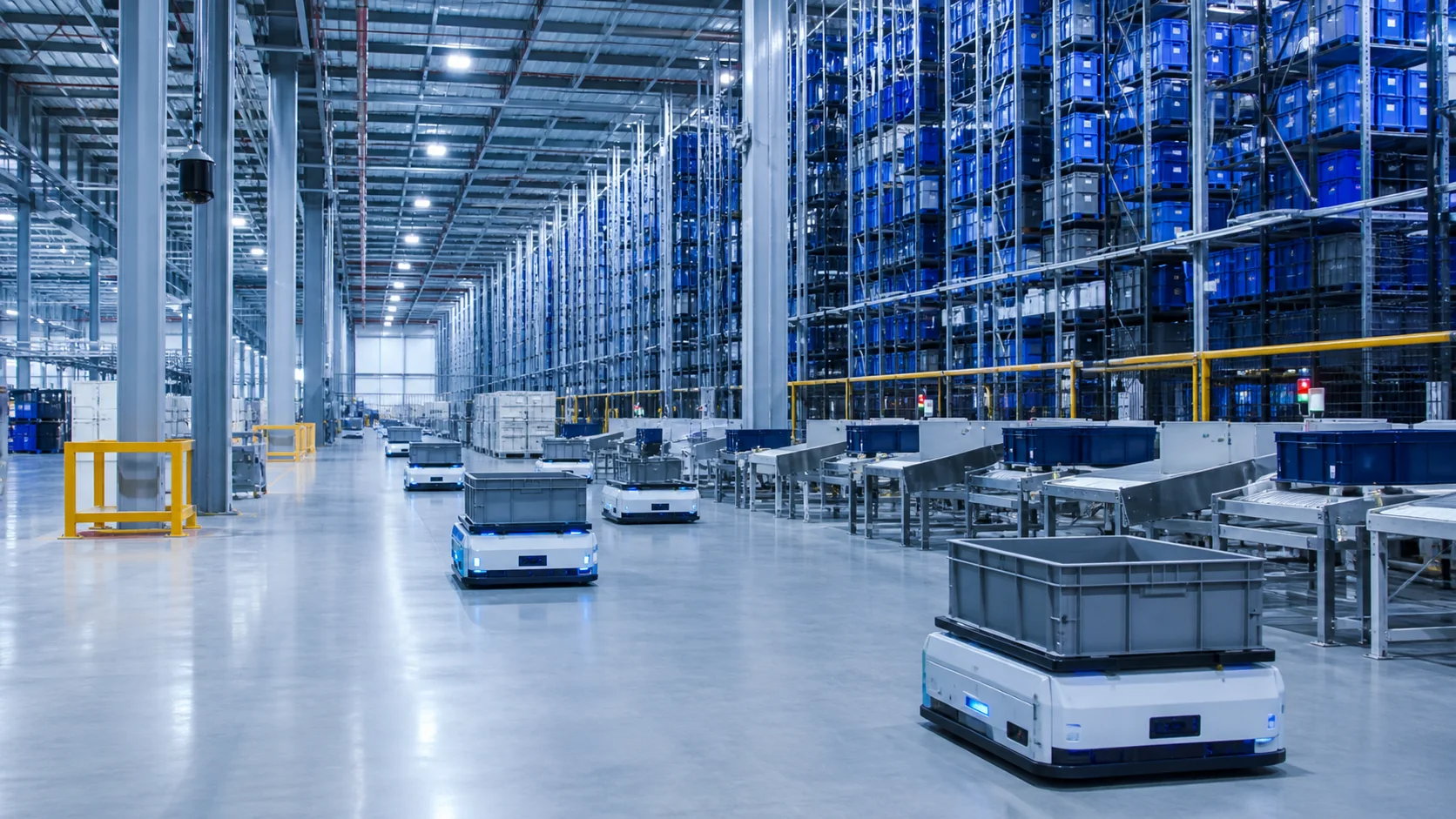 03Intralogistics
≈ %38Increase in storage density
Automated Storage and Intelligent Material Flow
↗











/ OSKON INSIGHTS
See tomorrow’s industry
All articles
See tomorrow’s industry
from today.
IRON & STEEL ·
06.09.2026
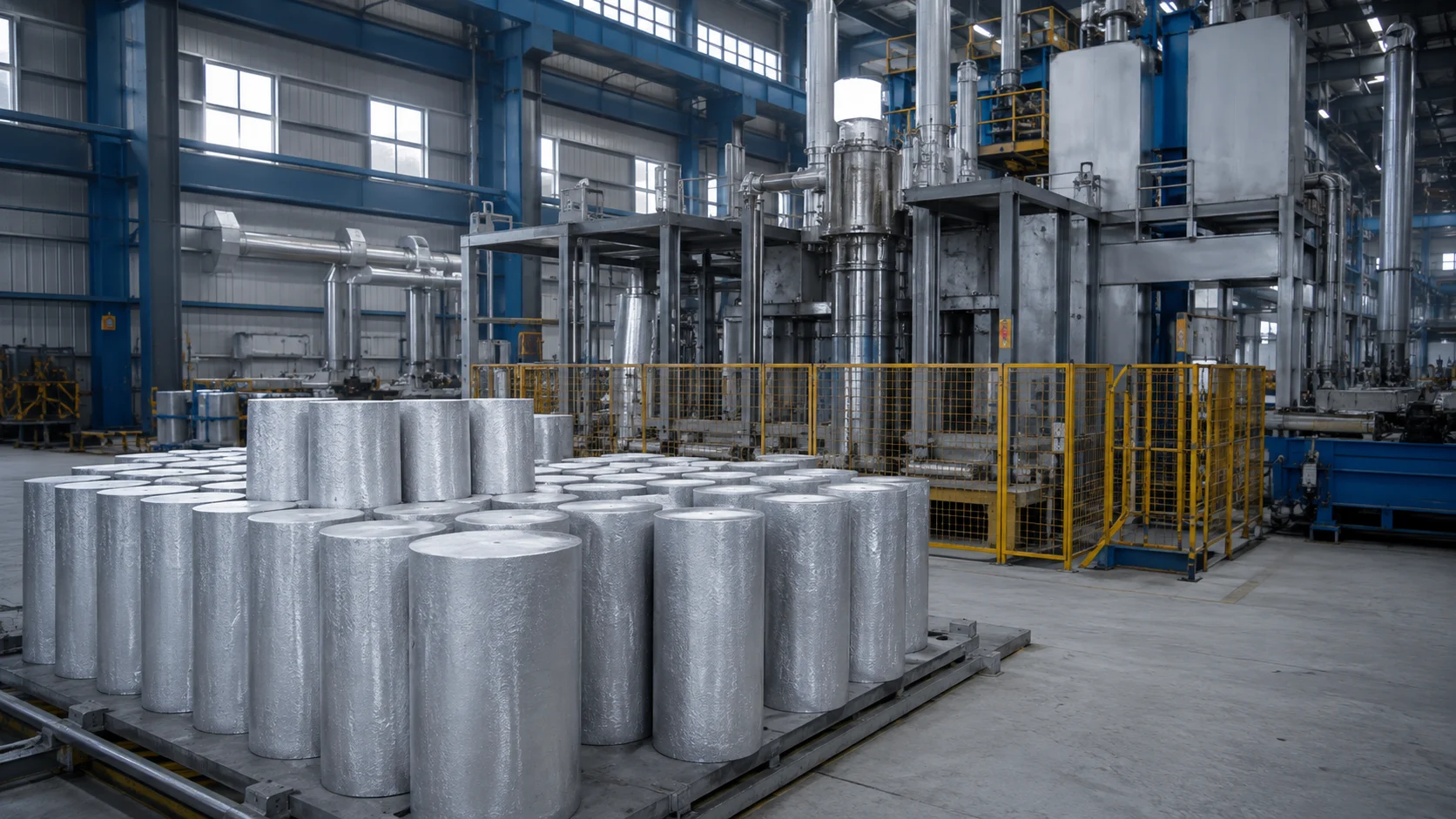
Aluminium Casting Lines: Process Sequences and Batch Traceability
3 min read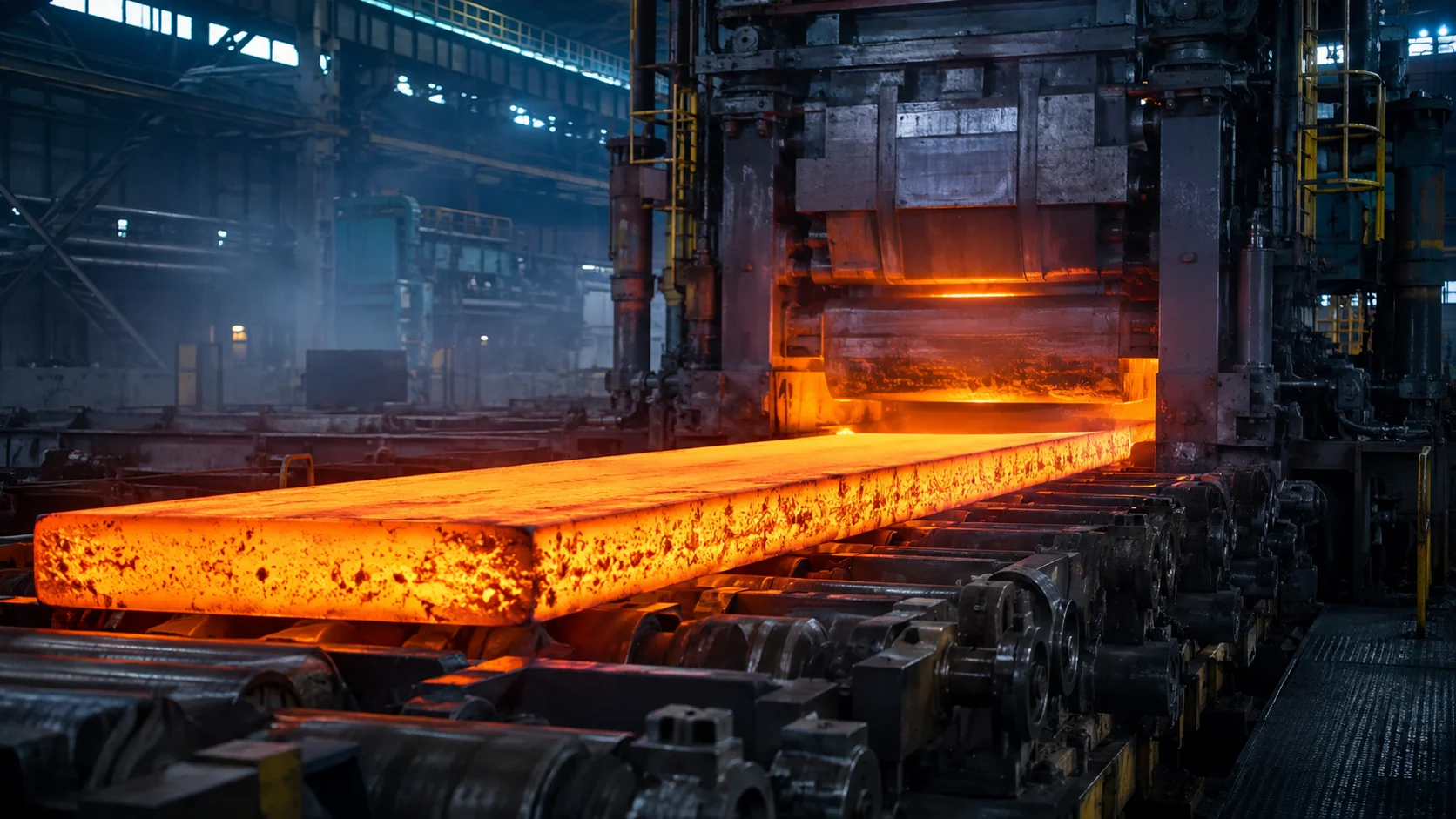
IRON & STEEL ·
06.09.2026
Rolling Mills: Recipes, Drive Coordination and Product Tracking
3 min read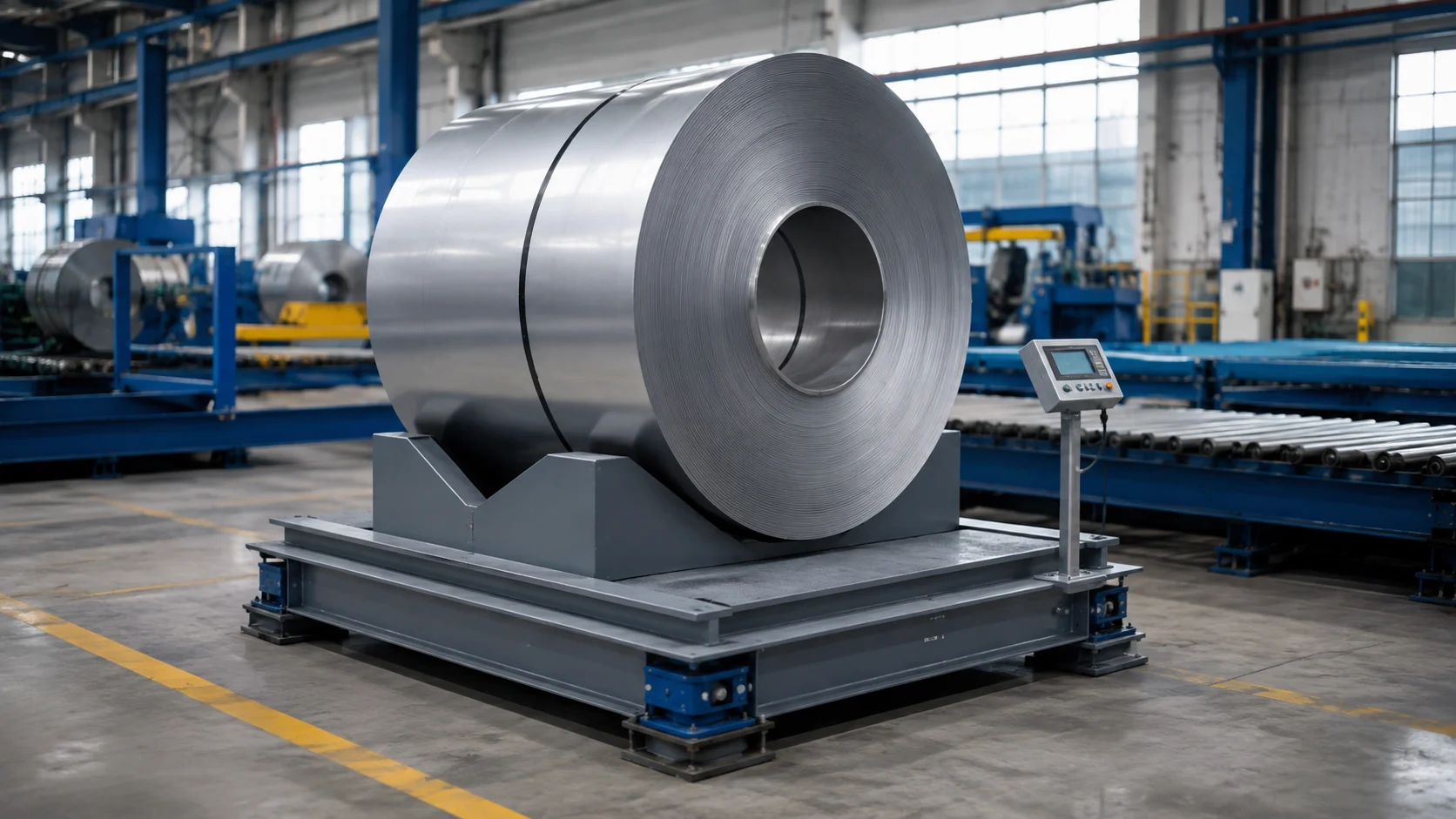
IRON & STEEL ·
06.09.2026
Weighing Lines in Iron and Steel: Coil, Bundle and Dispatch Records
3 min readLet’s turn your requirement
into a clear engineering scope.
Share your goal with us. We will bring the relevant engineering disciplines together around the right next step.
Talk to our engineering team Your request is routed directly to the relevant engineering team.Industrial automation solutions: factory automation, PLC, MES and robotics
The scope and applications of industrial automation—from controlling production lines and internal warehouse material flow to collecting manufacturing data and securing operational technology—and how an automation project is delivered.
What is industrial automation?
Industrial automation is the operation of physical processes in a manufacturing facility through the coordinated use of electrical, electronic, software and mechanical components, with human intervention reduced to a minimum. In its simplest form, it is a cycle in which a sensor measures its environment, a controller makes a decision based on that measurement, and an actuator converts the decision into physical movement. This cycle may be as simple as opening a valve or as complex as synchronising an assembly line where hundreds of stations depend on one another.
Automation systems are generally considered in three layers. The field layer includes sensors, motors, drives and safety components. The control layer contains the controllers that manage these components. The upper layer consists of software that monitors, plans and reports manufacturing operations. The success of an automation project often depends not on the quality of the individual components, but on how consistently these three layers are connected. You can review the scope of an end-to-end approach on our solution families and engineering services pages.
Manufacturing companies turn to automation for similar reasons: rising labour costs, difficulty finding skilled operators, customer traceability requirements, inconsistent quality and unpredictable downtime. Automation addresses all these issues at the same time. To deliver the expected benefit, however, the process must first be understood and only then automated. Automating a poorly defined process merely produces defective products more quickly.
Factory automation and production line modernisation
Factory automation covers the integration of machines, production lines and transport systems in discrete manufacturing facilities under a common control architecture. Assembly lines, packaging machines, test stations and feeding systems are typical components. In modernisation projects, the existing machinery is usually retained; what changes is the control and data layer connecting the machines.
Building a new line and modernising an existing one require different disciplines. A new installation offers design freedom. Modernisation, on the other hand, requires progressing without interrupting production, understanding undocumented behaviour in legacy equipment and fitting commissioning into short shutdown windows. For this reason, site surveys, current-state analysis and a phased migration plan are just as decisive in modernisation projects as software development.
The most common way to measure line efficiency is OEE, or overall equipment effectiveness. This indicator is calculated by multiplying availability, performance and quality, and it shows where improvement work should be focused. The return on an automation investment is also commonly calculated through increased OEE, reduced scrap and shorter unplanned downtime.
Process automation and continuous manufacturing
Process automation concerns the closed-loop control of variables such as temperature, pressure, flow, level, pH and conductivity in continuous or semi-continuous facilities in industries including chemicals, food and beverage, pharmaceuticals, paper, cement and energy. Unlike discrete manufacturing, the controlled variable is continuous and process dynamics are constrained by physical realities such as dead time and thermal capacity.
Recipe management is a separate discipline in these facilities. In batch-based manufacturing, this requirement is addressed through ISA-88-based batch systems. Manufacturing different products with different parameters on the same line requires recipes to be defined in the system independently of the operator and every batch to be recorded against the recipe used. In food and pharmaceutical manufacturing, this record is not only a quality tool but also a regulatory requirement.
Control quality in process automation directly affects product cost. A properly tuned control loop reduces oscillation around the set point and therefore lowers energy consumption, raw-material waste and product variation at the same time. Loop tuning during commissioning is consequently an output of the project that is at least as valuable as the software itself.
PLC programming and control systems
A PLC, or programmable logic controller, is the decision-making component of industrial automation. It reads digital and analogue signals from the field, executes logic according to the program loaded into it and drives the outputs. It is designed to withstand the vibration, temperature, electrical noise and continuous operating conditions of an industrial environment. This resilience, which is not expected from an office computer, has made the PLC the standard controller on the shop floor.
PLC programming uses the languages defined in the IEC 61131-3 standard. Ladder diagrams are readable for teams familiar with electrical relay logic; function block diagrams are common in process control; and structured text is preferred for sections requiring complex calculations and data processing. Good PLC software does not merely run; it can still be understood by another engineer years later. Standard libraries, meaningful tag names and a consistent program structure therefore determine the project’s long-term cost.
The choice of control architecture also varies according to project scale. A compact controller may be sufficient for a standalone machine, while remote input/output stations and industrial communication networks are required in facilities where hundreds of signals are collected across distributed locations. The communication protocol is selected by considering cycle time, determinism requirements and compatibility with the installed equipment base.
SCADA, HMI and operator interfaces
SCADA is the upper-layer application that collects and visualises data from field controllers, generates alarms and stores historical records. Operator panels, or HMI screens, enable immediate interaction at the machine. The difference between the two is one of scale: an HMI manages a machine; SCADA manages a facility.
Interface design receives less attention than it deserves in many projects, even though it directly affects the likelihood of errors by operators who watch the screen throughout a shift. In a good interface, colour carries meaning and is not used as decoration. Normal operation has a calm appearance, and attention is drawn only when a deviation occurs. The alarm list must also be managed: in a system where every deviation produces an alarm, operators soon learn to dismiss them and the real fault can be overlooked.
Historical data stored in the SCADA layer is used not only for reporting but also for root-cause analysis. Understanding why a stoppage occurred requires reviewing the signal behaviour at the time of the event. Data collection resolution and retention periods must therefore be defined deliberately during system design.
MES and manufacturing management systems
MES, or manufacturing execution system, is the software that fills the gap between the planning layer and the shop floor. The enterprise resource planning system above answers “what will be produced”, while field automation determines “how it will be produced”. MES answers “what was actually produced, how long did it take, where did it stop and which material was used”. MOM, or manufacturing operations management, extends this scope to include quality, maintenance and inventory processes.
Collecting data from manufacturing operations is the foundation of MES applications. Manually entered data is late, incomplete and optimistic; data obtained directly from the machine reflects reality. MES projects therefore usually begin with shop-floor connectivity: machine signals are read, stoppages are classified automatically and operators are asked only for information that the machine cannot determine.
Traceability is one of the most tangible outputs of MES. When the system records which raw-material batch was used for a product, on which machine, during which operator shift and with which parameters, a customer complaint can be limited to the relevant batch rather than becoming a recall of all inventory. In automotive, food, pharmaceutical and defence supply chains, this capability is often a prerequisite for becoming a supplier.
The most common mistake when implementing a manufacturing management system is reproducing existing paper forms on screen without reviewing the process. Execution, quality, planning and laboratory processes are addressed separately by Opcenter Execution, Opcenter Quality, Advanced Planning and Scheduling, and Research, Development and Laboratory solutions. Digitalisation is an opportunity to reconsider the process itself; merely digitising a form reproduces the same inefficiency on a screen.
Industrial robots and robotic automation
An industrial robot is a programmable, multi-axis manipulator that replaces people in repetitive, heavy or hazardous tasks. Articulated robots offer a broad working envelope and flexible reach; SCARA robots provide a speed advantage in planar assembly work; delta robots are used for lightweight pick-and-place applications requiring high cycle rates; and Cartesian systems are preferred for long-axis linear movement.
Common applications of robotic automation include welding, palletising, pick and place, machine tending, bonding, painting and inspection. For heavy-load handling and stockyard operations, unmanned crane applications are used. Consistent seam quality in robotic welding and an unchanged cycle time throughout the shift in palletising are among the most visible benefits.
Collaborative robots are designed to work in the same area as people without conventional fences and barriers. However, “collaborative” describes the application, not the robot itself: if the end effector carries a sharp component, the application is no longer collaborative. Every robot cell must therefore undergo a risk assessment together with its gripper and the component it handles.
The success of a robot cell depends more on gripper design, component feeding and cycle planning than on the robot brand. The robot itself is often the most predictable component; the uncertainty lies in how the part arrives and how it is held.
Autonomous mobile robots, AGVs and intralogistics
An autonomous mobile robot, or AMR, is a transport vehicle that perceives its environment and calculates its own route. An automated guided vehicle, or AGV, follows a defined line or reference points on the floor. The difference is flexibility: an AGV operates predictably on a fixed route, whereas an AMR can change its path when it encounters an obstacle and does not require a new line when the layout changes.
Intralogistics covers the entire flow of material within a facility. Every transport step, from receiving raw materials and feeding production lines to moving finished goods to dispatch, falls within this scope. Material flow is an invisible cost in many facilities: operator walking time, space occupied by work-in-progress and stoppages caused by material delivered to the wrong location become apparent only when they are measured.
Mobile robot families vary according to the requirement. Latent mobile robots (LMR) that travel under and lift racks are used for warehouse picking; forklift mobile robots (FMR) handle palletised loads; carton transfer units (CTU) transport boxes; and the CMR family supports heavy-duty and conveyor-based transport. Fleet management software coordinates these vehicles, handling task allocation, traffic management, charging plans and priority rules.
Infrastructure is the issue most frequently overlooked in mobile robot projects. Floor flatness, door widths, lift and automatic-door integration, wireless network coverage and charging-point locations may be more decisive than robot selection. Measurements taken during the feasibility study prevent many commissioning surprises. See our accessories and field equipment for charging, navigation and field hardware.
Warehouse automation: conveyors, sorters and vertical storage
Warehouse automation is the mechanisation of transporting, sorting, storing and preparing products for dispatch within a warehouse. Conveyor systems provide continuous flow; roller, belt, modular-chain and telescopic types are selected according to load characteristics. Sorters direct incoming products to the correct line according to barcode or volume data and replace manual sorting as order volumes increase.
Vertical storage systems use available height to store more products within the same footprint. For businesses with dense inventory and limited space, they are often among the fastest-returning investments when compared with the cost of expanding floor area. Shuttle systems provide high-density storage using vehicles that move horizontally within aisles.
The warehouse management system is the decision layer above these physical components. It determines where products are placed, the order in which orders are picked and the routes to be followed. No matter how capable the automation hardware is, weak put-away and picking strategies prevent the expected efficiency from being achieved.
Industry 4.0, the Internet of Things and the smart factory
Industry 4.0 describes an approach in which manufacturing assets are connected, data is collected in real time and decisions are made based on that data. The Internet of Things, or IoT, is its technical backbone: sensors, controllers and machines produce data over a network. The Industrial Internet of Things, or IIoT, adapts this concept to manufacturing environments.
A smart factory is more than a connected facility; it is a facility that turns collected data into decisions. A machine transmitting data does not by itself create a smart factory. The term becomes meaningful when exceeding a threshold opens a maintenance work order, the production plan is updated according to actual capacity, and a quality deviation is detected before it stops the line.
Digital transformation projects must follow a realistic sequence. Measurability comes first: if reliable machine data cannot be obtained, every layer built above it rests on assumptions. Visibility comes next; information must be presented in a form that decision-makers can understand. Autonomy is the final stage, where the system makes defined decisions without human approval. Projects that skip this sequence produce impressive dashboards but do not change behaviour on the shop floor.
A digital twin is the virtual counterpart of a physical asset or process. Simulating a new production line before commissioning allows the control software to be tested at a desk instead of in the field, significantly reducing commissioning time and field risk.
Artificial intelligence and industrial machine vision
Artificial intelligence takes tangible form in manufacturing primarily in three areas: visual inspection, predictive maintenance and process optimisation. They share a common characteristic: writing explicit rules is impractical, but providing examples is possible.
Industrial machine vision captures product images using cameras and lighting to perform measurement, reading or defect detection. Conventional image processing remains the most reliable method for clearly defined geometric checks, including dimensional verification, presence inspection and code reading. Deep-learning approaches are more effective for defects that are difficult to describe, such as scratches, stains and texture irregularities.
In machine-vision projects, lighting rather than the algorithm is often the decisive factor. Simple thresholding may be sufficient when a scene is illuminated at the correct angle and wavelength, while even the most advanced model can become unstable under poor lighting.
Predictive maintenance aims to detect the signals equipment produces before failure. It uses vibration, current signatures, temperature and acoustic data. Unlike calendar-based preventive maintenance, work is performed when it is needed, reducing both unnecessary maintenance costs and unexpected downtime. A meaningful model, however, requires data to be collected over a sufficient period and real failure examples to be labelled. Predictive maintenance is therefore not a one-off installation but a programme requiring continuity.
OT cybersecurity and operational technology protection
Operational technology, or OT, encompasses all systems that manage physical processes. Its fundamental difference from information technology is the order of priorities: confidentiality comes first in information systems, while continuity and human safety take precedence in manufacturing systems. Arbitrarily stopping a production line for a security update is not possible in most facilities.
Many field controllers use protocols designed without the assumption that they would be connected to the internet; most lack authentication and encryption. The first step in OT security is therefore an asset inventory: what is not known to exist on the network cannot be protected. See our cybersecurity services for complementary measures on the corporate network. Network segmentation follows. Separating the manufacturing network from the corporate network and the internet in layers prevents malware introduced through one client from stopping the production line.
Remote access is one of the most critical areas of OT security. Access requested by machine manufacturers for maintenance becomes a permanent open door when it is not controlled. Opening access on demand, recording sessions and revoking privileges when work is complete are essential for both security and accountability.
Process is as decisive as technology in industrial cybersecurity. Taking backups regularly and actually testing restoration provides more operational continuity than many security products.
Machine safety and functional safety
Machine safety is not an optional addition to automation projects; it is an integral part of the design. The process begins with risk assessment: hazards that may arise throughout the machine lifecycle are identified, and the severity of harm, frequency of exposure and possibility of avoidance are evaluated for each hazard.
The first step in the risk-reduction hierarchy is eliminating the hazard through design. Where that is not possible, protective measures are introduced. Fixed and interlocked guards, light curtains, safety mats, two-hand controls and emergency-stop circuits fall within this scope. Warnings and training are used for the residual risk.
Safety functions must meet a defined reliability level. Safety circuits use self-monitoring architectures that do not move to a dangerous state when a single component fails. Mixing safety and production logic in the same program is one of the most common design errors; the safety chain must remain independent and verifiable.
The point most often overlooked in practice is that safety measures must not prevent operators from doing their work. A guard that makes the task difficult is soon bypassed, creating a machine that is safe on paper but unsafe in the field.
Electrical panels, panel engineering and energy monitoring
An electrical panel is the physical backbone of an automation system. It brings together power distribution, protection, drives, controllers and communication components. Panel engineering includes the single-line diagram, power and control circuits, terminal plan, cable schedule and layout drawings. A well-prepared design facilitates not only manufacturing but also troubleshooting years later.
Thermal management is often underestimated in panel design. A panel selected without calculating heat generated by drives and power components may stop production when protection trips during the summer. Cable sizing, short-circuit withstand and selectivity calculations likewise determine whether the panel maintains its initial performance over many years.
Energy monitoring makes consumption visible by production line, machine or department through meters installed in the panel. Savings initiatives based only on the total bill rarely produce results. Once the consumption breakdown is visible, an idling compressor, an unnecessary heater or an inefficient motor can be identified quickly. Energy data also enables consumption per unit of product to be calculated, forming the basis of sustainability reporting.
Building automation and facility management
Building automation integrates the heating, cooling, ventilation, lighting, fire and access-control systems of manufacturing facilities and commercial buildings within a single management layer. It shares the same control logic as production automation; the difference is that the controlled process is the environment rather than the product.
A building management system aims to reduce energy consumption while maintaining comfort conditions. Adjusting ventilation according to occupancy, shifting operating curves according to outdoor temperature and automatically setting systems back outside working hours are typical sources of savings. Manufacturing facilities also introduce process requirements: humidity control, pressure cascades and particle levels can directly affect product quality.
How is an automation project delivered?
An automation project is a methodological undertaking before it is a technical one. We explain how this method is established on our project management and consultancy page. The process begins by defining the requirement correctly. Technology is not selected at this stage; the current state is measured, the bottleneck is identified and the objective is expressed numerically. “Increase efficiency” is not an objective; “reduce end-of-line packaging stoppages by forty per cent” is measurable.
Alternative solutions are compared during feasibility and conceptual design. Automation consultancy can provide an independent perspective at this stage. The same requirement can often be met at different investment levels. A robotic cell and a simpler mechanical arrangement must be compared not only by initial cost but also by operating cost, flexibility and commissioning time.
Electrical engineering, mechanical design and software architecture proceed in parallel during detailed engineering. Manufacturing, factory acceptance testing, site installation and site acceptance testing follow. Testing in the factory substantially reduces time spent on site because most issues are resolved in a controlled environment without interrupting production.
Commissioning is the project’s most intensive and visible stage. Operator training, documentation handover and spare-parts planning are often postponed, even though the system’s reliable operation throughout its lifetime depends on these three areas. The after-sales support and maintenance period following commissioning is when the investment’s real return emerges; open requests are tracked through the support channel.
System integration and supplier selection
System integration is the process of combining hardware and software from different manufacturers into one functioning whole. Facilities built with a single brand are rare; machines are purchased from different suppliers at different times. The integrator’s task is to make this heterogeneous structure communicate through a common data model and control logic.
Continuity is as important as technical competence when selecting a supplier. A system expected to operate for five years after commissioning needs a team capable of modifying its software. Source-code handover, documentation standards and guaranteed response times must be clarified during contracting.
Return on automation investment
The return on an automation investment is usually calculated through labour savings, although the main benefit in many projects comes from other items. Reduced scrap, lower rework costs, prevention of customer losses caused by quality rejection and fewer unplanned stoppages are often worth more than labour savings.
Capacity gains must also be included. Producing more with existing equipment postpones the purchase of another machine, and the financial value of that postponement can significantly shorten payback. Lower energy consumption and reduced occupational accident risk are harder to monetise directly but create some of the most lasting long-term effects.
A realistic assessment must use total cost of ownership. In addition to initial investment, it should include spare parts, maintenance, software updates, training and the cost of possible capacity expansion. The cheapest quotation often becomes the most expensive option over five years.
Industry applications
Automation requirements vary by industry. Traceability, cycle time and zero-defect targets lead in automotive manufacturing and its supply chain. Hygienic design, washdown capability and recipe management are decisive in food and beverage manufacturing. In pharmaceutical and cosmetics production, validation and data integrity become requirements that take precedence over the technical solution.
High temperatures, heavy loads and demanding environments shape equipment selection in iron and steel, metal and foundry facilities. Hazardous-area classification and safe shutdown systems are central in chemicals and petrochemicals. Line speed and tension control lead in packaging, cable and textiles, while order density and seasonal variation require flexible, scalable systems in logistics and e-commerce warehouses. Field conditions and project-based production are decisive in shipbuilding and marine applications.
Remote monitoring, central management of distributed sites and uninterrupted operation lead in energy and infrastructure facilities. Every industry has its own standards, audit requirements and acceptance criteria; an automation solution cannot deliver the expected benefit unless it is adapted to the language of that industry. See our references for completed projects across different industries.
Components of an automation system
An automation system consists of complementary component families. Sensors perceive the process: proximity sensors detect presence, encoders measure position and speed, load cells measure weight, and temperature and pressure transmitters measure process variables. Measurement accuracy and repeatability define the limits of every control function built above them; an inaccurate sensor can mislead even the best software.
Actuators convert decisions into movement. Pneumatic cylinders are used for rapid, simple linear motion; servo motors for precise positioning; and geared induction motors for continuous-drive applications. Variable-frequency drives do more than start and stop motors: by controlling speed, torque and acceleration profiles, they reduce both mechanical fatigue and energy consumption.
Power and protection components keep the system operating safely. Circuit breakers, contactors, thermal overload relays and surge-protection devices limit damage during faults. Uninterruptible power supplies protect the control layer from grid fluctuations; a controller restarting after a brief voltage dip can mean hours of recovery in many facilities.
Industrial communication and field networks
Components communicate through industrial communication protocols. Traditional serial protocols are simple and widespread, while Ethernet-based industrial protocols lead in applications requiring high data volumes and low latency. Motion control requires deterministic timing with cycle times consistent at the microsecond level, making protocol selection a technical necessity.
Topology, cable type, shielding and grounding are as decisive as protocol selection in field-network design. Electrical noise is unavoidable in industrial environments; high-frequency components generated by motor drives can cause difficult-to-explain interruptions in an incorrectly routed data cable. These faults are often mistaken for software errors, costing weeks of work.
Opening the data layer to upper-level systems is a separate discipline. Using vendor-independent data models to carry manufacturing data into monitoring and analysis prevents the entire integration from being rewritten when equipment changes. Systems that communicate through standard interfaces provide flexibility in facilities with operating lives measured in decades.
Standards, regulations and certification
Automation projects are delivered within a legal and technical framework. Machine-safety standards define how risk assessment is performed, the reliability level at which safety functions must be designed and how validation must be documented. Separate families of standards apply to electrical installations and panel manufacturing, while hazardous areas are governed by specific classification rules.
For machine manufacturers, a declaration of conformity and a technical file are prerequisites for placing a product on the market. For operating companies, ensuring that existing machines comply with current safety requirements creates a direct responsibility during occupational health and safety inspections. The fact that a machine was purchased many years ago does not remove today’s obligations.
Certification is not merely a formality. A well-prepared technical file may be the only reliable source for understanding how a system was designed when it is modernised years later. Drawings not updated during commissioning create cost during every subsequent intervention.
Sustainability and energy efficiency
In manufacturing facilities, sustainability is no longer only a corporate objective but a commercial requirement. Participation in supply chains increasingly requires reporting energy consumption and carbon footprint per unit of product. Reliable reporting depends on measuring consumption at machine and production-line level.
Automation contributes to energy performance in two ways. The first is direct savings through speed control with drives, prevention of idling, monitoring compressed-air leaks and heat recovery. The second is visibility. When the energy used to manufacture each product on each line is known, production planning can also take energy cost into account.
Reducing waste and scrap is another measurable component of sustainability. Early warning reduces the size of a defective batch, while removing defective products within the process through machine vision prevents them from consuming additional resources at downstream stations.
Team competence and training
The human element is the most frequently overlooked component of an automation investment. When a new system is commissioned, maintenance teams must be able to trace faults, operators must use the interface correctly and production planning must benefit from the new data. Systems delivered without training soon remain frozen at their initial settings and are gradually bypassed.
Competence planning must begin at the start of the project. Who may intervene in each part of the system, where external support is required and how knowledge will be transferred should be determined in advance. Systems dependent on one person’s knowledge become a business risk when that person leaves.
Current documentation is part of this risk management. When electrical drawings, program backups, parameter lists and commissioning notes are kept up to date, maintenance depends on the organisation rather than an individual.
Where should you begin?
Automation is a broad subject, and the right starting point differs for every facility. There are three ways to clarify the appropriate next step: choose automation consultancy if you want to measure your current state and establish priorities; review our solution families if you are looking for a specific solution; or explore our industry pages to discuss industry-specific requirements.
If you would like us to evaluate your project directly, complete the quotation form or reach us through our contact page. Our blog and webinar archive remain available for current applications and technical guidance.
Frequently asked questions
What is the difference between industrial automation and factory automation?
Industrial automation is the overarching discipline and covers every industrial field, including manufacturing, process operations and logistics. Factory automation is its application in facilities performing discrete manufacturing. Process automation is the equivalent application in facilities performing continuous manufacturing.
What knowledge is required to learn PLC programming?
Basic electrical knowledge, number systems and logic gates are sufficient for a starting point. The next subjects are at least one IEC 61131-3 language, sensor and actuator technologies, industrial communication protocols and safety circuits. Practical experience is more decisive than theoretical knowledge in this field.
What is the difference between MES and ERP?
ERP plans resources and manages commercial processes such as orders, inventory, purchasing and costs. MES concerns the moment when manufacturing actually takes place: executing work orders on the shop floor, collecting manufacturing data, and recording stoppages and quality. They do not replace one another; they supply information to one another.
What is the difference between an AGV and an AMR?
An AGV follows a route defined on the floor and operates on a fixed path. An AMR perceives its environment, calculates its own route and can find an alternative path when it encounters an obstacle. AGVs are advantageous for predictable, fixed flows with dense traffic; AMRs suit environments where layouts change and flexibility is required. See our mobile robot page for a family-level comparison.
How long does an automation investment take to pay back?
The payback period varies according to the application, number of shifts and scale of current losses. Applications that directly address a bottleneck and operate across multiple shifts have significantly shorter payback periods. A sound calculation must include not only labour but also scrap, rework, downtime and capacity gains.
Can I adopt automation without replacing my existing machines?
In most cases, yes. In this approach, known as a retrofit, the mechanical structure of the machine is retained while its control, drive and data-collection layers are renewed. If the machine still has mechanical life remaining, a retrofit can provide similar capabilities at a substantially lower cost than investing in a new machine.
Does automation make sense for small and medium-sized businesses?
Automation is more closely related to repetition than scale. A low-volume task performed frequently is easier to automate than a high-volume task performed rarely. For smaller businesses, a phased approach focused on one bottleneck keeps both risk and initial investment low instead of automating the entire line at once.
How should automation system maintenance be planned?
The maintenance plan is based on system criticality analysis. Components that stop all production when they fail require stocked spares and regular inspections. On the software side, taking regular backups, maintaining version records and testing restoration procedures are as important as mechanical maintenance.
What is the difference between SCADA and HMI?
An HMI manages one machine or station as the operator panel at the machine. SCADA is an upper-layer application that collects data from multiple machines and provides facility-wide monitoring, alarm management and historical records. An HMI may be sufficient for a small application, while SCADA is required at facility scale.
Where should warehouse automation begin?
The starting point is measuring the existing material flow. Equipment should not be selected until it is known which products move most often, where picking time accumulates and which step creates the bottleneck. The greatest gain is usually achieved through partial automation targeting the picking process for the fastest-moving product group. Sorting lines and vertical storage solutions are typical components of this step.
Is machine-vision quality control suitable for every product?
The defect must be visually distinguishable. A crack inside a component or a deviation in material composition cannot be seen by a camera and requires other inspection methods. Surface defects, dimensional inspection, presence verification and code reading are areas in which machine vision is particularly strong.
What is the first step in an Industry 4.0 project?
Begin with data. In a facility where reliable, time-stamped machine data cannot be obtained, every analysis layer built above it rests on assumptions. The first step is usually collecting core indicators from existing machines and classifying stoppage reasons correctly. See Solution 4.0 and our digitalisation page for roadmap guidance.
Does automation reduce employment?
In practice, automation usually changes the nature of work. Repetitive and physically demanding tasks decrease, while system monitoring, maintenance, data analysis and process-improvement duties increase. Many companies adopt automation to fill positions where skilled operators cannot be found.
What should be done first for OT security?
Create an asset inventory. Protection cannot be planned without knowing which devices are present on the manufacturing network, which software versions they run and with whom they communicate. Network segmentation and controlled remote access follow the inventory. See our OT cybersecurity page for details.
End-to-end automation and intralogistics integration
In turnkey intralogistics projects, site surveys, flow analysis, mechanical and electrical design, software, commissioning and after-sales support are addressed through one engineering approach. This gives logistics automation and warehouse automation a scalable structure using conveyors, sorter systems, automated storage solutions and AGV/AMR systems according to the requirement.
To maintain uninterrupted field operations, PLC, SCADA and HMI integration connects the control and monitoring layer, while WMS/WCS integration establishes reliable data flow between warehouse management and equipment orchestration. This integrated approach delivers industrial system integration that brings factory automation projects together with material movement.
Automation in warehouse, manufacturing and sorting processes
Intralogistics automation manages material movement throughout the facility, while warehouse automation, sorter systems, automated storage systems, AGV and AMR systems and conveyor systems operate within one coordinated flow. WMS and WCS integration supports task and inventory management, while PLC and SCADA integration supports field control and operational visibility.
In high-volume order and dispatch operations, e-commerce warehouse automation and parcel sorting systems direct products quickly and accurately to the correct destinations. On the shop floor, in-plant logistics automation organises line feeding and semi-finished-product transfers. When choosing among factory automation companies, businesses should evaluate engineering, integration, commissioning and after-sales support capabilities together.