






Location uncertainty
When the last known position of a raw material, work-in-progress item or finished product is unknown, search, waiting and unnecessary transport time increase.
MTS tracks raw materials, work in progress and finished-product movements through unique identities, aligning physical flow with ERP, MES and WMS records through the same verified event.
Explore the solution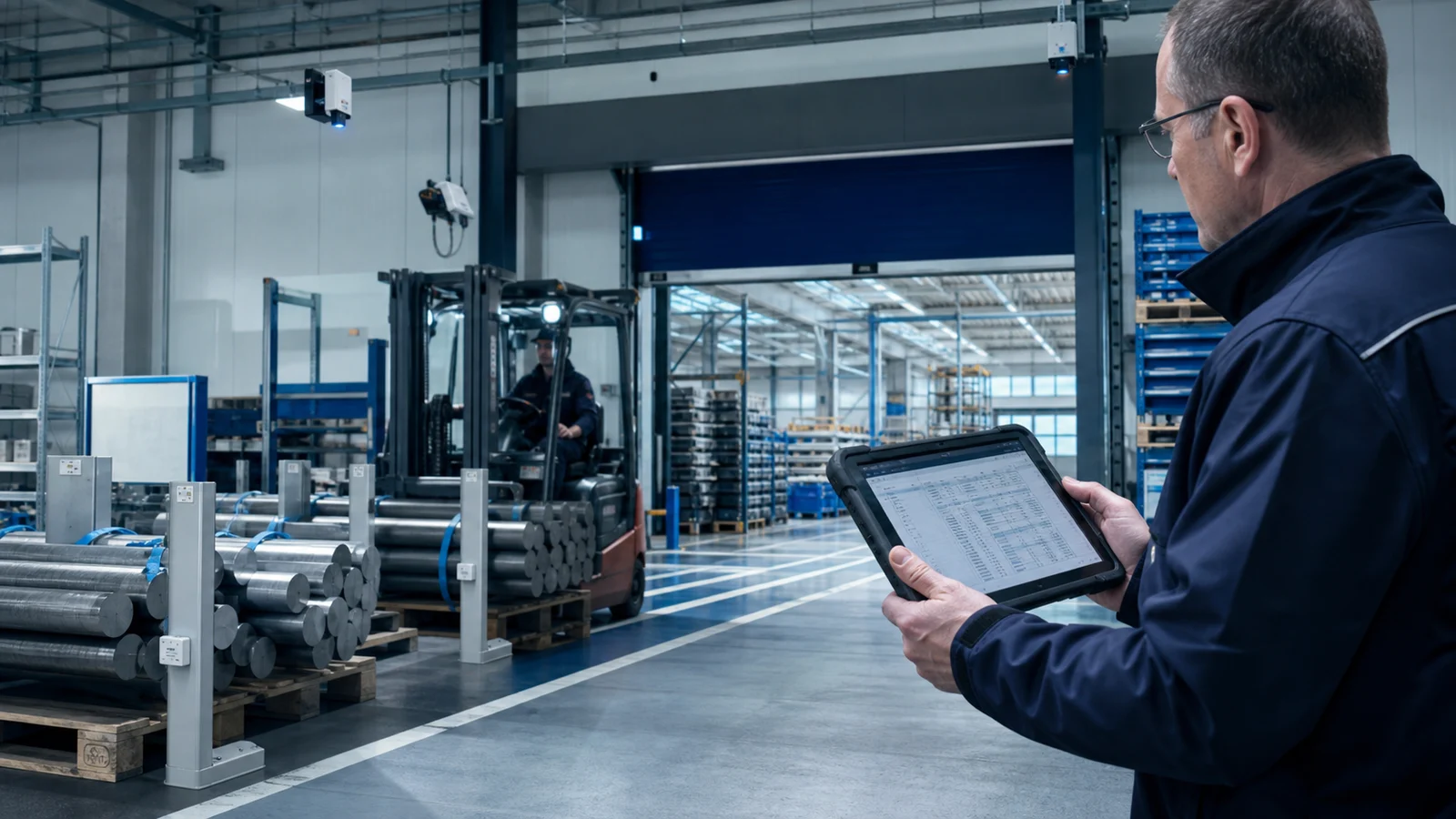
When the last known position of a raw material, work-in-progress item or finished product is unknown, search, waiting and unnecessary transport time increase.
If the production order, bill of materials and physical material are not verified before consumption, quality and rework risks arise.
When physical transfers and system transactions occur at different times, inventory accuracy, planning and line-feeding decisions deteriorate.
MTS tracks every physical movement through a unique material identity, from goods receipt and storage to line feeding and production consumption. Operations teams see the current location while ERP and MES systems receive verified movement events.
A field event is not merely read; it is verified against the correct material, location and production-order context before being transferred to enterprise systems.
A unique record is created for the pallet, tote, coil or lot.
→Passage, pickup, drop-off or consumption events are captured in the field.
→Material suitability, route and operation sequence are checked.
→The verified event is reflected in ERP, MES or WMS records.
Technology is selected according to material form, environmental conditions, read distance and required processing speed.
Tags and readers are selected for field conditions such as metal, liquids, temperature and read distance.
Warehouses, racks, buffers, lines, machines and consumption points are defined hierarchically.
Incorrect materials, routes, sequences and unauthorised movements are checked before field execution.
Production orders, inventory, bills of materials and completed movements are synchronised bidirectionally.
Operator tasks, alerts, material queries and controlled manual transactions are presented by role.
Waiting, transport, searching, consumption and inventory movements are reported to expose bottlenecks.
As material moves from receipt to production consumption, its digital identity travels with the physical asset.
The tag or handling unit is matched to its unique material record.
Active production order, product, source and destination details are loaded.
Material suitability, route, sequence and authorisation conditions are validated.
The physical pickup, transport, drop-off or consumption operation is performed.
Location, status and inventory information is transferred to relevant enterprise systems.
Who moved what, from where, to where and when is retained.
Receipt, quality hold, put-away, transfer and stock-count movements.
Delivery of the correct material in the correct sequence to the correct production order.
Location, status and process history of products waiting between operations.
Packaging, loading, dispatch verification and returned-material management.
Customer and facility information has been anonymized to meet confidentiality obligations.
 ANONYMOUS PROJECT
Manual recipe execution was transformed into a controlled batch operation combining material identity, equipment conditions and process safeguards.
Read the story → ANONYMOUS PROJECT
Recipe execution and cleaning evidence were combined into a controlled batch history covering material, process and hygiene conditions.
Read the story →Share recipes, material flow and operating constraints with the process automation team.
Request a process assessment Your request is routed directly to the relevant engineering team.
Engineering confidence with Oskon.
Leave your details and our expert engineers will contact you for a preliminary consultation tailored to your needs.