





Manage cleaning circuits, recipe steps and measurement records together in CIP systems. Cycle completion and equipment suitability for the next product are separate decisions.
Cleaning objectives depend on the product and equipment
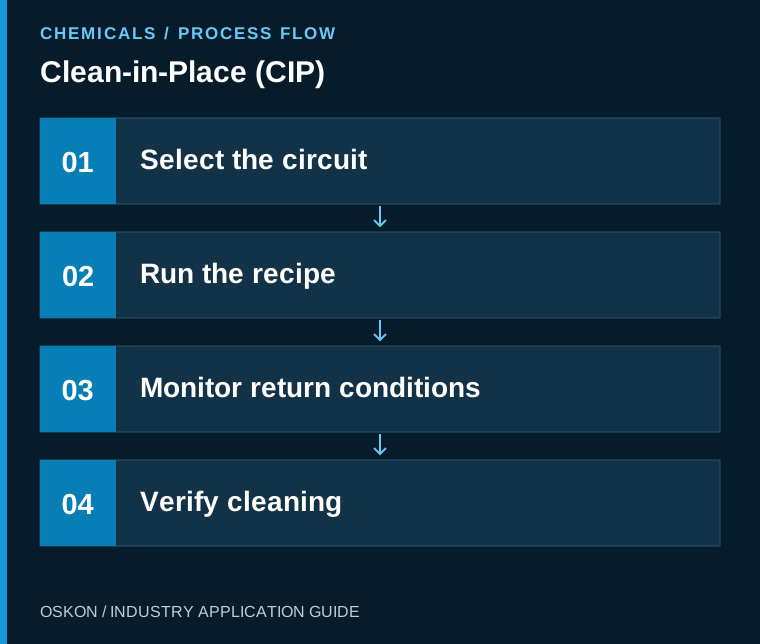
Clean-in-place describes cleaning the internal surfaces of suitably designed equipment without dismantling it. Different residues, products and equipment may require different methods. Validate the cleaning recipe against material compatibility, residue type and product requirements. Manage time, temperature and flow as recipe parameters.
Define the physical cleaning circuit
Clarify which tank, pipeline and equipment connects to each CIP return. Assess valve positions, shared circuits and areas that cannot be cleaned in the design. The selection on screen must match the physical route. Establish interlocks to prevent simultaneous production and cleaning demands on shared equipment from conflicting. Checking the software name alone cannot resolve incorrect circuit selection.
Use measurements to confirm recipe step completion
Create pre-rinse, cleaning and final-rinse steps according to the application. Obtain required times, temperatures, flows and chemical conditions from the validated recipe. Conductivity measurements can help monitor circuit behaviour in suitable applications, but do not directly detect every residue. Clearly define the conditions under which step time is counted.
Assess supply and return data together
The detection of a satisfactory value on the supply line does not necessarily prove that the same condition exists throughout the entire equipment. Return measurements and the hydraulic behavior of the circuit must be evaluated within the context of the project. In the event of a sensor fault, insufficient flow, or an interruption, the status of the cycle must be clearly defined. An incomplete cleaning process should not be automatically considered a successful outcome. The restart procedure must be based on well-established procedures.
Distinguish cycle records from cleaning verification
The automation report shows which steps ran and under what conditions. Assess cleaning adequacy through suitable sampling, analysis or other verification methods. These records complement each other. Link equipment readiness to the required results and operational approval. Maintain traceability between the previous product, cleaning time and next product.
Acceptance testing must cover the actual circuits
Take measurements on representative lines, including the longest or most demanding circuits. Test shared-valve conflicts, loss of return flow and incomplete cycles. Manage recipe changes through version control and approval. Chemical selection and operating conditions rely on relevant product information rather than a generic online recipe. Clearly list the verified circuits in the acceptance report.
Key information to monitor in the automation system
| Control point | Monitored information |
|---|---|
| Circuit ID | Equipment being cleaned and valve route |
| Process record | Time, temperature and flow according to the recipe |
| Ready for use | Cycle result and required verification outcome |
Three questions to ask at the start of the project
- Is step time counted only while the required conditions are met?
- Are return-line measurements assessed?
- Are cycle completion and cleaning approval treated separately?
Explore related applications
Explore related processes in Process Safety and Detergent Production Plants. Browse all Chemicals articles or visit Chemicals solutions.