





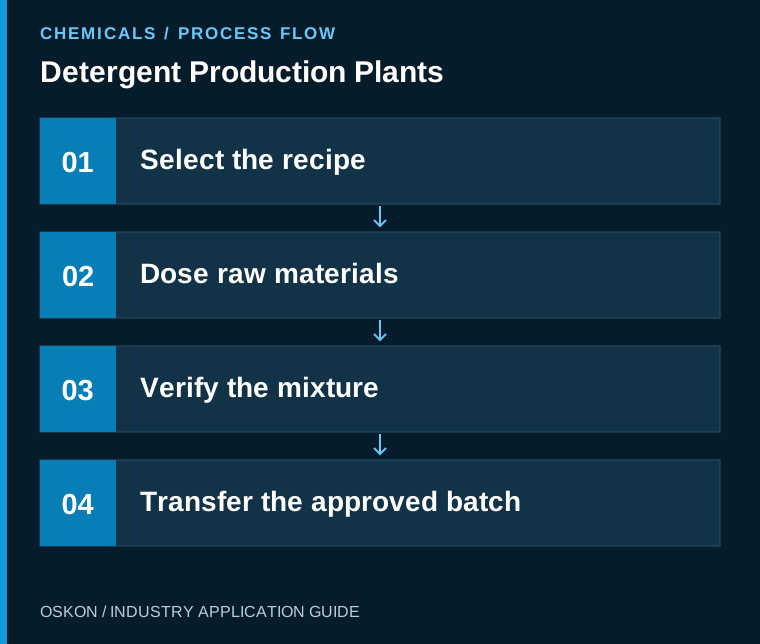
Maintain recipe steps and batch identity from raw material receipt through to filling in detergent production. Weighing, mixing, transfer and quality approval should share the same production record.
The product family determines equipment requirements
Detergent products in liquid, powder, or other forms with different consistency characteristics do not share the same production infrastructure. This guide focuses specifically on the planning of automation for liquid products that are prepared in tanks. At the beginning of the project, the types of products, batch sizes, characteristics of raw materials, and cleaning requirements are defined. The target capacity is determined not only by the volume of the mixing tank but also by the entire preparation and transfer process.
Break the approved recipe into steps
Manage raw material addition, mixing, holding, sampling and transfer as a sequence of steps. The process development team approves the recipe, and automation implements that approved method. Clearly define each step's starting conditions and completion criteria. Include materials added manually by the operator in the batch record; information beyond automatically fed materials must also be retained.
Define mixing by more than rotational speed alone
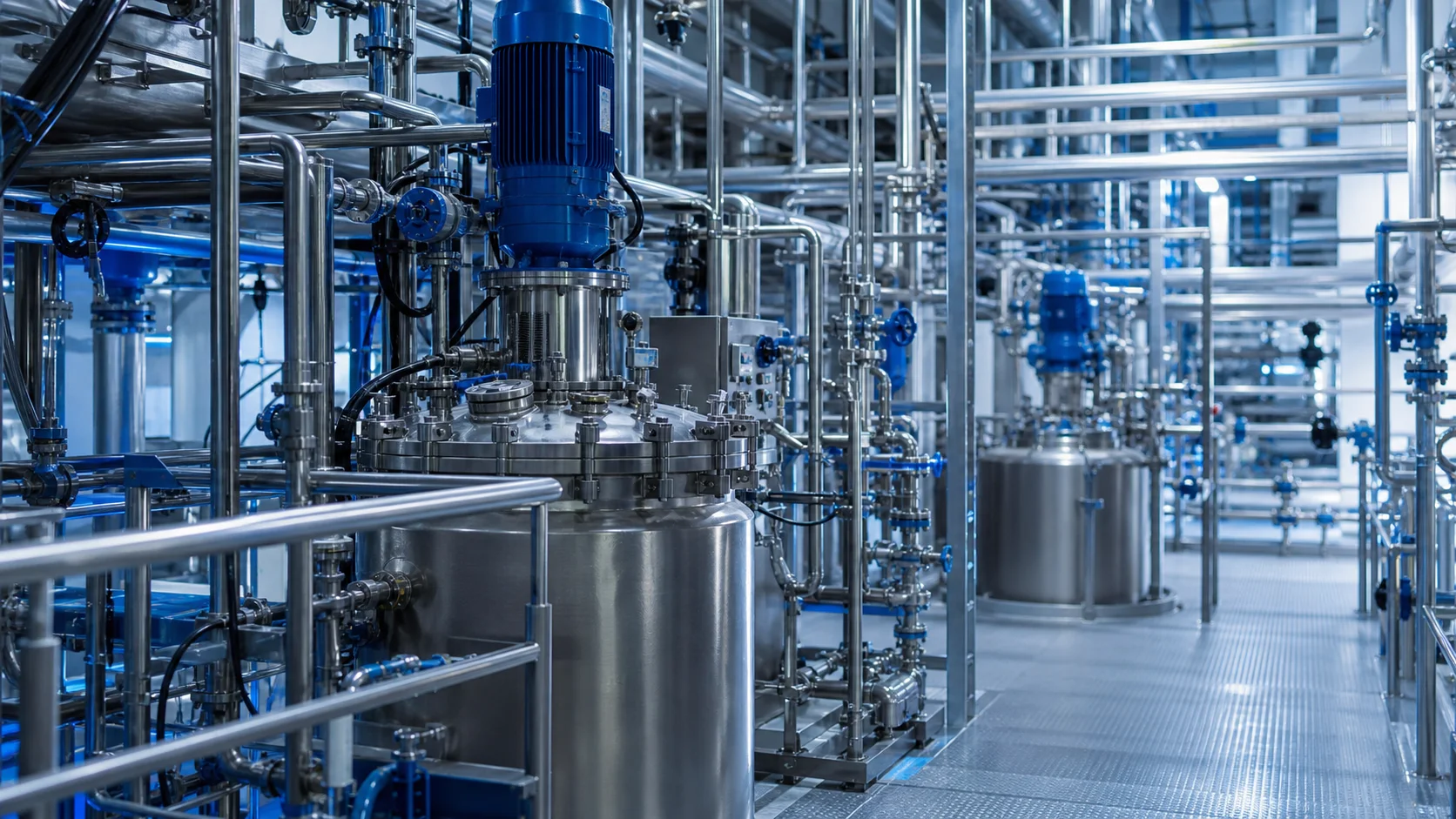
In the mixing of surfactants, factors such as product properties and air entrainment are of significant importance. The geometry of the mixer, its fill level, and the duration of operation are determined through process validation. The fact that the motor is running alone does not constitute proof that the mixture has reached the desired quality.
Record raw material quantities for traceability
On lines using weighing or flow measurement, store target and actual quantities separately. Product remaining in the line after feeding and valve closing behaviour can affect the measurement result. Manual corrections require authorisation and a recorded reason. Linking raw material lots to the batch makes it possible to investigate the effect of a particular supply period on quality.
Control transfers before quality approval
Keep batches awaiting sampling, approved batches and batches requiring rework in distinct statuses. Assess the approval needed to send the product to the filling tank together with the destination tank's suitability. Route selection and valve position verification form part of the design to prevent incorrect transfers. Include cleaning status in transfer readiness checks; an empty tank is not always ready for use.
Test recipe exceptions during acceptance testing
Test scenarios such as missing raw material, quantity deviations, resuming after an interruption and quality holds. The batch report must show the recipe version, lots, actual quantities and interventions. Assess initial production trials alongside product quality checks. Automation acceptance then becomes a broader production validation, extending beyond the movement of pumps and valves.
Key information to monitor in the automation system
| Control point | Monitored information |
|---|---|
| Actual quantities | Weighing or flow records compared with the target |
| Batch step | Mixing, holding and sampling status |
| Quality status | Product approval before transfer |
Three questions to ask at the start of the project
- Are manual additions included in the batch report?
- Is the recipe version linked to the production record?
- Are the cleanliness and suitability of the destination tank verified?
Explore related applications
Explore related processes in Paint Production and Gel Production Processes. Browse all Chemicals articles or visit Chemicals solutions.