





/ AUTOMATED STORAGE AND ARCHIVE SYSTEMS
Vertical Carousel Module (VCM)
Keep small and medium-sized parts organised in a compact footprint.
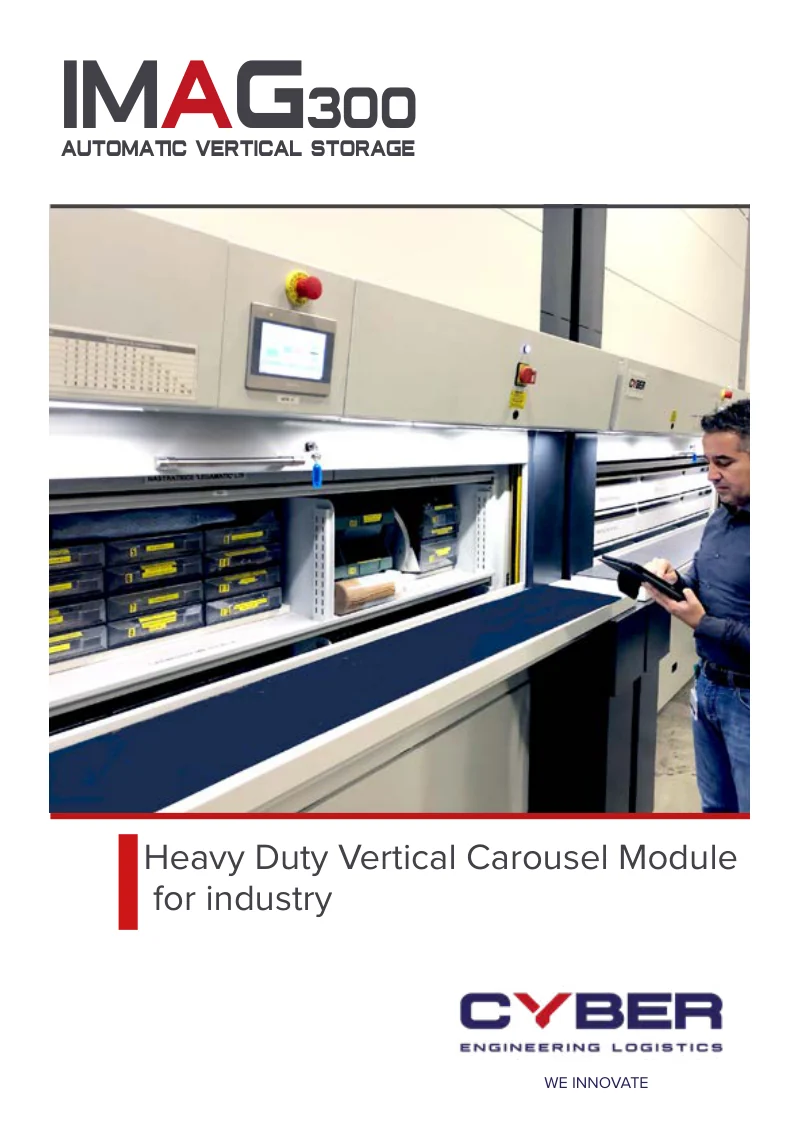
A vertical carousel with chain-driven rack carriers that automatically brings the selected rack to the operator's access point.
Explore
/ IMAG300Bring the material
Bring the material
directly to the operator.
The rack carriers rotate vertically with a chain mechanism. The selected rack is automatically moved to the operator's access point; the rack interiors can be divided according to the application.
- HeightFrom 2.1 to 7.1 m; it is configured according to the existing ceiling height.
- Carrying capacityUp to 9,000 kg in total; 300 kg of payload per carrier.
- OptionsLED picking, compartmentalized shelving and automation integration.
High storage capacity
in a compact footprint.
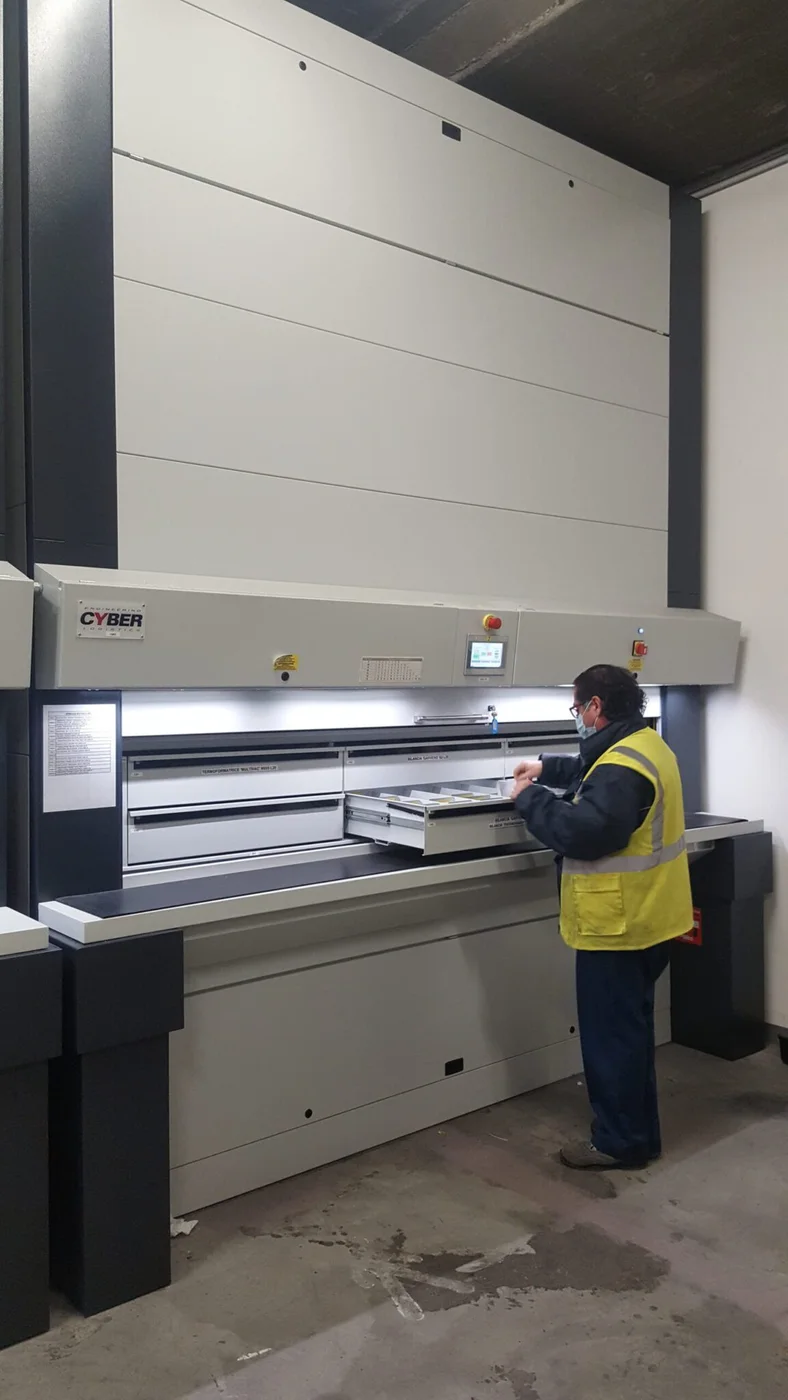
/ IN THE FIELDThe selected carrier
The selected carrier
arrives at the picking point.
IMAG 300 is an automated storage system with rotating carriers that uses the full available building height and suits small to medium-sized materials. The carriers rotate on the operator's command, bringing the selected carrier to the front of the picking area. CYBER.Game provides stock and expiry date control, dynamic real-time inventory and integration with the existing management system.
- ModularityFull use of height and machine volume; internal carriers can be customized.
- SecurityPhotoelectric barriers protect the picking compartment; access is restricted to authorised personnel.
- TraceabilityAccesses and operations are recorded.
- Remote control.The working state of the machine is monitored and controlled remotely.
IMAG 300
technical specifications.
The values are taken from the Cyber Italia product documentation; the number and size of carriers are determined by the material profile.
| Specification | Value |
|---|---|
| Height | 2,100 – 7,100 mm |
| Width | 3,100 – 3,500 mm |
| Depth | 1,725 mm + 325 mm access bay |
| Number of carriers | 6 – 40 |
| Carrier Available Width | 2,450 – 2,850 mm |
| Carrier Usable Height | 180 – 570 mm |
| Speed | 15 cm/s |
| Carrier load capacity | 300 kg |
| Total load capacity | 3,300 – 9,000 kg |
| Carrier structure | High-strength tubular frame |
| Controls | Electrical panel console, touch HMI |
Key IMAG300
application scenarios.
Component management
Management of multiple small parts from a single access point.
Consumables
Organised storage of fast-moving consumables.
MRO inventory
Tracking of maintenance materials with recorded access.
Cobot feeding
Integrated work with picking, counting or cobot systems.
Carriers configured
to suit the material.
The carrier arrangement and additional equipment are chosen according to the shape of the material to be stored and the safety requirement.
Single or double layer carrier
Single-level or height-adjustable double-level carriers with vertical dividers.
Transparent front panel
Carriers with fixed or adjustable dividers and visible contents at the front.
Telescopic drawers
Drawer carriers on telescopic slides, made according to the material.
Lighted optical bar
An illuminated guide indicates the correct compartment for picking and replenishment.
Fire protection and sanitation
Automatic fire detection/extinguishing; surface and environment sanitation system.
Access control
Access authorized by badge or password.
Identify the material, measure the area,
and size the system together.
- Site surveyMeasure material types, volume, inventory turnover and available space.
- DesignMachine size, rack arrangement, software and integration scope are determined.
- CommissioningSetup, stock transfer, user authorization and training are completed.
Let’s analyse storage and flow
around your real operation.
Share load profiles, throughput targets and space constraints so the right architecture can be assessed.
Request a storage and flow analysis Your request is routed directly to the relevant engineering team.