





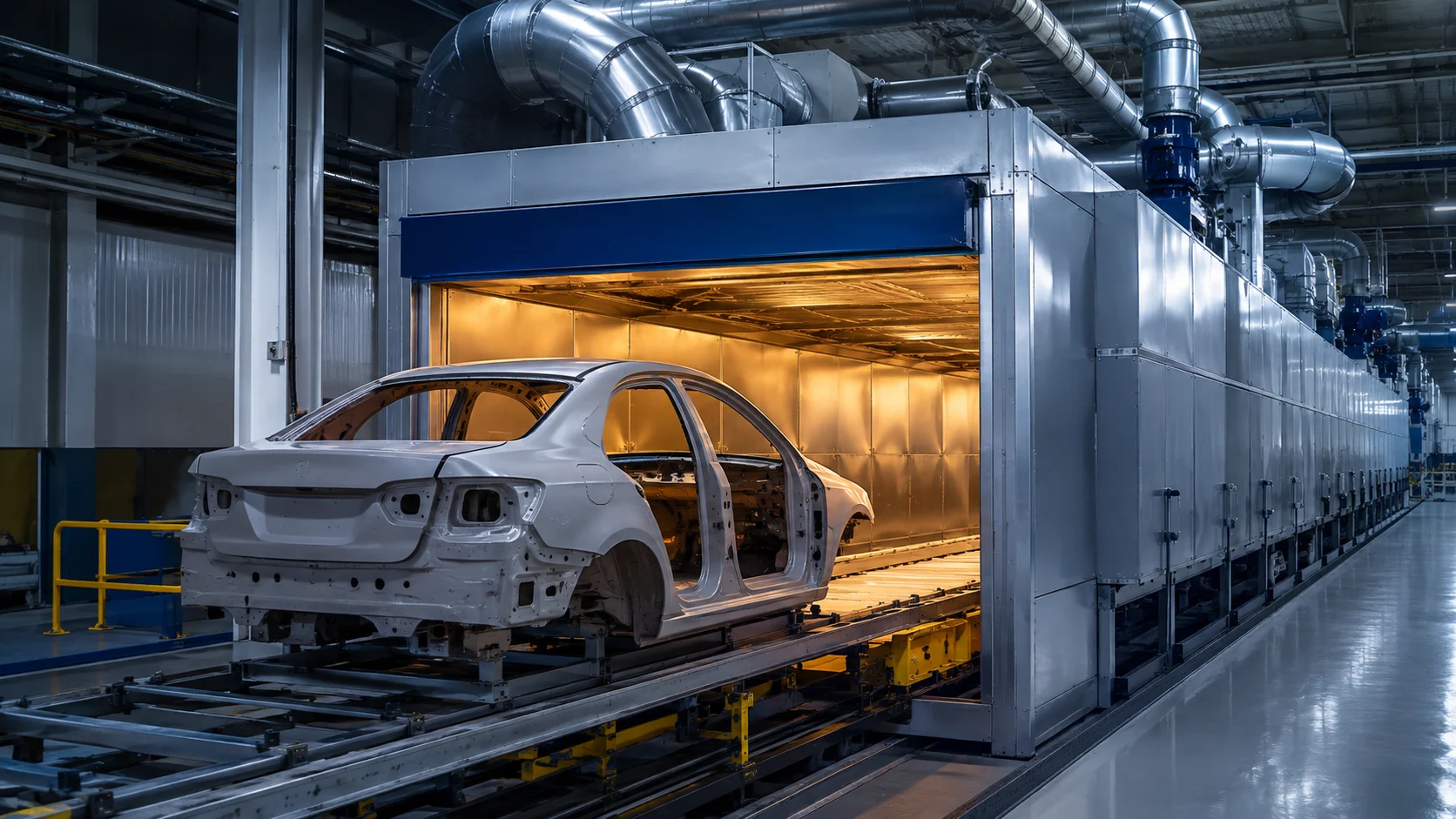
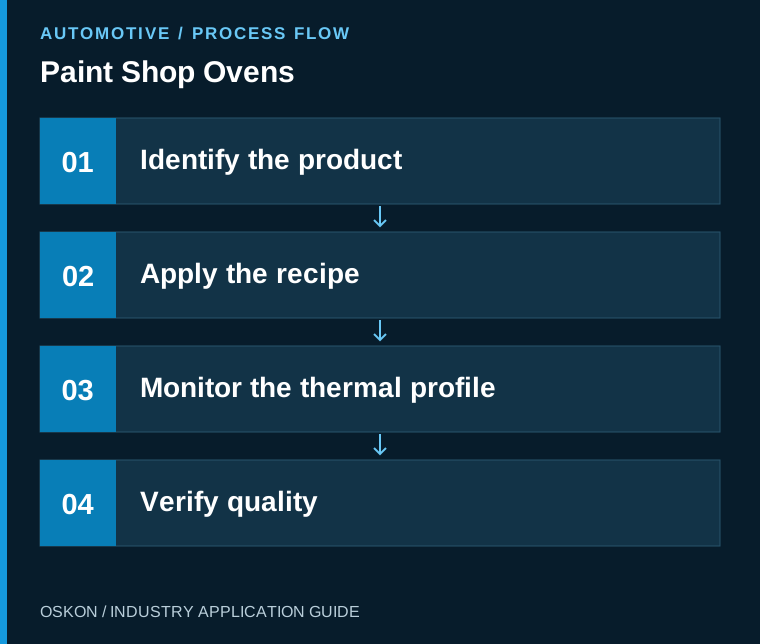
Monitor oven air temperature and the product's thermal behaviour separately in paint shop ovens. Match recipes, conveyor movement and stoppage scenarios to the coating system's validated requirements.
Air temperature and product temperature are different
The temperature on the oven control screen represents the air at the measurement point. Different areas of the vehicle body can heat at different rates depending on mass, geometry and air distribution. Support conformity assessment with thermal profile measurements on the product, according to the coating manufacturer's requirements. A single high temperature reading does not demonstrate that the required process has occurred on every surface.
Define the recipe inputs
The body model, coating system, line speed, and oven loading arrangement are all taken into consideration when evaluating a recipe. The authority to modify the production recipe should be limited, and any changes must be recorded. Target values such as general temperature or duration are not specified here; these are determined based on material and equipment validation. Automation ensures that approved parameters are consistently applied and that any deviations are monitored.
Monitor behaviour across zones
In multi-zone ovens, assess measured temperatures, control outputs and air circulation feedback together. A zone reaching its target late may be related to load changes or air distribution as well as heating capacity. Changing control settings without checking sensor calibration and placement may conceal the cause. Trend records support maintenance investigations.
Design a separate scenario for conveyor stoppages
Product positions and exposure times become important during oven stoppages. Define behaviour for planned stops, unexpected conveyor faults and power failures in line with the equipment manufacturer's design. Returning products to the line must depend on quality assessment. When normal cycling resumes, the control system must not mark interrupted bodies as complete without retaining a traceable record.
Heating and ventilation safeguards
Design protective functions for heating, air circulation and exhaust systems according to the energy source and process characteristics. Clearly define the boundaries between production control and required safety functions. Include maintenance and cleaning access, isolation and verification steps in the operating plan. The interface must clearly show which condition is preventing heating or production.
Make acceptance measurements repeatable
Thermal profile measurements are reported in conjunction with the selected body model and loading conditions. The locations of the sensors, information about the measuring device, and line settings must be preserved. This ensures that a comparable reference is available in the event of changes to the product or recipe. By examining the coating quality, energy consumption, and handling behavior within the same test framework, the furnace’s performance under actual production conditions can be assessed more accurately.
Key information to monitor in the automation system
| Control point | Monitored information |
|---|---|
| Zone temperature | Setpoint and actual value trends over time |
| Conveying status | Body position, speed and stoppage duration |
| Product profile | Thermal behaviour verified on the body |
Three questions to ask at the start of the project
- Has the thermal profile been verified on the product?
- Are bodies remaining in the oven tracked after a stoppage?
- Are recipe changes recorded?
Explore related applications
Explore related processes in Sanding Booths and Body Filler Booths. Browse all Automotive articles or visit Automotive solutions.