





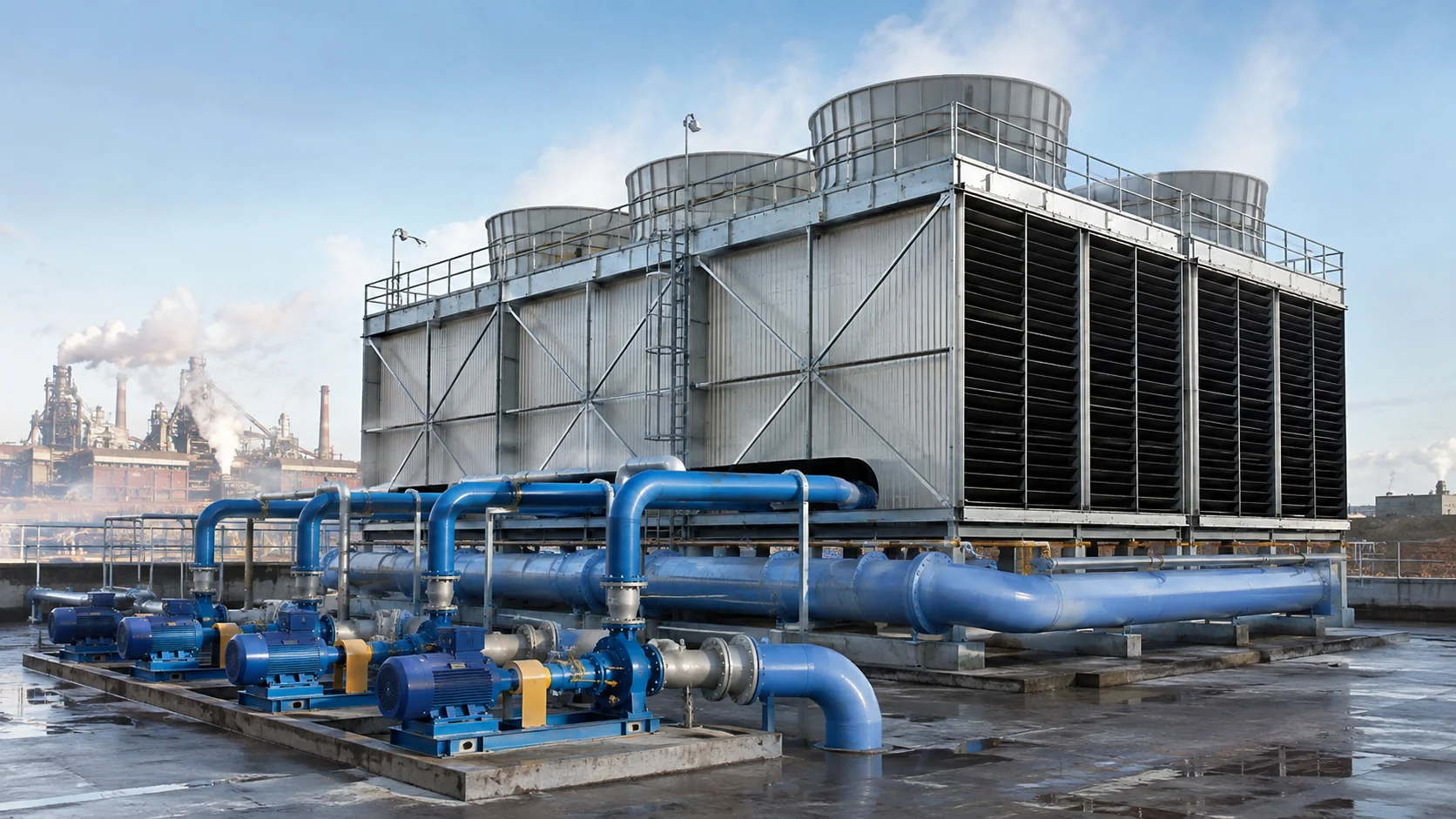
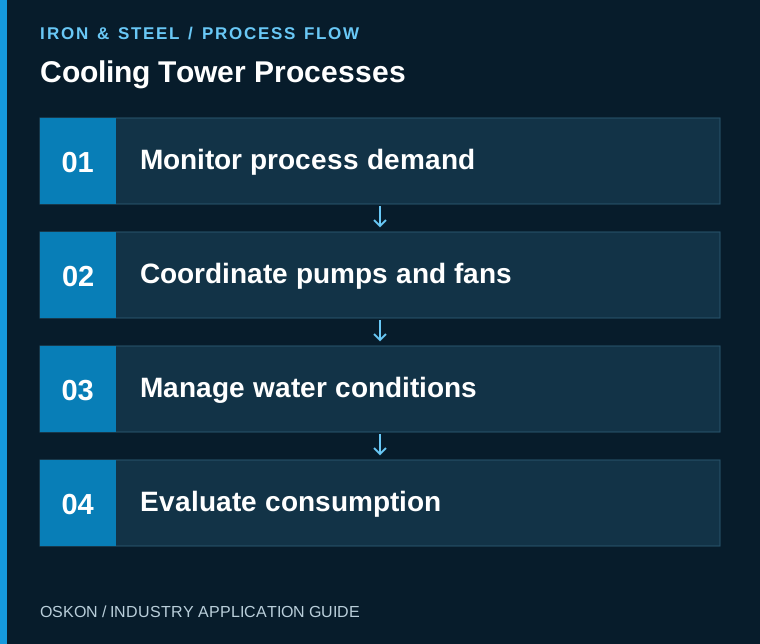
Consider the process heat load, pump and fan coordination, and water management together in cooling tower automation. Assess consumption data alongside production load and weather conditions.
Consider the cooling tower together with the process circuit
The function of a cooling tower is to serve as part of the heat removal system required by the associated process. Its open-loop or closed-loop design, as well as the presence of heat exchangers and distribution pumps, affect the scope of its control capabilities. The required supply and return temperatures, flow rates, and design parameters are all determined together. The outlet temperature of a single cooling tower does not necessarily ensure that all users receive adequate cooling.
Match measurement points to control decisions
Temperature, level, flow and equipment feedback serve different control tasks. Assess sensor positions, maintenance access and measurement quality. A pump-running signal does not replace actual flow information. After a measurement fault, do not use the last value as though it were current. The interface must clearly show which user or circuit is requesting cooling and which equipment is meeting that demand.
Define the fan and pump operating sequence
The sequence in which equipment is brought into operation, the method of capacity sharing, and the backup strategy are all determined by the plant design. Methods that prevent unnecessary startups and shutdowns at short intervals are selected in accordance with the limitations of each piece of equipment. Units that are under maintenance are excluded from the automatic selection process. While optimizing energy usage, it is essential to maintain the process’s required cooling conditions; however, simply reducing fan consumption may not necessarily result in overall system improvements.
Manage water treatment through a specialist programme
Measurement of feedwater and blowdown, along with monitoring of conductivity, are among the tools used for tracking water quality. The water treatment program to be implemented is determined by experts, based on water analysis results and the characteristics of the equipment. Automation facilitates the measurement and recording requirements of this program. However, conductivity alone does not constitute an indicator of overall water quality or microbiological suitability.
Report consumption with its operating context
Supply water consumption, blowdown, and electricity usage are analyzed in conjunction with the production load and external environmental conditions. Directly comparing the total consumption over two days with different loads can be misleading. To investigate potential leaks, the measurement locations and the scope of the meters must be clear and precise. Any sudden changes in these values are compared with maintenance records and process data. Energy-saving targets are established based on the measured baseline values.
Test standby operation and load changes during acceptance testing
Scenarios such as unit out-of-service status, pump failures, low water levels, and measurement errors are considered. The suitability of temperature and flow rates under actual process conditions is verified. If seasonal factors cannot be taken into account during commissioning, a subsequent verification plan is established. A clear delivery document explaining water management, maintenance requirements, and automation limitations is prepared for the operations team.
Key information to monitor in the automation system
| Control point | Monitored information |
|---|---|
| Thermal circuit | Supply and return temperatures and flow |
| Water management | Make-up water, blowdown and selected quality measurements |
| Equipment status | Operating, standby and maintenance status |
Three questions to ask at the start of the project
- Is pump feedback supported by actual flow measurement?
- Is the water treatment programme based on analysis results?
- Are load and weather conditions included in consumption comparisons?
Explore related applications
Explore related processes in Slitting Lines and Cut-to-Length Lines. Browse all Iron & Steel articles or visit Iron & Steel solutions.