





Manage station readiness, body tracking and stoppage impacts together in continuous paint shops. Coordination between processes, alongside line speed, determines production continuity.
Define the limits of continuous flow
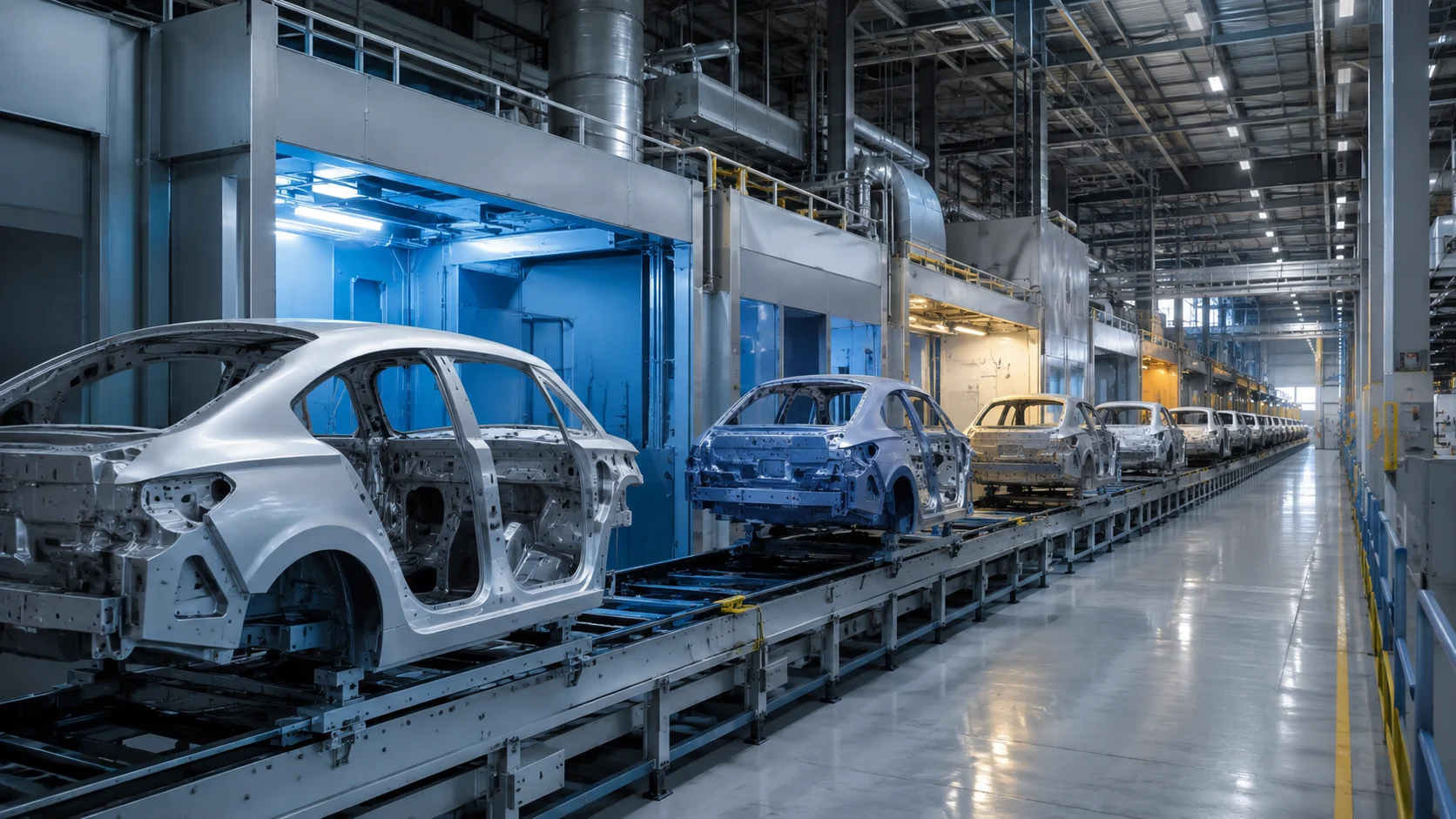
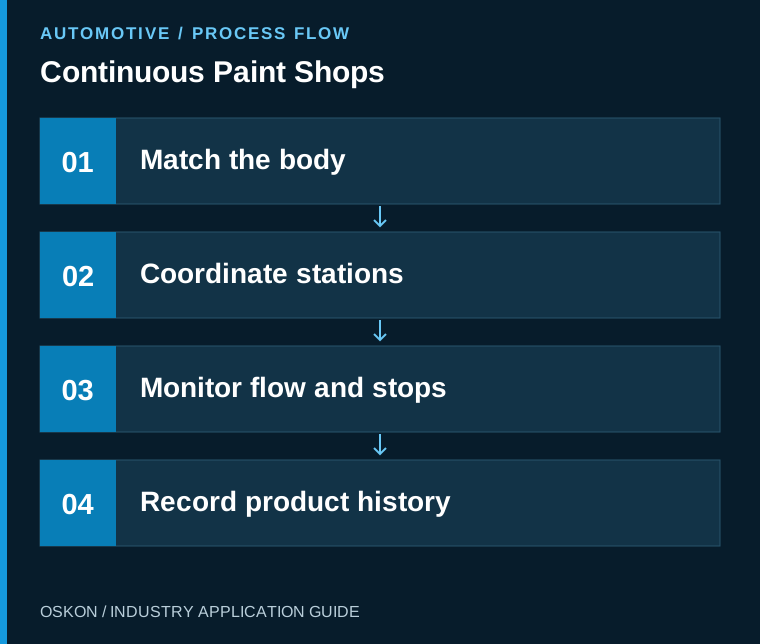
A continuous paint shop moves products through interconnected processes within a defined conveying arrangement. The stations do not all need the same control architecture. Pretreatment, application, holding and oven sections each have their own conditions. Define each section's capacity, minimum operating requirements and response to stoppages at the start of the project.
Body identity must be maintained throughout movement
Transfer the product ID, carrier ID and model information received at entry consistently throughout the line. A mismatch between the body's physical position and its software record creates a risk of using the wrong recipe. Define controlled exception procedures for failed reads, manual handling and carrier changes. Operator corrections to identity require authorisation and a recorded history.
Use consistent definitions for station permissives
Each station's ready, running, complete and fault signals must follow a clear interface protocol with adjacent equipment. Prevent stale ready signals from remaining valid after communication loss. Test signal timeouts and reconnection behaviour during acceptance. The line controller monitors transfer to the next process under suitable conditions, as well as the operation of individual machines.
The impact of a stoppage depends on its location
Stopping a body in an application booth, holding area or oven has different quality consequences. Stoppage management must account for these differences. A list of affected products can be created using position and time information. Define the rework or quality checks required before returning to production. Make traceable decisions instead of releasing every product through a blanket approval after each stop.
Identify bottlenecks using cycle data
Line speed alone does not explain capacity. Waiting causes, micro-stoppages, colour changeovers and rework volumes must be examined together. Clocks at data collection points must be synchronised to avoid misinterpreting the sequence of events. Actual production data is used to assess whether increasing speed in one section creates queues or quality deviations in the next.
Extend acceptance scenarios to the entire line
After single-machine tests, integrated tests are conducted that take into account product identity, recipe transfer, and faults at adjacent stations. Different product sequences and controlled restarts should be tested. The acceptance report includes information on the tested product mix and the operating conditions. This approach goes beyond simply running the empty line at nominal speed; it enables a true understanding of the actual production process.
Key information to monitor in the automation system
| Control point | Monitored information |
|---|---|
| ID matching | Consistency between the physical body and its software record |
| Station permissives | Ready status and communication freshness |
| Stoppage impact | Products affected according to their location |
Three questions to ask at the start of the project
- Is identity maintained when carriers change?
- Has communication loss been tested?
- Can affected products be separated after a stoppage?
Explore related applications
Explore related processes in Sanding Booths and Body Filler Booths. Browse all Automotive articles or visit Automotive solutions.