






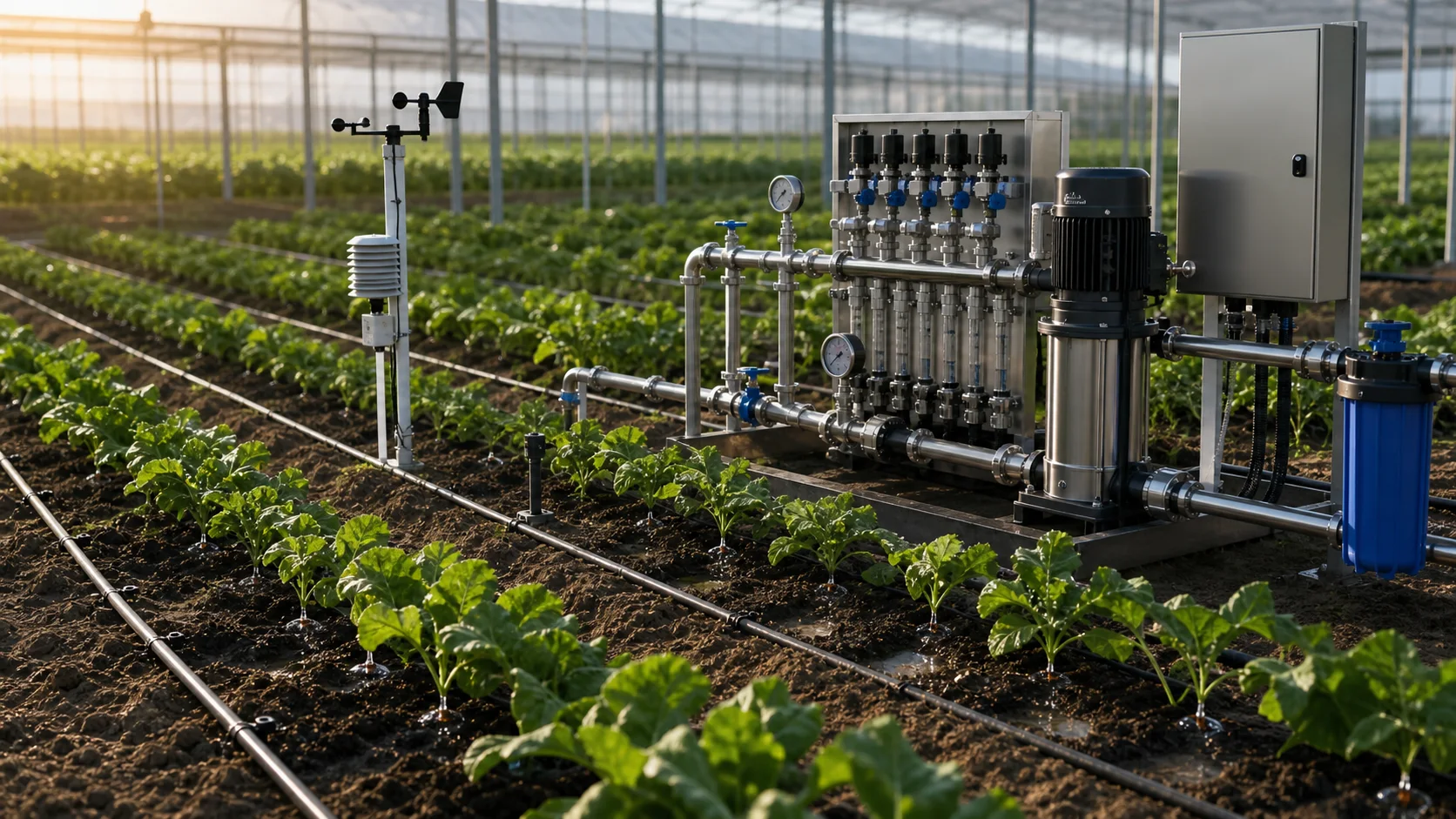
Agricultural automation; It manages irrigation, fertilization and field monitoring processes together through sensors, control panels and software. The aim is not only to run the system at certain hours; It is to deliver water to the right area, at the right time and in a controlled amount, by measuring the actual need in the root area of the plant.
Soil moisture sensors, climate stations and precipitation data are processed in PLC or industrial controllers. When thresholds and prescriptions are met, pump groups, solenoid valves and irrigation zones are automatically activated; The system is safely stopped when a sufficient humidity level is reached.
Turns soil moisture and weather data into irrigation decisions for each zone.
Monitors pumps, filters, and valves to maintain balanced supply to drippers.
Records irrigation, fertigation, consumption, and alarm data in one place.
Drip irrigation automation
Automation in drip irrigation lines; It starts with monitoring main and secondary line pressures, sequential control of zone valves, flow measurement and filter status monitoring. The difference between the expected flow rate and the measured flow rate; It produces early warnings for problems such as leakage, clogging or valve failure. Thus, while water is delivered directly to the root zone in a controlled manner, the manual control burden of field teams is reduced.
Fertigation and prescription management
In fertigation systems, fertilizer and nutrient solution are dosed into irrigation water in a controlled manner. Dosing pumps, mixing tanks, pH and EC measurements can be managed on a recipe basis. Authorized prescriptions; It is applied according to the product, development period, field region and irrigation program, and the actual consumption is recorded with batch and time information.
Pump, valve and energy management
Pressure control, soft start or speed control, dry run protection and backup pump scenarios are the basic parts of automation in pump stations. Sequential activation of zones limits sudden pressure changes; Energy and water consumption can be taken from the meters and reported on the basis of production area, product or irrigation program.
Remote monitoring and alarm management
SCADA and web-based monitoring screens; It shows soil moisture, temperature, precipitation, tank level, line pressure, instantaneous flow rate and total consumption in a single center. In areas with suitable communication infrastructure, remote stations can be connected to the center via wired network, radio, cellular connection or industrial IoT gateways. Instant alarm and history recording is provided for critical situations such as pressure loss, low tank level, sensor disconnection and power outage.
Project specific engineering approach
Every agricultural field; They differ in terms of crop pattern, soil structure, water source, land elevation and existing irrigation infrastructure. Therefore, the solution is; It is designed by evaluating field exploration, hydraulic requirements, measurement points, communication coverage and operating scenarios together. Oskon integrates the system in a single engineering architecture, from control panel and field instrumentation to PLC/SCADA software, commissioning and remote support.