





Assess buffer areas in automotive lines beyond their holding capacity alone. Designing product sequences, station demand and fault recovery together makes intermediate inventory visible and manageable.
What problem should the buffer solve?
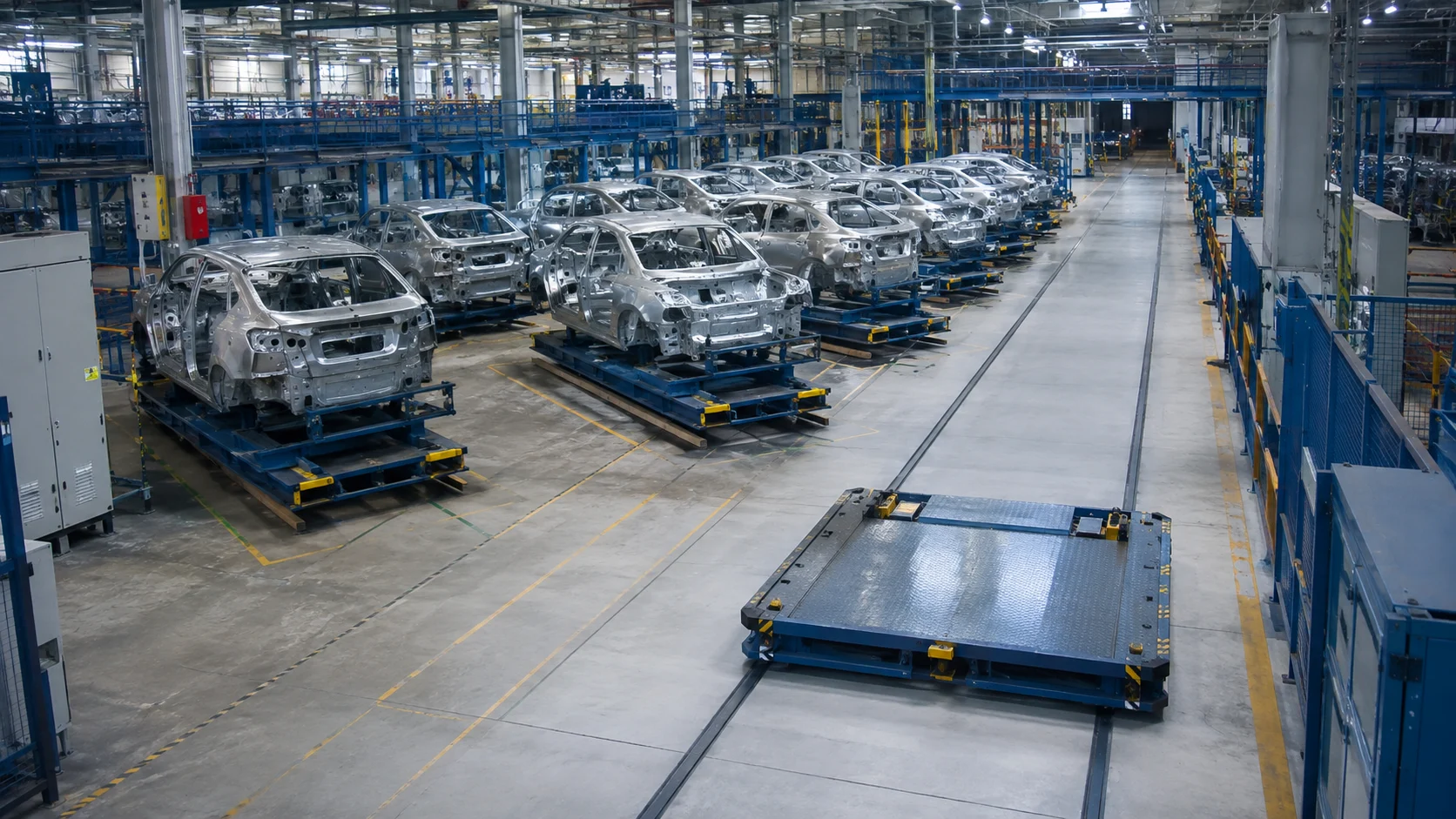
A buffer area accommodates flow differences between connected production sections and adjusts product sequencing when required. A larger holding area does not solve every capacity problem. First examine infeed and outfeed rates, stoppage distributions, the product mix and resequencing requirements. Selecting only by carrier count before the area's purpose is clear may fail to provide the expected operating flexibility.
Physical layout and software capacity must match
The physical occupancy of each position is matched to the product record in the system. Unavailable, maintenance and reserved positions should have distinct statuses. Sending a carrier to an apparently empty position must depend on actual position verification. Define how inventory will be reconciled after manual intervention from the outset; deleting records should not become a routine recovery method for operators.
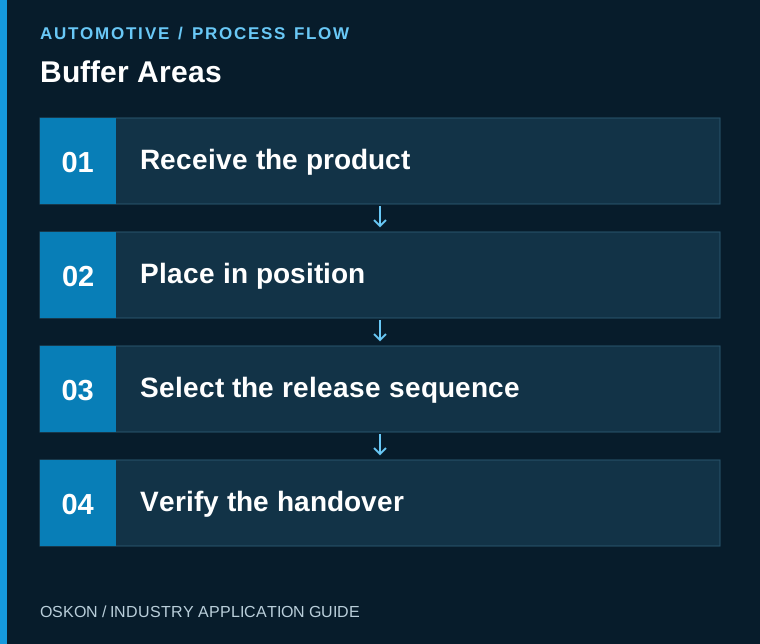
Production requirements determine the release strategy
First-in-first-out, model balancing, downstream station demand and specific order priorities are different release strategies. Agree the rules and exceptions with the production team. Keep waiting times visible to prevent a product from being repeatedly pushed back in the sequence. After resequencing, ensure the correct identity still reaches downstream assembly or process recipes.
Define a handover protocol with adjacent lines
Inbound acceptance and outbound handover are completed together with position, carrier readiness and product identity checks. Communication loss or an incomplete transfer requires consistent recovery. Both controllers counting the same product in their own areas is just as problematic as neither controller claiming it. The verification that completes handover must be clearly stated in the software and acceptance documentation.
Interpret occupancy levels together with their causes
High occupancy does not always mean the buffer is too small; a long stoppage on the downstream line or an incorrect sequencing rule can also cause it. Record waiting times, occupancy, blocked infeed and waiting for products at the outfeed together. Analysis by product family shows whether particular variants constrain the flow. This data can support decisions to increase capacity.
Test exceptions during acceptance testing
Test full and empty areas, unreadable IDs, blocked positions and power restoration using actual product flow. Compare the layout on screen with the carriers on site. Observe how a manually removed product is recorded in the system. At acceptance, operators should understand the sequence and causes of waiting, and the maintenance team should be able to locate inconsistencies reliably.
Key information to monitor in the automation system
| Control point | Monitored information |
|---|---|
| Position occupancy | Matching physical inventory to software records |
| Waiting time | Product-specific delays and priorities |
| Handover result | Receipt confirmation from the adjacent line |
Three questions to ask at the start of the project
- Are the release priority rules defined?
- Is manual product removal recorded?
- Is product ownership maintained during an incomplete transfer?
Explore related applications
Explore related processes in Automatic Carriers and Telescopic Bars and Hanger Systems. Browse all Automotive articles or visit Automotive solutions.