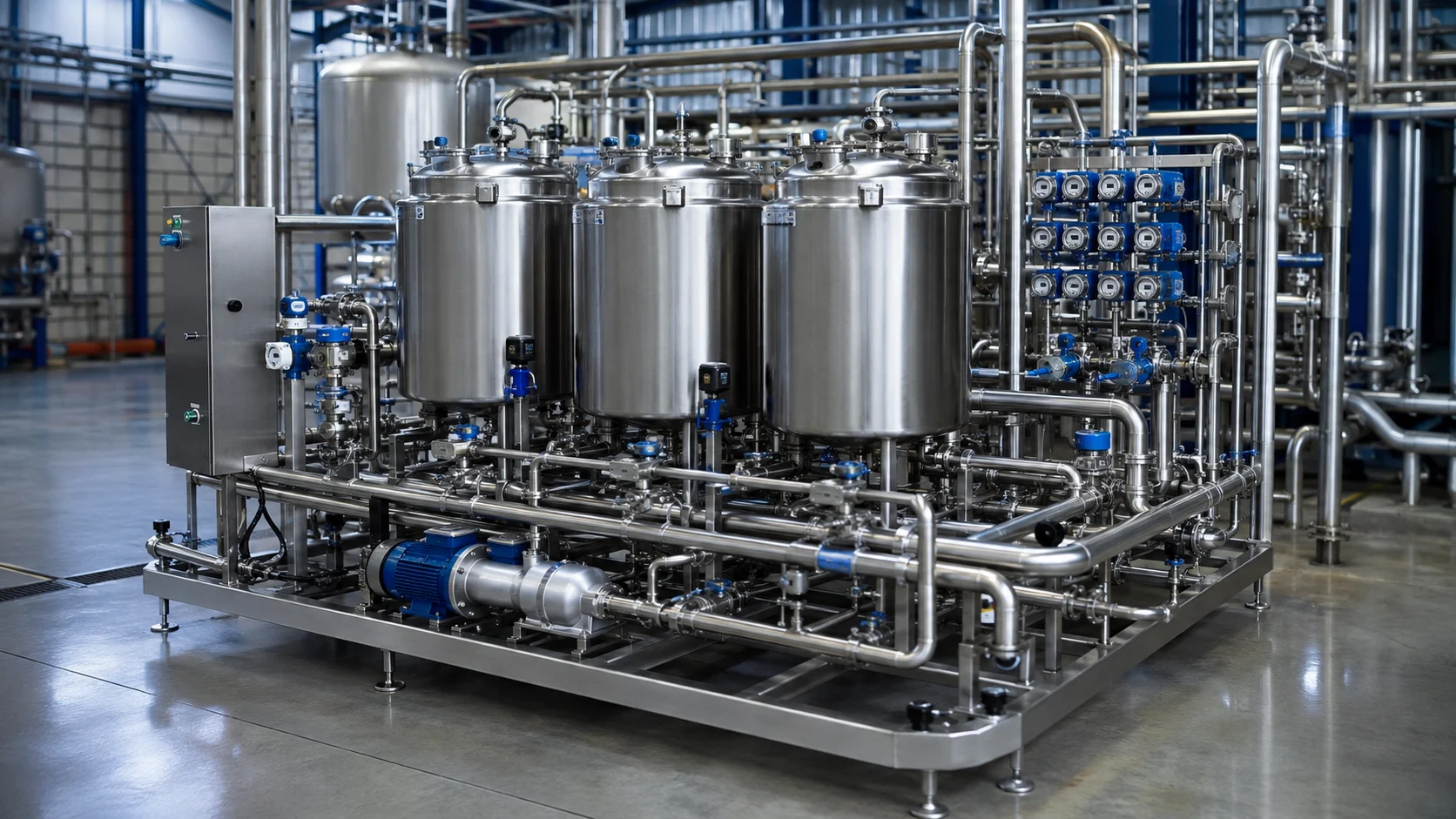






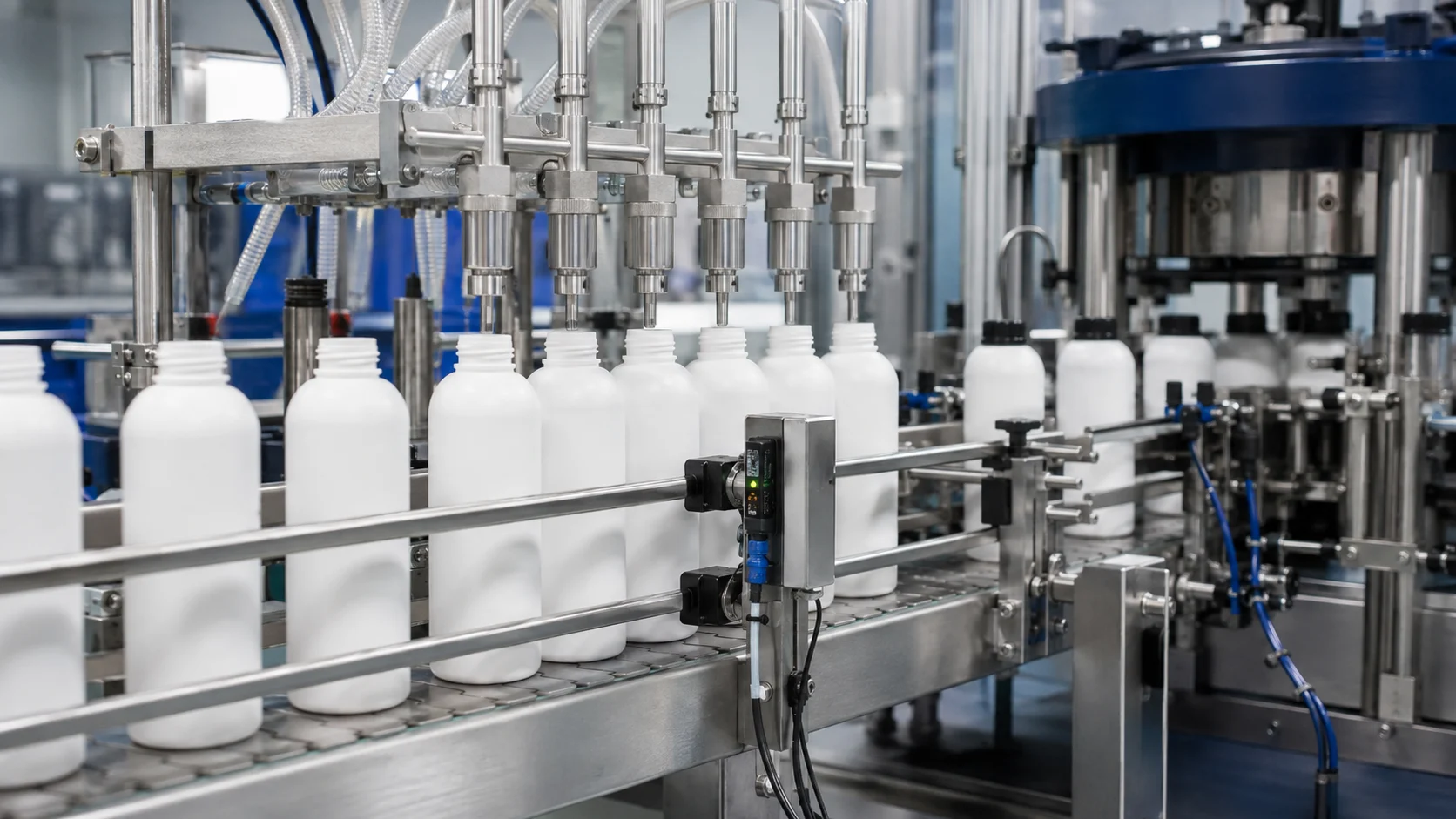
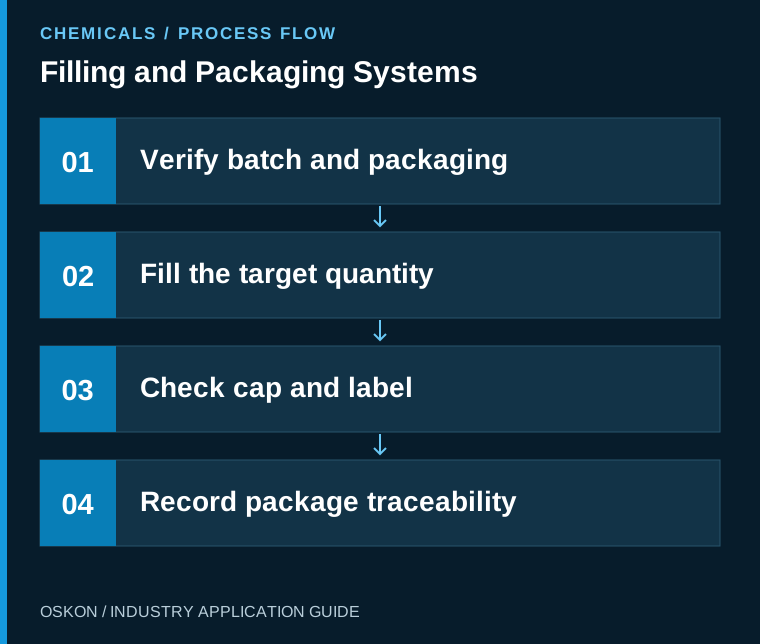
Combine quantity control with packaging verification, cap and label checks, and batch tracking in chemical product filling. Correct recovery after a product changeover is as important as starting the line with the correct product.
Product behaviour determines the filling method
The fluidity of the product, its tendency to foam, the type of packaging, and the target cycle for filling must all be taken into consideration when selecting the appropriate filling equipment. In some applications, measurements based on weight or volume may be used. Siemens’ filling and dosing solutions are examples of systems that can be integrated with weighing and control systems. The accuracy of the selected method must be verified using actual products and packaging materials; tests conducted solely with water may not accurately reflect the product’s behavior in real-world conditions.
Link the production order to line readiness
The batch to be filled must be approved, and the correct tank and line must be selected. The package size, cap type, and label version are matched according to the production order. Operation steps such as removing previous packaging and labels before changing the product are listed in the control checklist. The status “line ready” indicates a more comprehensive preparation state than simply the machines being powered on.
Manage exceptions in quantity control
Assess target and actual filling quantities together with measurement validity. Verify that underfilled or overfilled products are physically directed to the correct location. A reject command is not confirmation that the product has actually been separated. Define how the line behaves when the reject area is full or confirmation is missing. Decisions to refill follow an approved workflow.
Monitor cap and label inspection separately
Even if the filling process is appropriate, errors in sealing or labeling can render the product unfit for use. The control method is selected based on the type of packaging and the nature of the error. Reading the code and verifying that the printed information corresponds to the correct batch must be performed together. The data source used for displaying expiration dates or other product information, as well as the authority to make any changes to this information, must be clearly defined.

Maintain the relationship between packages and pallets
Define the traceability required from individual packages through to cases and pallets. Individual serial numbers may not be necessary in every application, but the relationship between batch and quantity must be preserved. Establish records for partial cases, repackaging and label reprints. Production quantities reported to the higher-level system must reconcile with rejects and rework.
Include product changeovers in acceptance testing
Different types of packaging, as well as minimum and maximum planned line speeds and product transitions, are tested. Incorrect labels, unreadable codes, filling errors, and losses in rejection verification are all included in the acceptance plan. The reported number of good products is compared with the actual counts. It is also observed on-site whether the operator is able to perform the required changeover procedures and interpret the error messages correctly.
Key information to monitor in the automation system
| Control point | Monitored information |
|---|---|
| Filling result | Quantity and measurement validity |
| Packaging inspection | Cap, label and code matching |
| Reject verification | Physical separation of nonconforming products |
Three questions to ask at the start of the project
- Is the physical removal of rejected products verified?
- Is the label version linked to the production order?
- Are partial cases and repackaging tracked?
Explore related applications
Explore related processes in Weighing Systems and Silo Areas and Tank Farms. Browse all Chemicals articles or visit Chemicals solutions.