





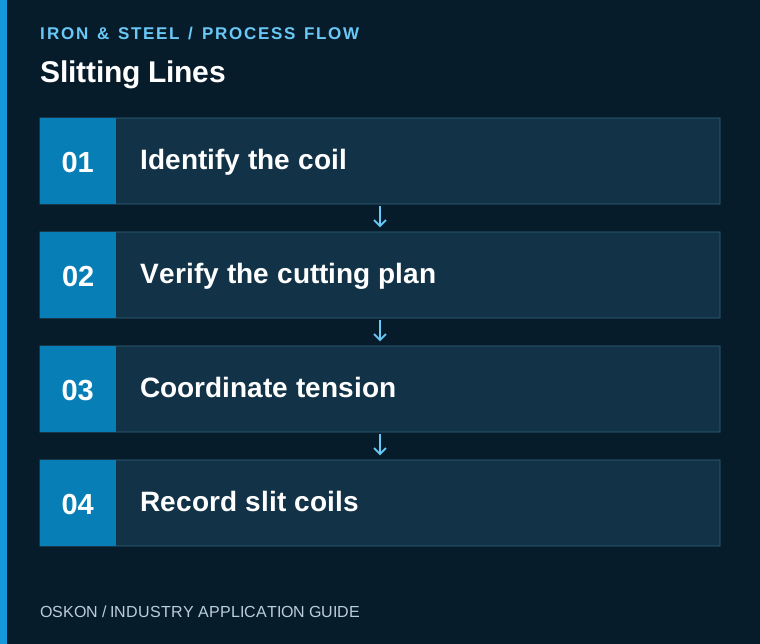
Manage coil identity, cutting plans, line tension and winding results together on slitting lines. Product quality depends on coordination across the entire line as well as the knife arrangement.
Link the cutting plan to the material
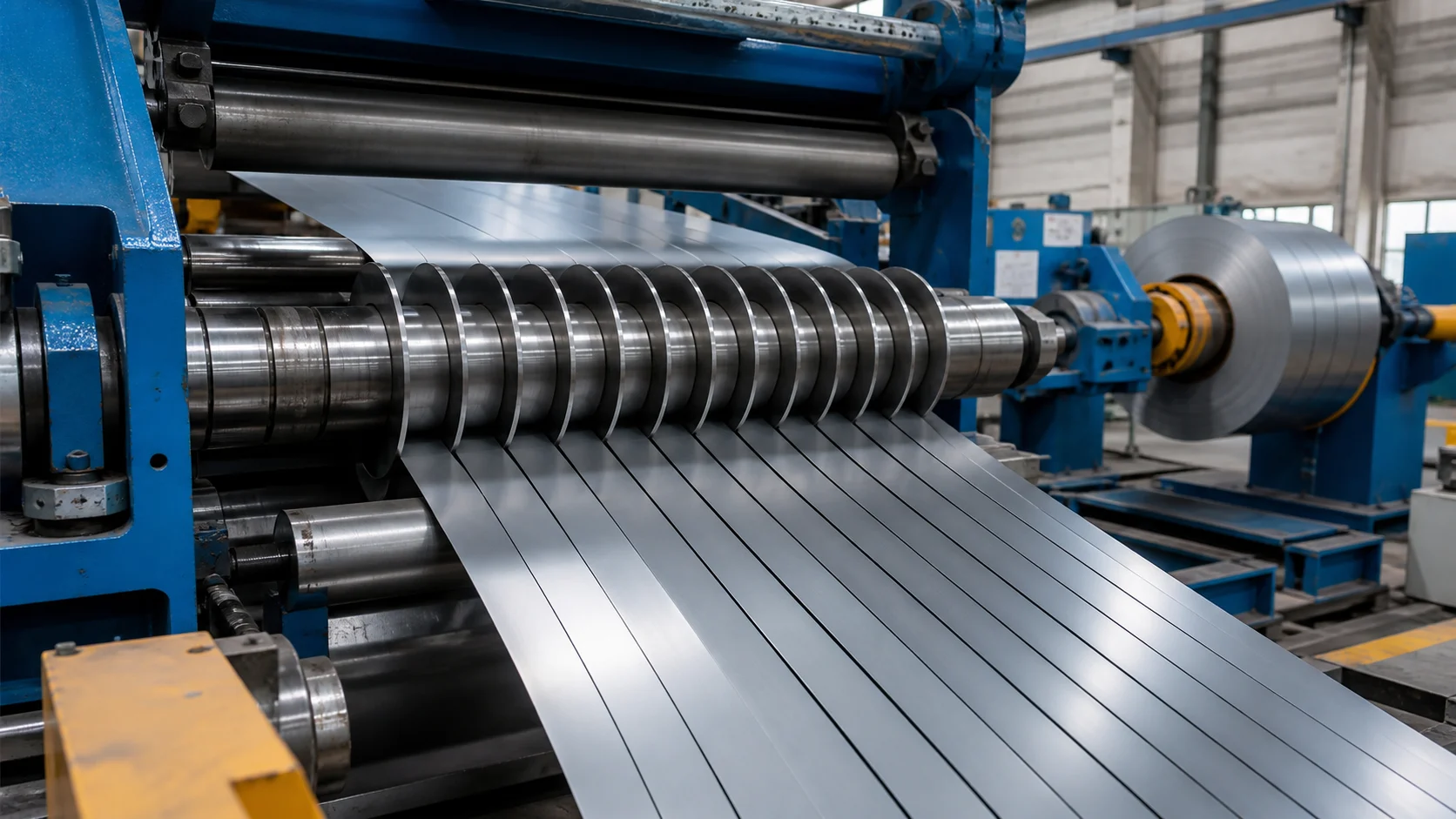
Slitting is the process of cutting a wide strip into narrower strips by making longitudinal cuts. For a particular project, the combination of roll width, thickness, material properties, and desired strip dimensions must be specified. The nominal speed alone does not determine the actual capacity; factors such as preparation time, blade replacement, and loading/unloading times of the roll also need to be taken into account.
Maintain the relationship between the parent coil and the slit coils
The identity of the input coil, its material information, and the cutting plan are all associated with the processing order. Establishing a connection between the resulting narrow coils and the main coil facilitates quality control and shipping tracking. Any changes in partial processing, rewinding, or planning adjustments must be clearly recorded. The width combination selected by the operator is reflected in the version of the recipe used and in the coils produced.
The knife arrangement requires mechanical verification
The arrangement of the blades, the spacing between them, and the condition of the cutting tool are determined based on the material being processed and the design of the equipment. Automation can assist with checking the preparation checklist and ensuring that the blade settings match the specified recipe; however, it cannot replace physical verification of the cutting tool. Task-based monitoring systems are used to detect any incorrect configurations before the start of production. Linking records of wear and blade replacements with quality test results helps to optimize maintenance schedules.
Coordinate tension and speed together
The control approach between the uncoiler, cutting section and recoiler depends on the line architecture. Assess changing diameter, acceleration and stopping behaviour together. Record target and actual speed, drive load and the tension measurements used in the project. Investigate mechanical slip, measurement quality and control settings together when tracking fluctuations; changing the speed parameter alone may be insufficient.

Check winding quality separately
Strip width conformity and even coil winding are separate quality characteristics. Assess edge condition, winding geometry and other project criteria using suitable inspection methods. A line-complete signal does not replace these checks. Retain the IDs of nonconforming coils and the rework decision. This supports yield and quality investigation by parent coil.
Acceptance testing must represent the material range
Run trials with materials representing the planned thickness and width ranges. Monitor acceleration, deceleration, controlled stops and coil changes. Compare identity records with the resulting products. Assess safeguards for maintenance and knife changes against actual tasks, including sharp edges and moving equipment. Clearly state the validated product range in the acceptance report.
Key information to monitor in the automation system
| Control point | Monitored information |
|---|---|
| Cutting plan | Matching the material to the strip widths |
| Line behaviour | Speed, load and tension trends |
| Product association | Tracking the parent coil and the slit coils |
Three questions to ask at the start of the project
- Is the knife arrangement physically verified?
- Are the slit coils linked to the parent coil?
- Do acceptance trials cover the material range?
Explore related applications
Explore related processes in Cut-to-Length Lines and Tension Levelling Lines. Browse all Iron & Steel articles or visit Iron & Steel solutions.