






Improvement based on number of attempts
As each formulation change requires a new round of experiments, development time and material costs become unpredictable.
With Siemens gPROMS FormulatedProducts, we model formulation and production together, grounding AI-assisted recipe decisions in a mechanistic model.
Explore the solution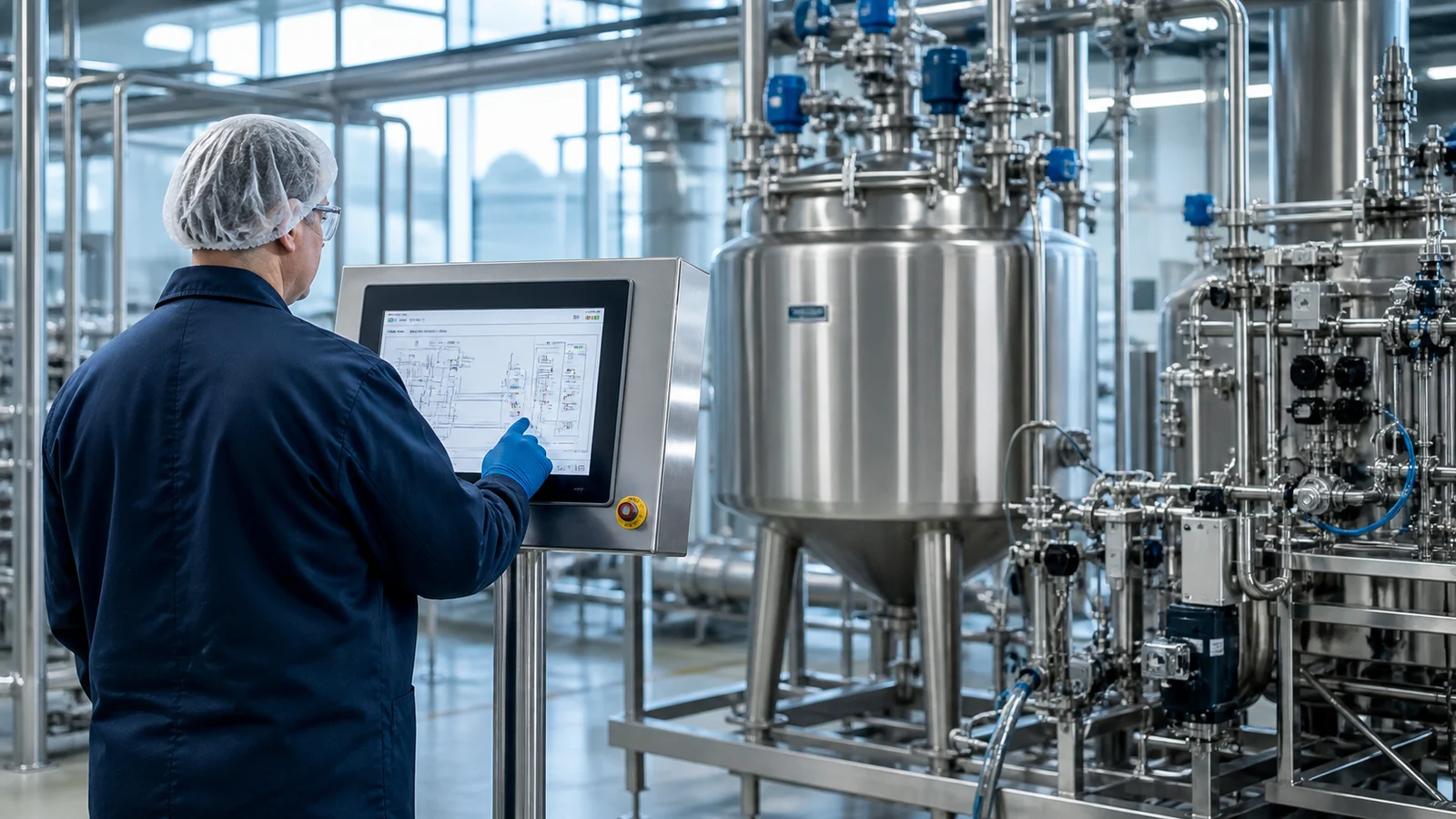

As each formulation change requires a new round of experiments, development time and material costs become unpredictable.
A recipe that works in the laboratory may not produce the same result on a production scale due to differences in mixing, temperature, and residence time.
Models trained with historical data alone do not produce reliable predictions outside the data range and cannot explain the decision reasoning.
Siemens gPROMS FormulatedProducts combines formulation behavior and manufacturing processes in the same mechanistic model family. Data-driven methods are added to this model as a hybrid layer, not replaced.
Define ingredients, solubility and product properties with physics-based models.
→The crystallization, drying, granulation and tableting steps are solved in the end-to-end flow.
→Critical parameters, risk and operational range are scanned on the model to prepare for scaling.
→The verified recipe is transferred to the ISA-88-based batch system and control layer.
The platform supports one workflow from development to production for pharmaceutical and formulated products, using mechanistic and hybrid model libraries.

Compare candidate formulations for solubility, stability and manufacturability before physical trials.
Review the product →In solid form, particle size, moisture and flow behavior are calculated together throughout the process steps.
Review the product →
Compression behaviour and absorption models link product performance to formulation decisions.
Review the product →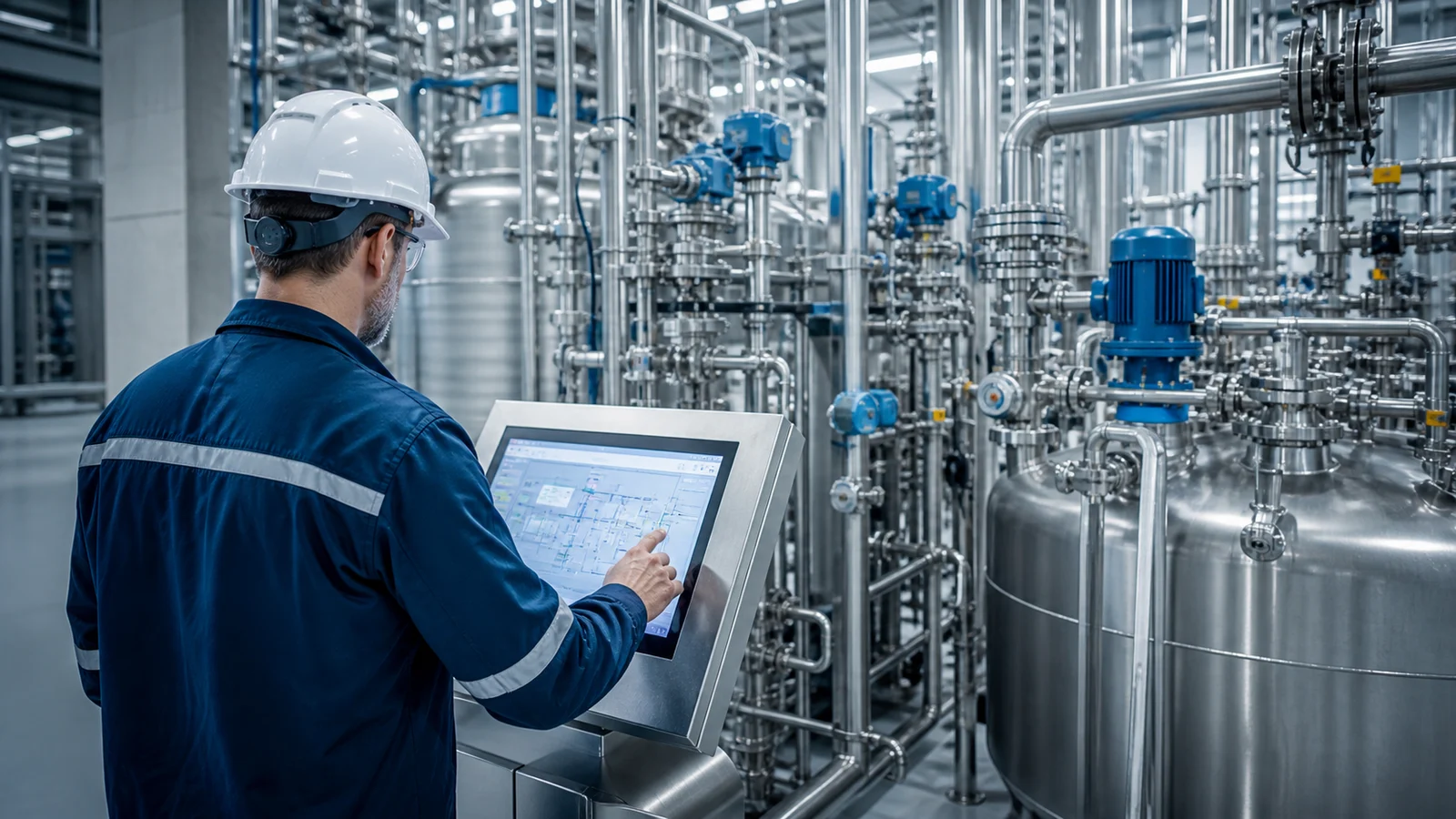
Digital twin models are built for the bioreactor, membrane filtration and chromatography steps.
Explore the platform →Data-driven methods are used to accelerate the mechanistic model and fill gaps; each suggestion is presented with the validity range of the model.
The learning component works together with the physical model; the prediction is based on an explanatory basis.
Critical process parameters and acceptable operational range are systematically determined.
Using the same model at different equipment scales, the transfer risk is pre-evaluated.
Variables determining product quality are monitored together on the formulation and process side.
Production deviations are compared with model scenarios to narrow down possible causes.
The verified recipe parameters are transferred to the ISA-88 recipe structure and control layer.
Critical quality characteristics, specification range, and acceptance criteria are clarified.
Existing equipment scales, cycle times and constraints are modeled.
The adequacy of laboratory, pilot and production data and sources of uncertainty are evaluated.
It is written down with which experiments the model will be tested and in which decisions it will be used.
It determines which of the development time, yield, quality, or scale-up risks is targeted.
The formulation history, experimental results and process records are gathered.
Product and process steps are modeled using the gPROMS FormulatedProducts libraries.
The target experiment set is planned according to the model's prediction and the results are compared.
Production-scale equipment and cycle conditions are tested on the model.
Recipe parameters are moved to the batch system; deviation and performance tracking is set up.
Solid form development, scale up and verifiable process design.
Optimization of yield and product characteristics in reaction and crystallization steps.
Prediction of emulsion, viscosity and stability behavior at the formulation stage.
Correlation of product quality with process conditions in mixing, thermal processing and drying steps.
Tell us briefly about your operation so we can establish the right next step together.
Discuss your requirements Your request is routed directly to the relevant engineering team.
Engineering confidence with Oskon.
Leave your details and our expert engineers will contact you for a preliminary consultation tailored to your needs.