





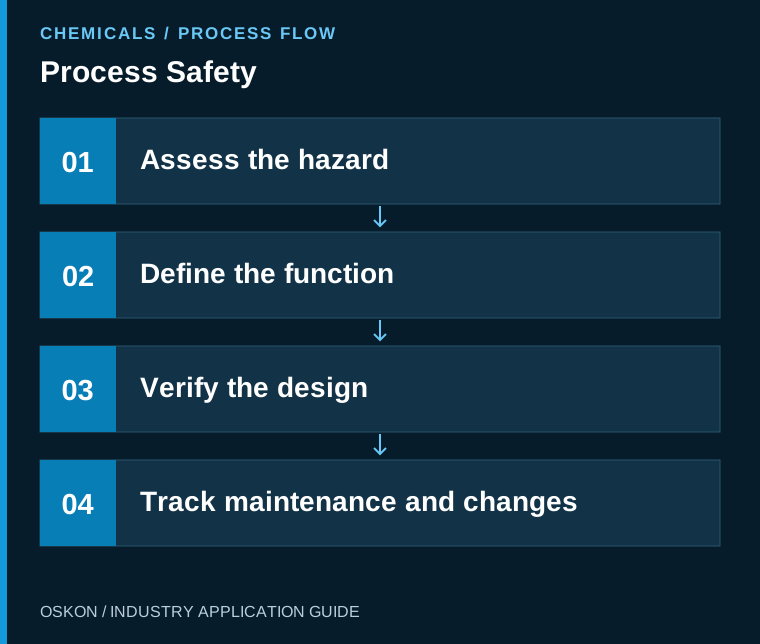
Process safety involves more than an alarm list. Plan hazard assessment, protective functions, operating procedures and change management together.
Start with the hazard and scenario
In chemical plants, the implementation of process safety begins with the assessment of potential hazards based on the materials used, the equipment employed, and the operating conditions. Tasks such as startup, shutdown, cleaning, and maintenance are also examined, just like normal production processes. The functions to be incorporated into the control system must be derived from this assessment. Selecting a device first and then determining which risks it is designed to address weakens the justification for its design.
Separate normal control from protective functions
Production control maintains the process at its target conditions. Required safety functions provide the specified response to defined hazardous situations. Assess sensors, logic and final elements as a whole. Sharing a display or communications does not demonstrate sufficient independence between functions. Architectural decisions rely on specialist risk assessment.
The action required from the operator must be clear for each alarm
Define the cause, consequence and expected response for every alarm. Numerous recurring alarms can make significant events difficult to distinguish. Warnings, control interlocks and automatic protective shutdowns serve different functions. Where operator intervention is relied upon, assess response time and operating conditions. Acknowledging an alarm does not mean the process has returned to normal or the hazard has been removed.
Validate the protective function as a whole
A sensor having suitable characteristics does not make the whole connected system adequate. Consider measurement, logic, final elements, power supplies and common-cause failures together. Required performance and testing methods follow the project assessment. This article does not recommend a particular safety level or circuit design; implementation follows requirements and validation plans prepared by competent teams.
Maintenance and modifications are part of the design
Sensor replacement, software revisions or increased process capacity can affect the validity of existing safeguards. Assess the effects before making changes, and plan the required tests and documentation updates. Manage temporary bypasses through defined authorisation, duration and monitoring arrangements. The operations team must be able to see clearly which safeguards are available.
Maintain records throughout the lifecycle
Link hazard assessments, function requirements, test results and maintenance records. Incident and near-miss investigations provide data for improving the design. Acceptance extends beyond commissioning-day tests; plan periodic verification and checks after changes. The aim is to keep the reasons for protective functions and the means of maintaining them clear throughout the plant's life.
Key information to monitor in the automation system
| Control point | Monitored information |
|---|---|
| Function requirement | Hazard, triggering condition and expected response |
| Availability | Fault, test and temporary bypass status |
| Change record | Assessment and validation history of the revision |
Three questions to ask at the start of the project
- Is the boundary between normal control and protective functions clear?
- Is the expected response defined for every alarm?
- Are the tests required after a modification identified?
Explore related applications
Explore related processes in Clean-in-Place (CIP) and Detergent Production Plants. Browse all Chemicals articles or visit Chemicals solutions.