






SIMATIC PCS 7 is Siemens’ DCS platform that integrates the controllers, distributed I/O devices, operator stations, engineering tools, as well as archiving and diagnostic functions of a process plant within a common control system architecture. The current Siemens product page highlights the PCS 7 V10.0 version; however, a sound investment decision cannot be based solely on the version number. The process’s requirements regarding continuity, control cycles, field signals, redundancy, functional safety, explosive atmospheres, user roles, recipe management, and reporting functions must be defined in advance. This guide is designed to help you choose SIMATIC PCS 7 not as a “PLC and display package,” but as a process control infrastructure that is managed throughout its entire lifecycle, from engineering and operation to modernization and cybersecurity.
Where does PCS 7 provide DCS value?
In continuous, semi-batch and batch processes, control involves more than executing logic. Operators need consistent faceplates, prioritised alarms, comparisons with historical trends and visibility of sequence steps; maintenance teams need device diagnostics. A DCS provides a shared data model and engineering approach for these tasks. In chemicals, energy, pharmaceuticals, water, food, mining and similar process industries, long plant life and controlled changes are central reasons to assess PCS 7.
A standalone PLC/HMI may be simpler for a small skid. In a plant combining many units, shared utilities and central operator management, fragmented projects can increase lifecycle cost. Consider more than the initial licence or panel price. Engineering reuse, alarm standards, spare parts, operator training, change implementation time during shutdowns, cybersecurity maintenance and future capacity all contribute to total cost of ownership.
| Layer | Main selection question | Item to verify during the project |
|---|---|---|
| Automation system | What are the requirements for control load, cycle time, availability, and fail-safe functions? | CPU capacity, network load, redundancy behavior, and actual cycle times |
| Process I/O | What are the requirements for signal type, field location, Ex zone classification, HART communication, and redundant channels? | Module/terminal variant, cabling, power, isolation, channel diagnostics and temperature limits |
| Operator and server | How many operating areas and concurrent users are required, and what are the archiving and availability targets? | Server/client placement, display performance, time synchronization and failover |
| Engineering | How should templates, libraries, user roles, and the change management process be managed? | Version, compilation, permissions, testing environment, backup, and restoration. |
| Upper-level systems | What data should be collected in what context for MES, laboratories, energy management, maintenance, and reporting purposes? | Interface ownership, data quality, buffering, security, and behavior in the event of connection loss. |
From shared engineering to a shared operating view
PCS 7 connects a process object's control logic and operator view instead of treating them as separate projects. A typical motor, valve, analogue measurement or PID loop carries its control block, alarms, status and faceplate behaviour together. Standardising names, units, alarm classes, colours, access and maintenance states gives different units a common operating language. This can reduce commissioning time and operator error risk.
Standardisation does not mean putting everything in one enormous template. Distinguish reusable types from plant-specific instances. When a type changes, identify the affected instances, the method for updating the operating plant and the rollback plan. Control narratives, cause-and-effect matrices, alarm philosophy and screen navigation are inputs to the engineering library. Retain traceability and independent testing between generated logic and source data even when automated generation tools are used.
Automation system selection: SIMATIC S7-410
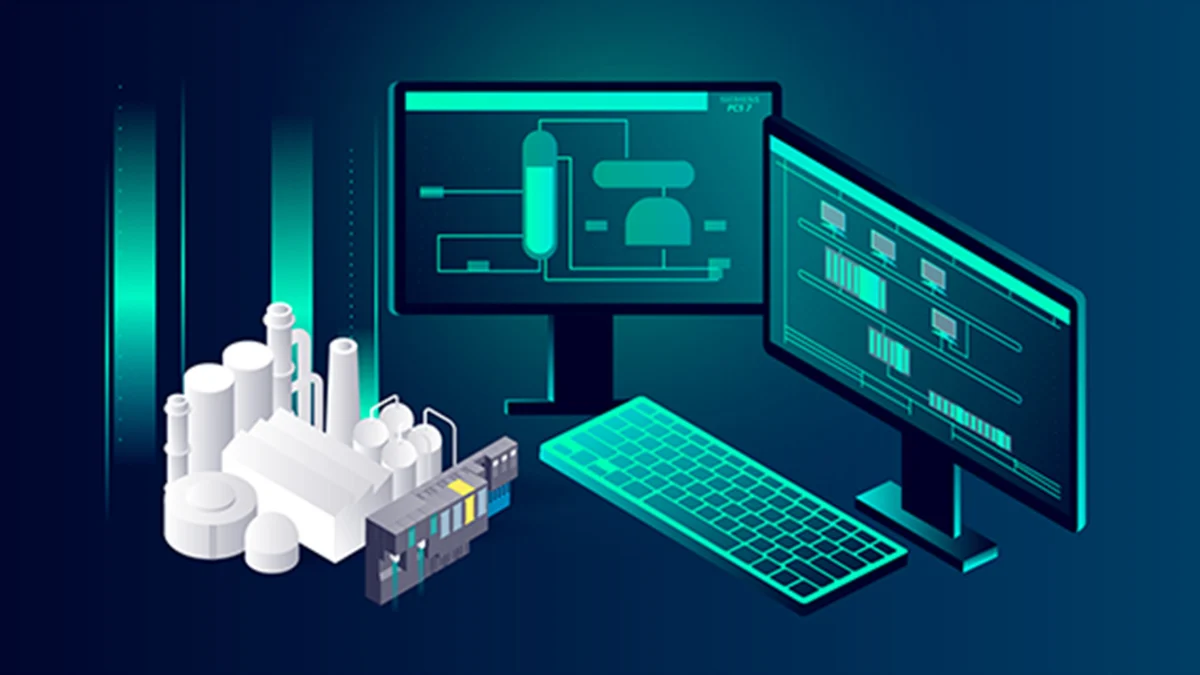
On Siemens’ current process automation systems page, the SIMATIC S7-410 family is positioned as a scalable, high-availability automation system for the PCS 7 platform. The CPU 410 can be used in both new installation and upgrade scenarios; its redundant PROFINET connections offer architecture options for real-time communication and diagnostics. However, the label “redundant CPU” does not inherently ensure high availability for the entire plant. It is also essential to consider potential single points of failure in areas such as power supply, communication pathways, I/O components, servers, network devices, and field components.
Do not size controllers by total I/O count alone. Calculate analogue and digital blocks, sequences, advanced control, communication connections, archiving and diagnostic load, safety programs, the change-download strategy and capacity reserve together. FAT must test standby takeover, communication loss, power failure and resynchronisation as well as normal operation. Even within the same system family, F/FH configurations, certificates and the safety lifecycle have separate requirements.
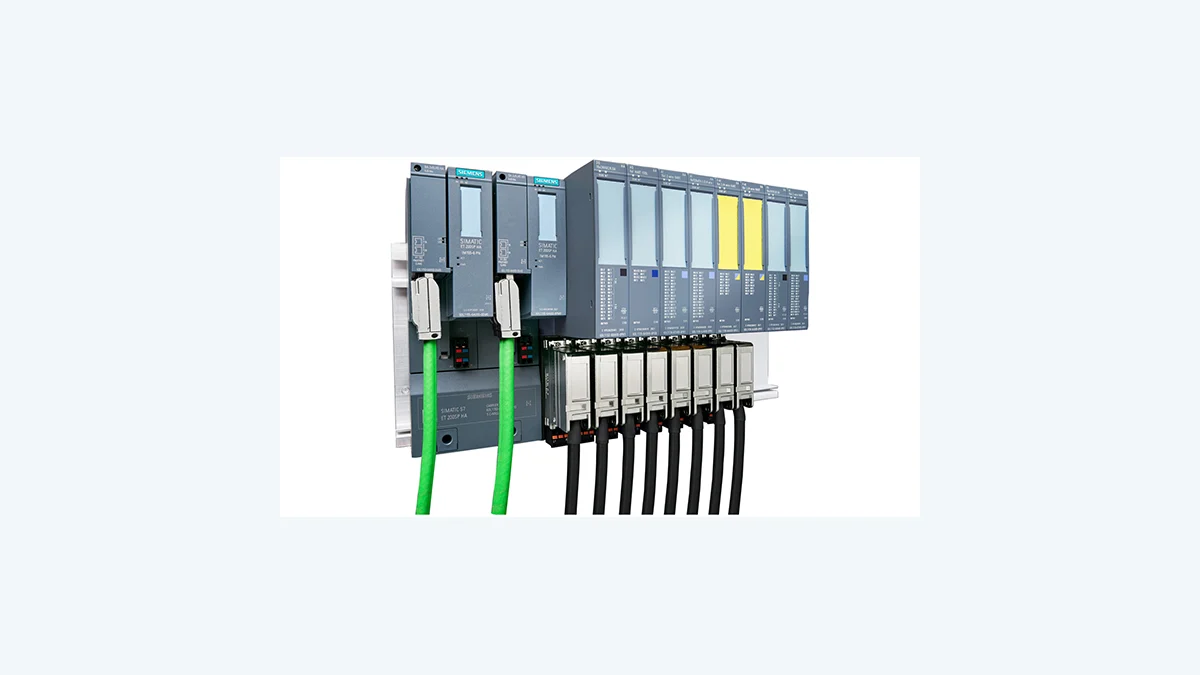
Distributed process I/O: SIMATIC ET 200SP HA
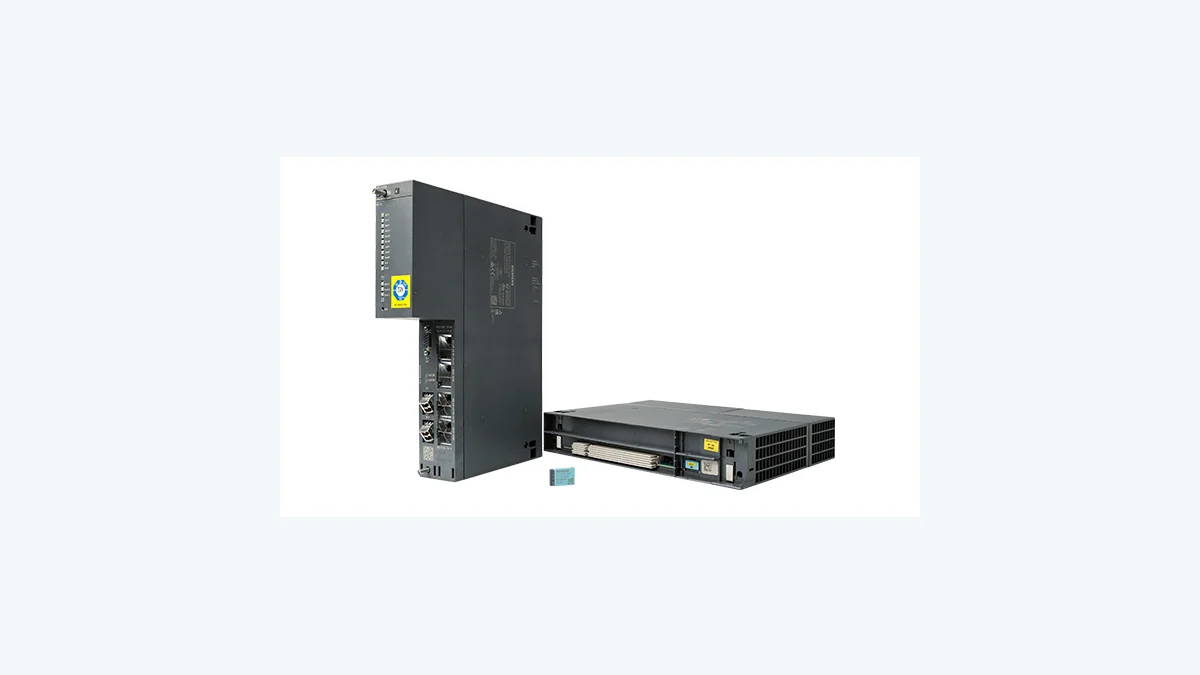
Locating field I/O near the process can reduce multicore cabling, terminal counts and central panel density. Siemens positions SIMATIC ET 200SP HA for the availability, robustness and flexibility requirements of process and manufacturing industries. Its current process I/O page highlights compact modular design, PROFINET connectivity, safety and Ex options, and push-in or D-Sub terminal approaches. Verify the exact order variants of the interface module, carrier, terminal block and every I/O module together; a general family description is insufficient for a real project.
Begin selection with the signal type: 24 V digital, analogue current/voltage, RTD or thermocouple, HART, NAMUR, fail-safe and Ex-i channels have different characteristics. Line length, shielding, earthing, galvanic isolation, ambient temperature, enclosure protection and field power budget are design inputs. Determine where redundant interfaces or I/O are needed from the production and safety consequences of failure. Even for variants supporting online module replacement, maintenance procedures must cover module identification, process impact, bypasses, channel tests and recommissioning records.
Operator systems, alarm management and human factors
Design the control system to help operators understand the right condition in time, rather than to display large quantities of data. Standardise navigation from overview to unit and equipment, normal process ranges, trend comparisons and equipment faceplates. Reserve colour for alarms or significant states; normal operation should remain calm and readable. Multiple monitors or a large screen cannot resolve poor information hierarchy.
Alarm engineering extends beyond adding high/low thresholds to a tag list. Define each alarm's required operator action, response time, priority, probable cause and consequence. Analyse recurring, fleeting and common-cause alarm floods during commissioning. Align permissions for silencing, shelving, suppression and maintenance removal with plant procedures. Establish common time synchronisation across controllers, servers and connected package units to support event-sequence investigation.
Batch processes, recipes and modular plant requirements
In batch production, recipes include procedures, unit allocation, material identity, phase transitions, operator approvals and deviation records as well as setpoints. Define recipe and batch scope early in a PCS 7 project; separate applications added later can leave gaps in data integrity and user management. In regulated industries such as pharmaceuticals and food, validate electronic records, audit trails, access and approval design against the plant's quality requirements. Siemens' current PCS 7 V10.0 introduction describes enhancements to GMP-related audit functions; these alone do not guarantee regulatory conformity for a plant.
Modular Type Package (MTP) support aims to enable standardized definition and integration of modular process units into the higher-level orchestration framework. Not all packages labeled as MTP can be automatically and seamlessly integrated; it is necessary to verify the supported profile and version, the meaning of various services, alarm and interface behaviors, naming conventions, safety limits, and the responsibilities defined in the supplier agreements. The ownership of control over the package unit at the local level, as well as the operational commands within PCS 7, must be clearly specified in writing.
V10.0, virtualisation and computer architecture
Siemens’ current PCS 7 product page presents the V10.0 enhancements under the main version heading; the latest support documentation also details the changes introduced in V10.0 SP1. Therefore, “PCS 7 V10” alone is not a sufficient technical specification. The system to be installed must be selected based on the main version, Service Pack, update level, and hotfix status, as well as the compatibility matrix of the used PCS 7 components and third-party software. For older projects, it is necessary to verify the requirements for interim upgrades, library conversions, hardware support, and licensing before proceeding with a direct upgrade to the target version.
Virtualization can consolidate server hardware and facilitate backup processes; however, it does not eliminate real-time constraints, licensing requirements, or availability limitations. Hardware failures, storage issues, network card problems, hypervisor failures, backup load, and time synchronization issues are all separate failure scenarios that need to be considered. Resource allocation, supported platforms, antivirus software/permission lists, and backup recovery tests must be configured in accordance with the manufacturer’s documentation. The presence of a backup file alone does not constitute proof of successful recovery; instead, the recovery process should be regularly tested in an isolated environment, with attention paid to the time required to restore selected systems.
Cybersecurity extends beyond a product feature
The security functions of the PCS 7 system form an integral part of the overall protection measures within a facility. The control network should be divided into process areas and security zones, allowing only necessary data flows while restricting remote access through controlled gateways. Engineering stations, operator functions, and management tools should be assigned privileges based on the principle of least privilege. The use of shared accounts, uncontrolled USB connections, and direct internet access increase the risk, regardless of the product version in use.
Manage patching between the extremes of immediate installation and making no changes. Assess Siemens security advisories, compatibility information, threats to the plant and planned downtime; test changes in a representative environment first. Record hardware, firmware, operating system, PCS 7 component, library and licence versions in the inventory. Preserve process performance and access boundaries when forwarding event logs to central monitoring. Define offline or immutable backup copies and recovery responsibilities in advance.
Modernisation and commissioning roadmap
- Inventory management and critical functions: Inventory existing controllers, I/O, networks, stations, software, interfaces and backups; classify the impact of downtime.
- Target architecture: Define control zones, redundancy, servers/clients, time synchronization, domains, archives and higher-level connections in a block diagram.
- Migration strategy: Prepare a risk and recovery plan for single-stop operations, step-by-step transitions, temporary network bridges, or gradual I/O conversions.
- Standard library: Typically, control modules, alarm settings, graphic objects, and naming conventions should be confirmed on the pilot unit.
- FAT: In addition to normal scenarios, test cases for communication loss, backup system activation, server downtime, power restoration, and incorrect operator actions should also be included.
- SAT and performance: Record the actual field signals, loop check results, control settings, alarm thresholds, and system response times.
- Handover: Complete all aspects including the source project, licenses, spares, as-built drawings, test protocols, as well as training and support communications, within a single delivery package.
Items to specify clearly in the quotation
- Basic version of PCS 7, update level, supported operating systems, and license scope.
- Control module, process object, I/O devices, client, server, archive, and future capacity assumptions.
- S7-410 CPU architecture, redundancy limits, communication modules, and dedicated performance reserves
- Complete list of modules/terminals available for ET 200SP HA stations, including options for HART, Ex certification, fail-safe features, and redundancy configurations.
- Engineering library, graphic standards, alarm philosophy, batch processing/MTP mode, and report scope.
- Responsibilities for third-party packages, analyzers, electrical systems, MES/LIMS systems, and maintenance software interfaces.
- FAT/SAT scenarios, simulation, performance criteria, cybersecurity enhancements, and recovery testing.
- Upgrading rights, spare parts, service level, training, as-built documentation, and lifecycle support.
A successful PCS 7 project turns process knowledge into a shared, testable and maintainable operating model, rather than merely connecting many Siemens components to one network. System versions, controllers and I/O provide the technical foundation. Value emerges when clear requirements, proportionate redundancy, disciplined libraries, operator-focused design and planned lifecycle management work together.