





Manage part positioning, clamping sequence, operator access and process approval within the same cycle. A semi-automatic fixture starts with processing the correct part against the correct datums.
The fixture does more than hold the part
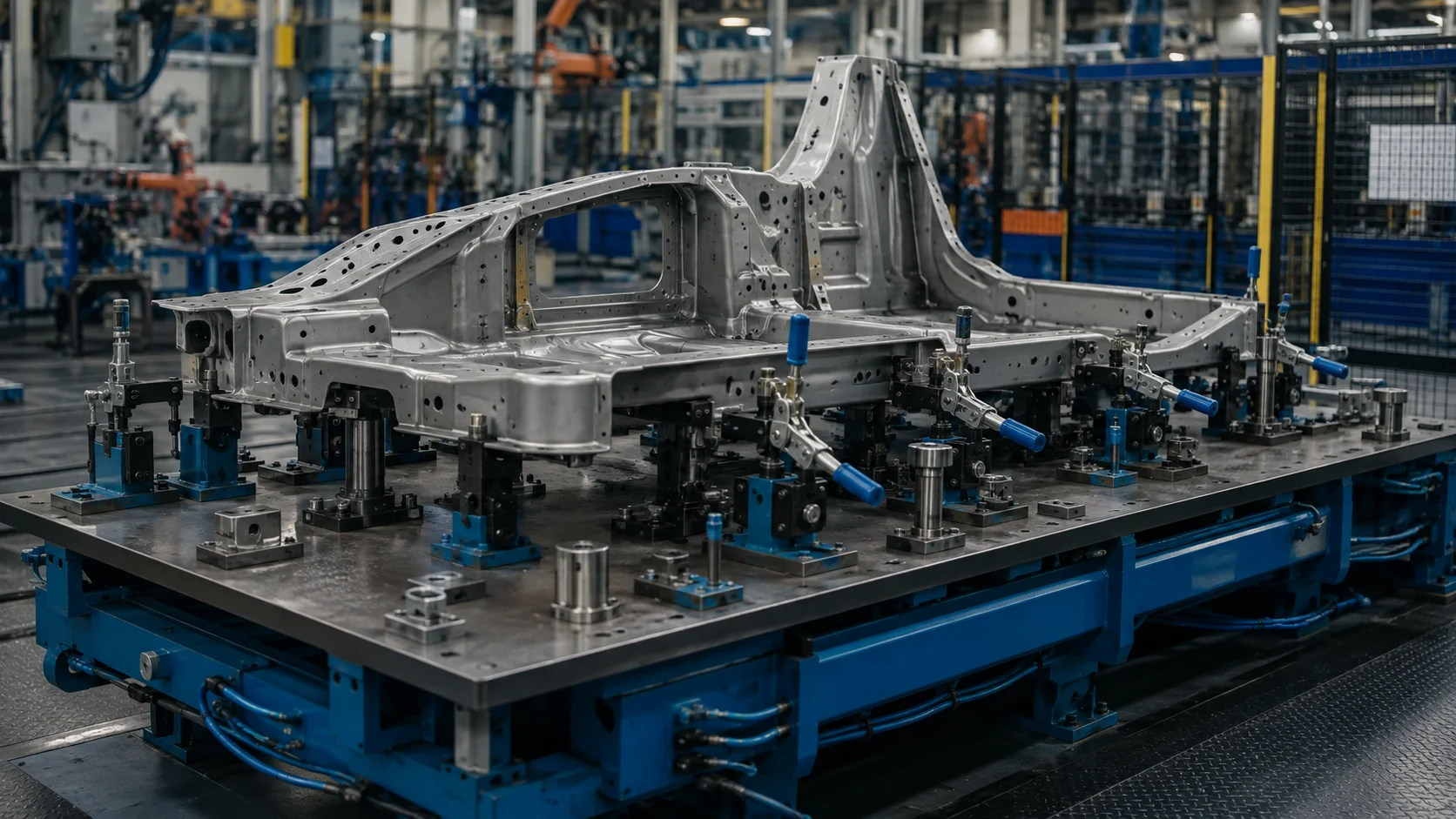
A semi-automatic fixture is a production station where the operator loads or unloads the workpiece while selected clamping and processing steps use controlled movements. The same fixture family may serve welding, assembly or inspection tasks. Before drawing the mechanical layout, define what the operator does, when the machine takes over and under which conditions the part is released. This division of work determines the target cycle time.
Datum surfaces and variant verification
Evaluate the measurement datums on the part drawing together with the fixture's locating points. Clamping force must not cause unwanted deformation of thin sheet metal. Consider physical guidance and sensor checks for left-hand and right-hand parts, model variants or additional brackets. A single presence sensor does not prove that the part is seated against every datum; each check must have a clearly defined error to detect.
Make cycle permissives visible
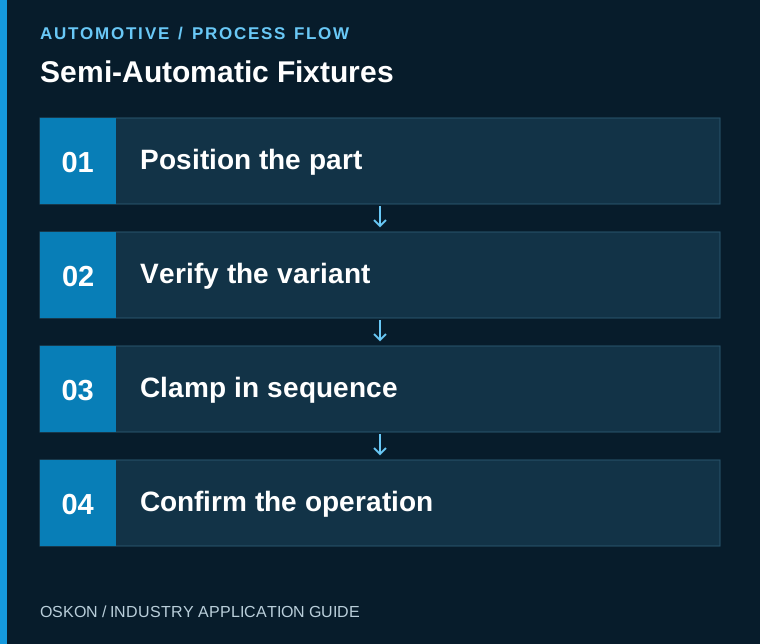
In a typical sequence, the operator positions the part, the system checks the variant and clamping proceeds in the defined order. The process receives permission to start once the required position feedback and protective conditions established by the risk assessment are satisfied. If a sensor does not respond, the screen should show the expected position and the point to inspect, alongside the fault code. A retry must not inadvertently repeat an unfinished operation.
Operator ergonomics and maintenance access
Loading height, part weight, reach distance and fastener locations determine how the station works in daily use. Open clamps must not obstruct the loading path, and a replacement sensor must allow repeatable adjustment. Treat air loss, power failure and mechanical jamming as distinct conditions. Select protective equipment for cleaning, adjustment and troubleshooting tasks as well as the production cycle.

Link quality records to the part identity
A station-complete signal is different from part quality approval. The recipe used, clamping checks, welding or assembly results and operator interventions can be linked to the part identity. This allows a recurring seating fault to be investigated by product variant or fixture component. Dimensional acceptance still requires an appropriate measurement method; completion of the PLC cycle alone does not demonstrate geometric conformity.
What should be tested during commissioning?
Test loading and unloading with samples at different tolerance limits. Include missing parts, incorrect variants, incomplete clamping and recovery after interruptions in the acceptance plan. For each test, check the expected machine response, operator message and recorded result together. The decision to start series production should rely on repeatable cycles and measurements with real parts, rather than empty-cycle speed.
Key information to monitor in the automation system
| Control point | Monitored information |
|---|---|
| Part presence | Sensor combination for correct positioning |
| Clamping position | Completion feedback for each movement |
| Process result | Operation record linked to the part ID |
Three questions to ask at the start of the project
- Are the part family and datum surfaces clearly defined?
- Are the responsibilities of the operator and the automation system clearly defined?
- Has the expected response to missing or incorrectly loaded parts been tested?
Explore related applications
Explore related processes in Bodyside and Underbody Robotic Lines and Door Robotic Lines. Browse all Automotive articles or visit Automotive solutions.