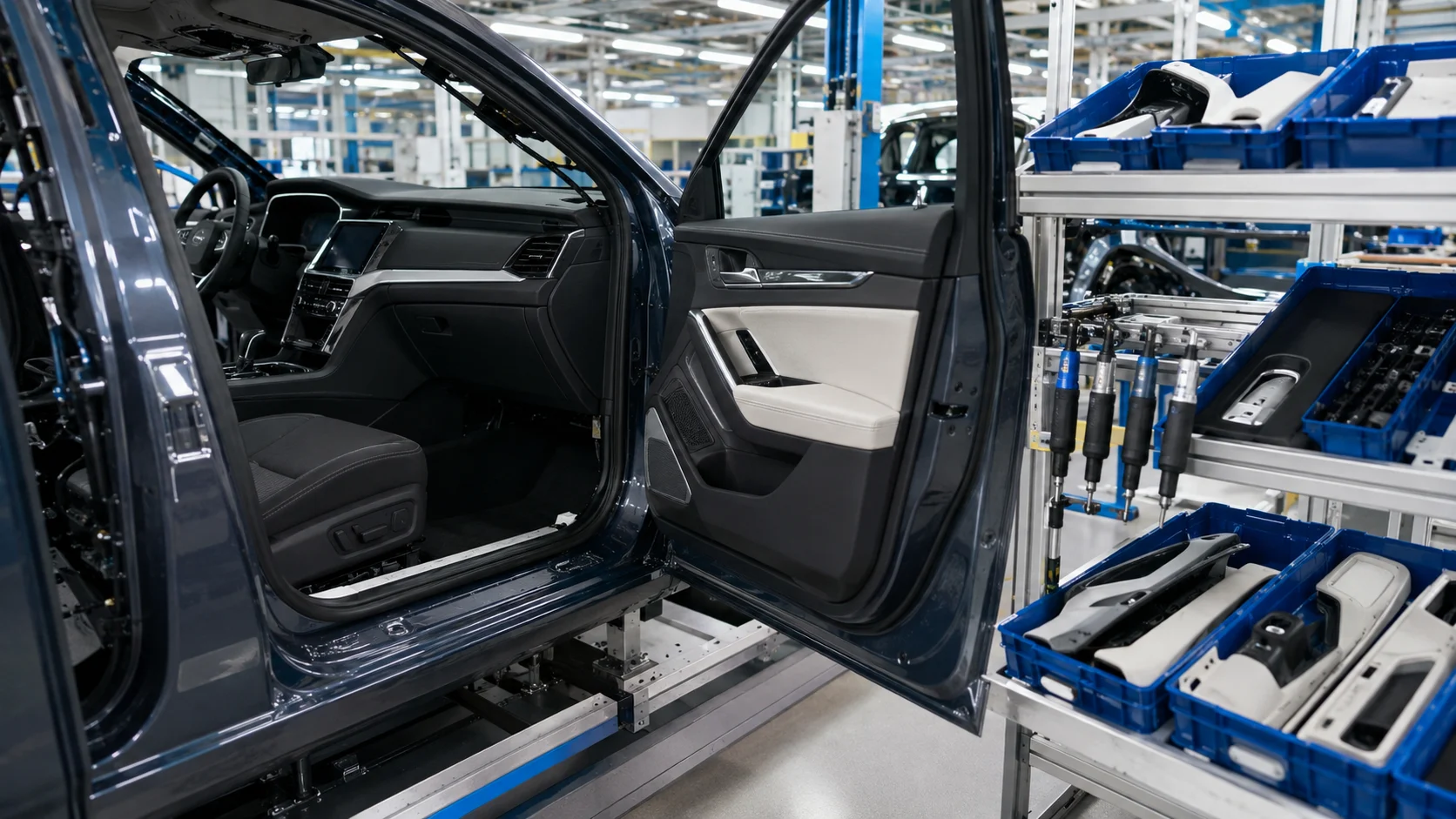






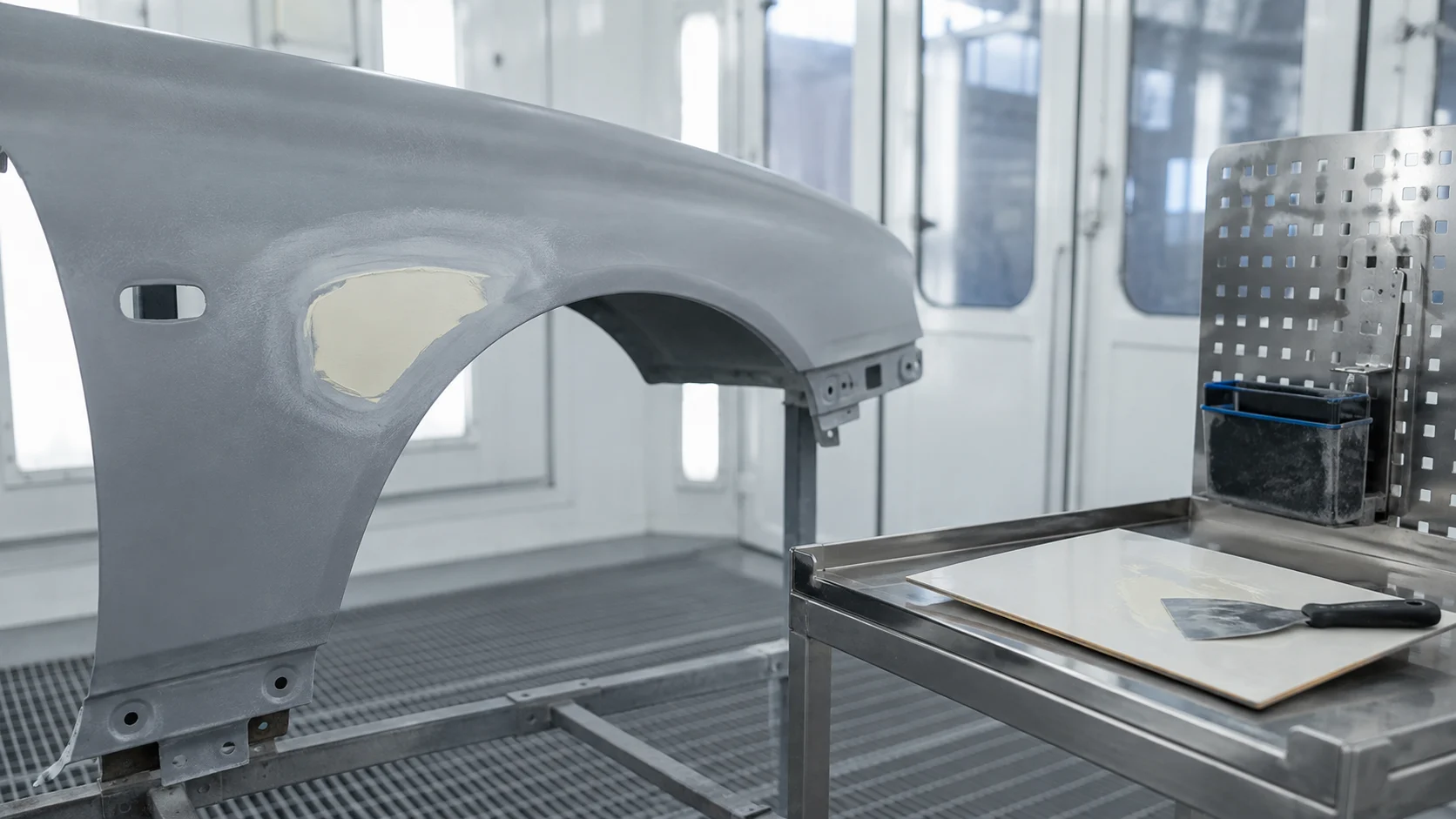
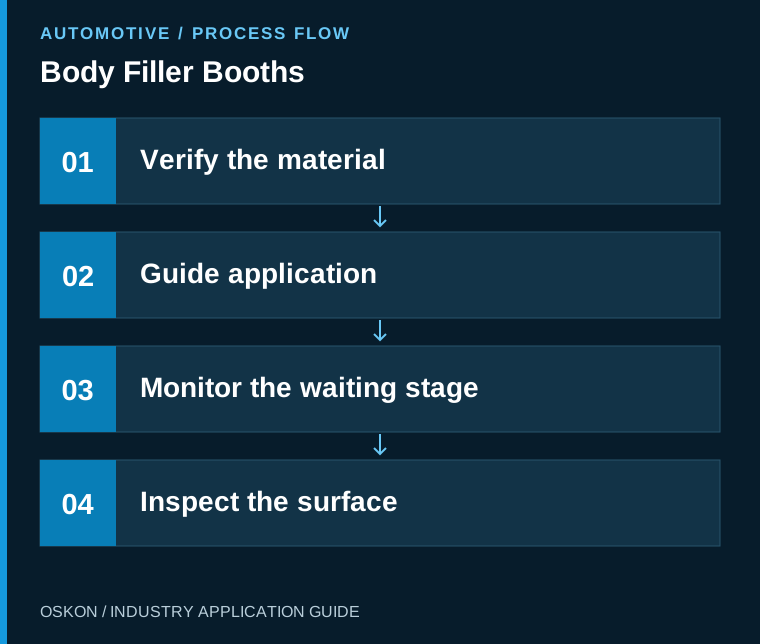
Combine material tracking, application sequences, working conditions and inspection steps in a shared production flow for body filler booths. Create records linked to each body to understand rework.
Define the application scope from the outset
The scope of body filler application in a paint shop depends on the material and the surface correction required. Do not assume this station has the same acceptance criteria as sealant application, bonding or other coating processes. First establish a work standard that states which product is applied to which surface and which checks are needed before the next operation. The booth layout must support that standard.
Material identification and conditions of use
Track material lots, expiry information and the preparation conditions specified in the manufacturer's technical data sheet. For multi-component products, manage preparation and usable time according to the approved application procedure. Automation supports applying approved material and process information to the correct body, rather than developing recipes. A material change must not leave operators unknowingly working to outdated instructions.
Ergonomics affects application consistency
The access distance to the surface, lighting, the arrangement of tools, and the working height are all taken into consideration together. Unnecessary walking around the body by the operator can affect both the cycle time and the efficiency of the application process. The separation of clean and dirty tools, the organization of the material preparation area, and waste management must all be included in the layout design of the booth. Layout tests are conducted using different body models.
Manage booth conditions to suit the material
Ventilation, temperature and other environmental conditions are determined by the material requirements and the workplace risk assessment. The operator interface can display the setpoint alongside the measured value. The project must define when a deviation triggers a warning and when it removes the production permissive. A single general booth setting should not be assumed suitable for every material.

Make waiting and inspection steps visible
The required waiting time after application or subsequent surface preparation steps can be specified in the work order. Operator approval, visual inspection, and records of reprocessing are kept in separate sections. When the location and type of the error are recorded using standard options, comparisons can be made between shifts. Exception handling procedures are defined for cases of time overruns or unfinished applications; the system does not rely solely on the “completed” button.
Validation before series production
Acceptance trials assess different surfaces, material lots and operators. The aim is to reproduce a surface acceptable for subsequent painting stages, as well as to achieve the target cycle time. Keeping work instructions, material information and inspection results in the same body record supports investigation. Also define which checks must be repeated after maintenance or product changes.
Key information to monitor in the automation system
| Control point | Monitored information |
|---|---|
| Material lot | Traceability of the material used |
| Booth conditions | Comparison with the approved operating range |
| Application result | Surface inspection and rework |
Three questions to ask at the start of the project
- Is the scope of the body filler process clearly defined?
- Are material changes reflected in the work instructions?
- Is the return route for partially completed applications defined?
Explore related applications
Explore related processes in Sanding Booths and Dry and Wet Paint Booths. Browse all Automotive articles or visit Automotive solutions.