





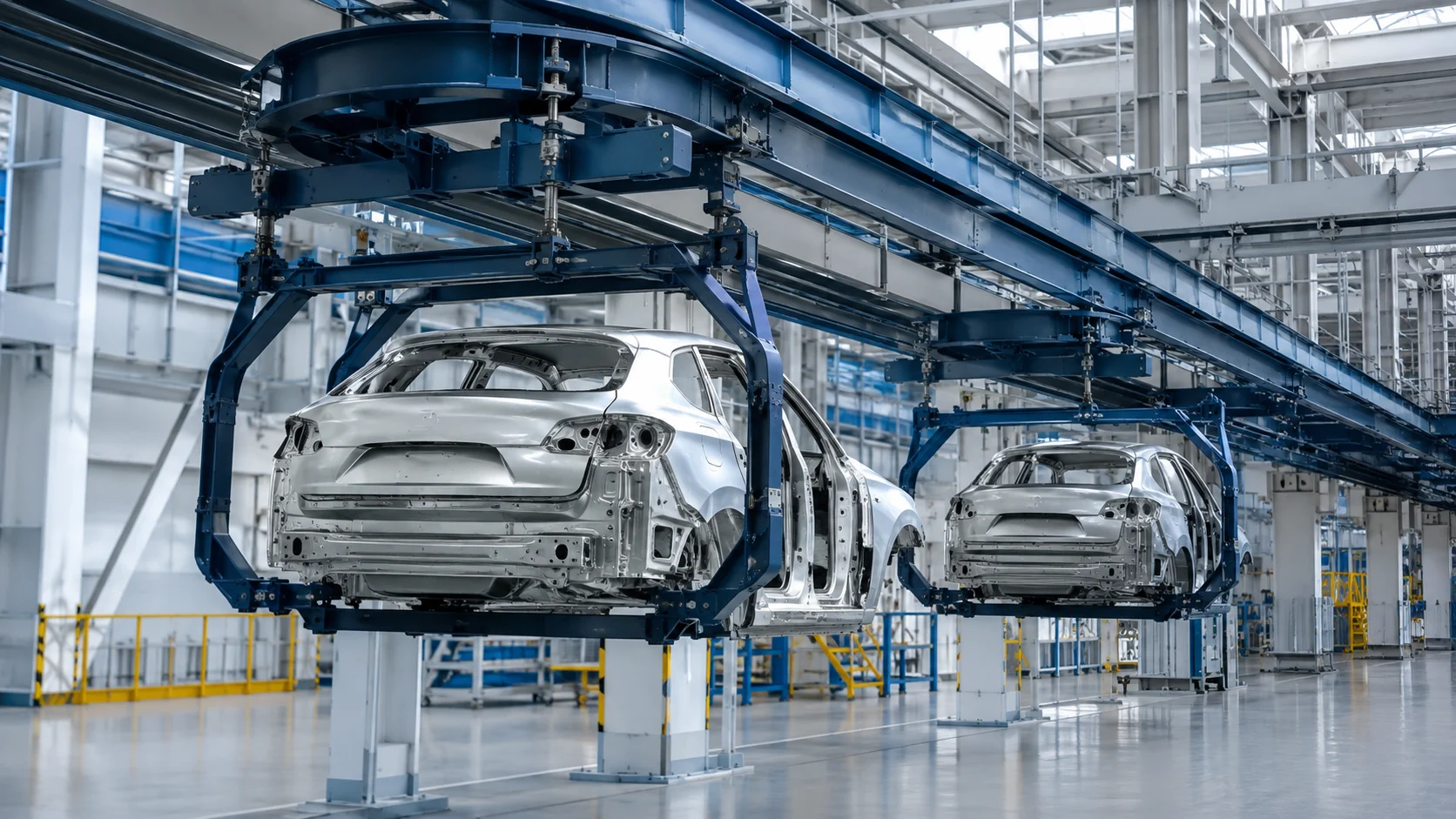
Track body identity, hanger status and station position together in overhead conveying systems. Assess hanger design alongside product access and maintenance arrangements.
A hanger is more than a conveying component
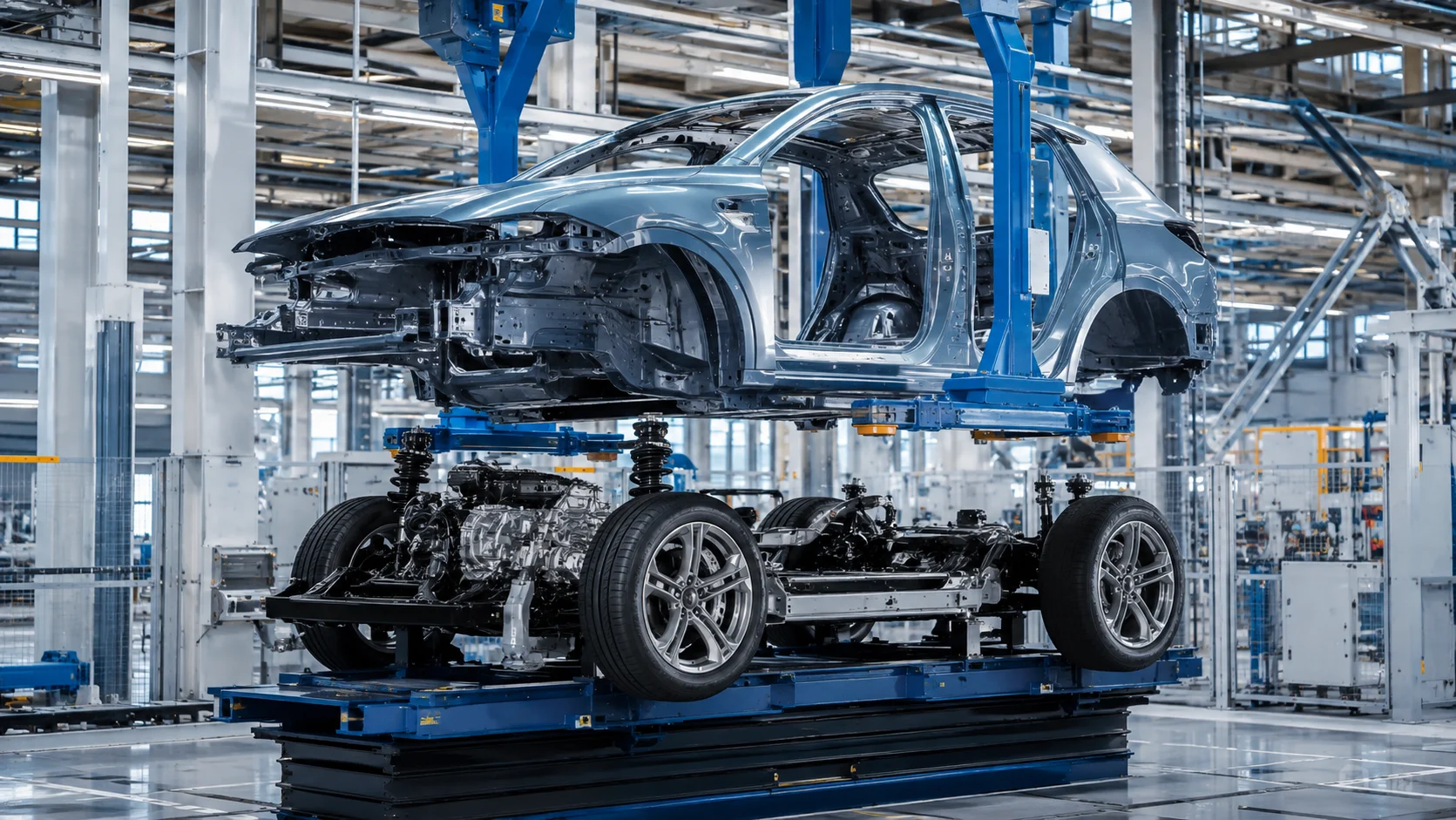
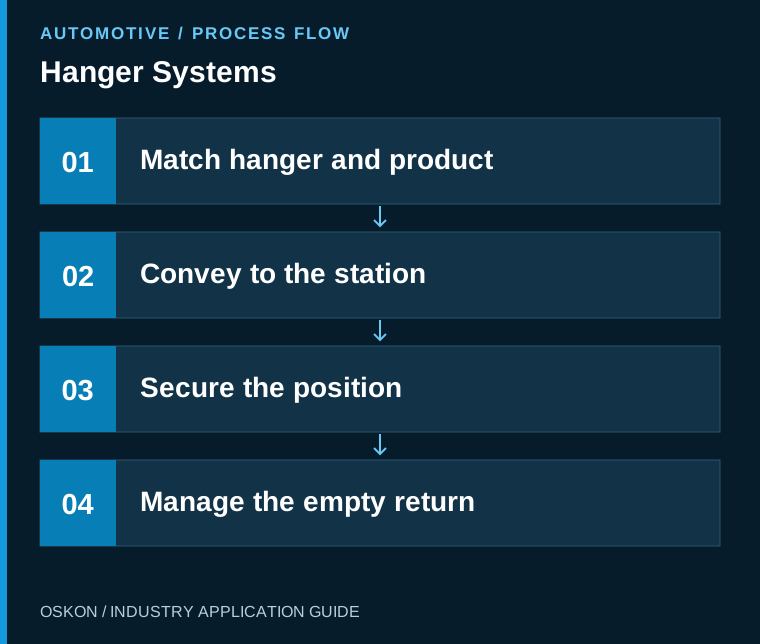
Hanger systems are used in applications where products are moved between production areas using a hanging carrier. The weight of the product, the mounting points, and the surfaces that the operator needs to access determine the design of the carrier. The environmental conditions in which the hanger is used—for painting, assembly, or some other process—may vary. The specific tasks for which the carrier will be used, as well as the surfaces that come into contact with the product, must be defined in advance.
Keep hanger identity separate from product identity
A carrier transports different products at different times. Therefore, the hanger identifier and the product identifier are kept separate and are associated only at the time of loading. Empty carriers require return processes, as well as registration procedures for manually removing products and replacing carriers. Reading errors must be resolved in a controlled manner, as incorrect matching could lead to the selection of the wrong recipe at the next station.
Verify stopping accuracy at the station
At the processing position, positioning accuracy, sway control and, where necessary, mechanical securing are important. Distinguish the conveyor-stopped signal from the product-ready-for-processing state. Processing permission follows the required position and securing checks. If variants use different mounting geometries, acceptance trials must demonstrate how the system recognises them.
Plan empty return and maintenance flows
The return route of empty hangers, the carriers designated for maintenance, and the conditions for reusing them all affect the production process. Damaged hangers or those awaiting inspection should not be displayed as available in the software. The maintenance schedule can be planned based on the number of uses and the need for inspections. The operation record must indicate that the maintenance has been performed and what verification was used to reissue the carrier.
Recovery from jams and interruptions
Protective design, access zones and maintenance tasks for suspended loads and moving equipment depend on risk assessment. Manual movements during troubleshooting must not disrupt product tracking. After position loss, reconcile the system with the physical installation using a defined procedure. The operator interface must clearly identify products with uncertain status and must not automatically transfer them to the next station.
Measure performance through product flow
Carrier unavailability, waiting in front of stations and the number of hangers out of service for maintenance can be monitored separately. The same total downtime may have different causes. The data helps decide between adding carriers and improving maintenance arrangements. Acceptance tests combine loaded and empty carriers, different products and diversion to the maintenance area.
Key information to monitor in the automation system
| Control point | Monitored information |
|---|---|
| ID association | Separate tracking of hanger and product records |
| Ready for processing | Position and securing verification |
| Hanger availability | Maintenance and empty return status |
Three questions to ask at the start of the project
- Are empty hangers and product records tracked separately?
- Are hangers awaiting maintenance removed from the automatic flow?
- Is a reconciliation method defined for position loss?
Explore related applications
Explore related processes in Buffer Areas and Automatic Carriers and Telescopic Bars. Browse all Automotive articles or visit Automotive solutions.