








As technology develops and becomes more widespread, the infrastructure it requires continues to expand and evolve. Cable is a fundamental component of this infrastructure. It is present in the walls, floors and ceilings of our homes, in kitchens and bathrooms, beneath streets and suspended between utility poles—in short, throughout the environments in which we live.
As the need for communication grows, communications technology develops with it. Cable is now found in almost every device used in daily life, with applications ranging from large power-transmission cables to fibre-optic telecommunications cables. Telecommunications cables are currently among the fastest-growing product groups and account for approximately 37% of total production, while the share of power cables has declined to around 56%. Demand for power and telecommunications cables is influenced by different factors. Power-cable demand depends not only on electricity consumption but also on grid expansion, new generation and transmission systems, and renewal requirements. Telecommunications-cable demand depends on a country's level of development, the modernity and reach of its communications network, telecommunications and computing equipment, and intensity of use.
Maintains stable line speed and tension according to the product recipe.
Synchronises drawing, winding and auxiliary axes within one control architecture.
Reduces quality deviations by monitoring diameter, surface and process parameters.
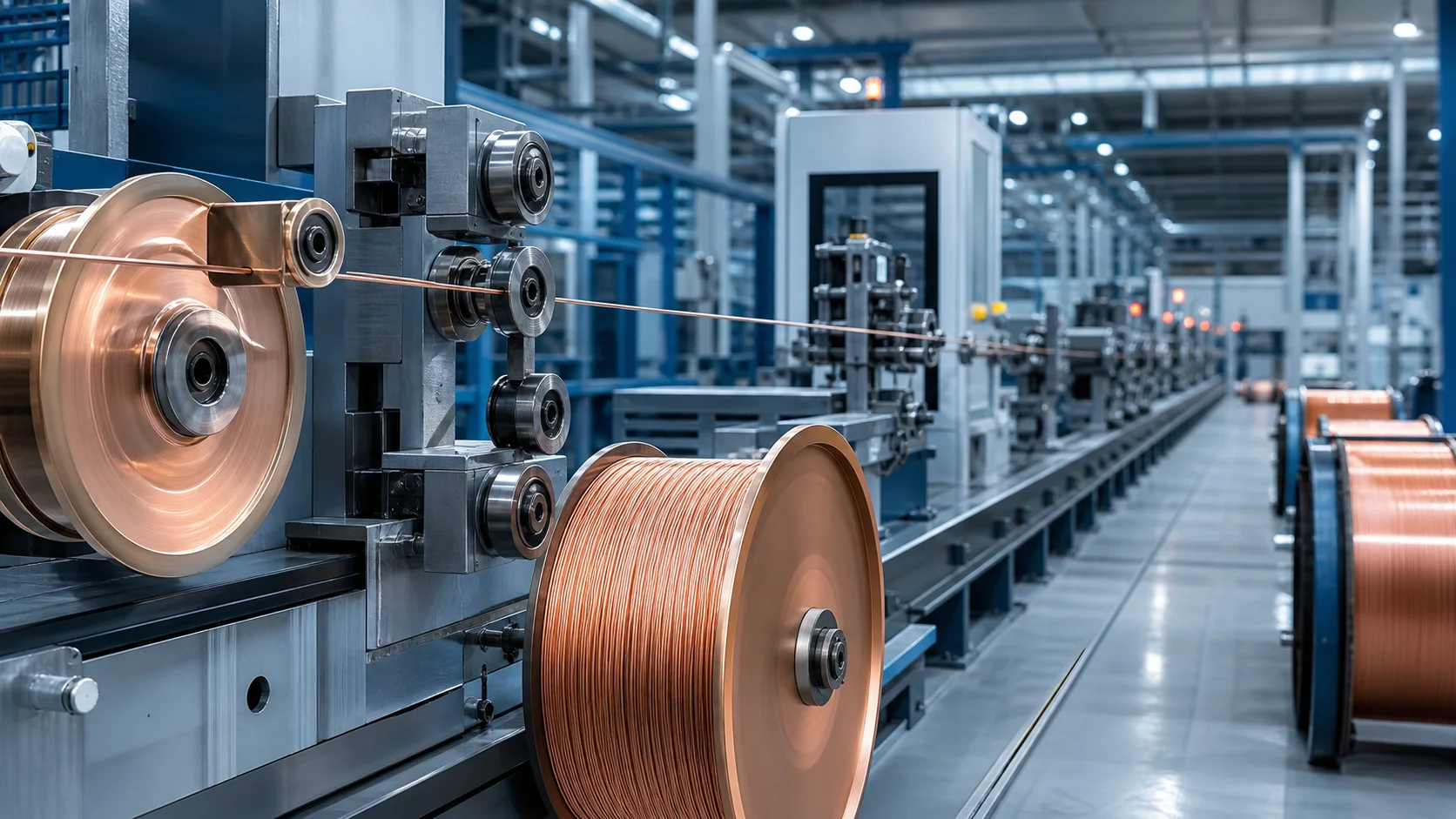
Cables can broadly be classified into two categories: power cables and telecommunications/communications cables. Copper, iron and steel wire, together with fibre-optic materials, are used in cable production.
Oskon Automation provides automation engineering for the following machinery:
- Copper wire-drawing machines
- Iron wire-drawing machines
- Steel wire-drawing machines