





Industrial RFID systems are more than just remote reading of tags: the right radio technology, reader, antenna, transponder, communication module, control software, and data structure are all designed together. Within Siemens SIMATIC Ident portfolio, the SIMATIC RF200 and RF300 are designed for high-frequency applications, while the SIMATIC RF600 is ideal for UHF tasks that require long range and multiple tags. The communication modules of the SIMATIC RF100C connect these reading stations to the automation network. This guide explains how to select an RFID reading station in a reliable manner, rather than simply listing products by their catalog names.
What components make up an industrial RFID system?
In Siemens’ current application documentation, the basic components of this system are described as follows: the controller, the communication module, the reader, and the transponder. The reader generates a radio frequency field and processes the data contained on the label. The transponder carries the identification information associated with the product or carrier, as well as any optional user data. The communication module connects the reader to the factory network, such as PROFINET. The PLC or another controller is responsible for executing read/write commands, managing timing, handling errors, and coordinating the process with the overall production sequence.
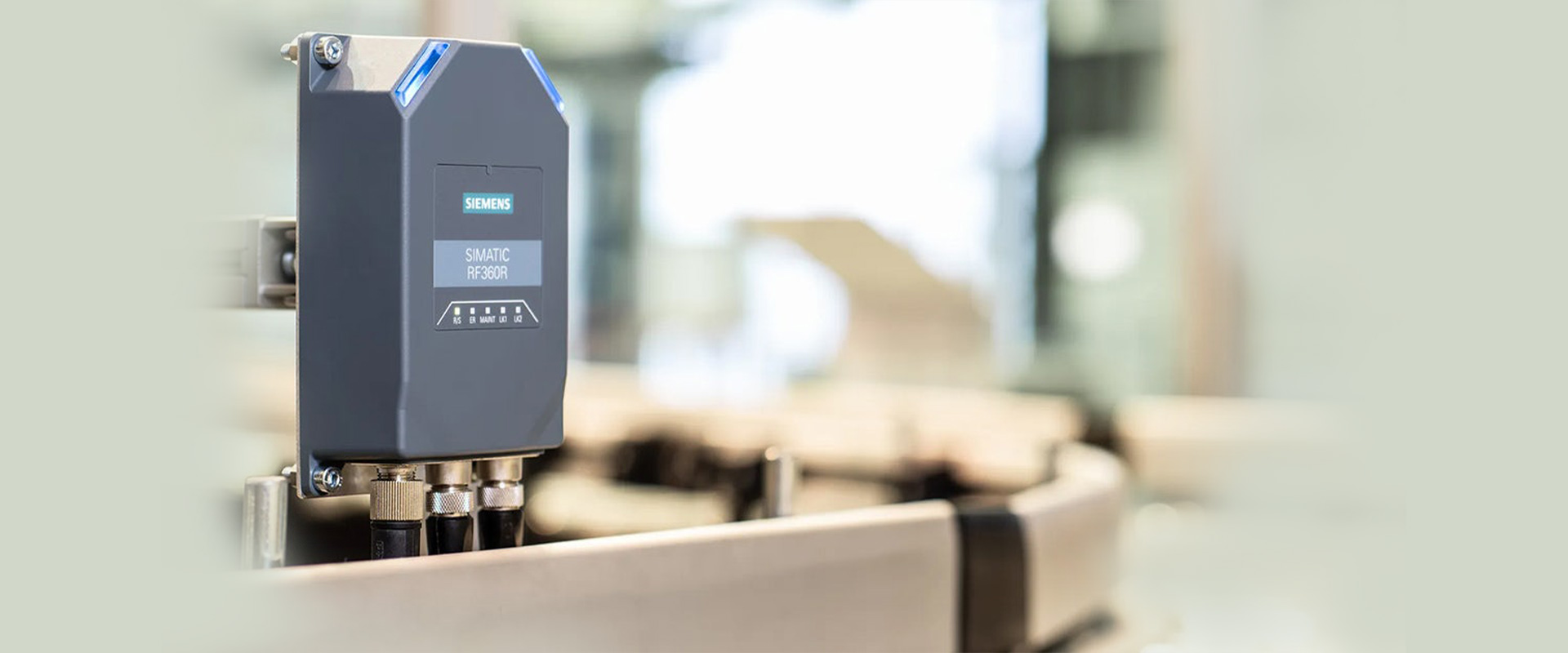
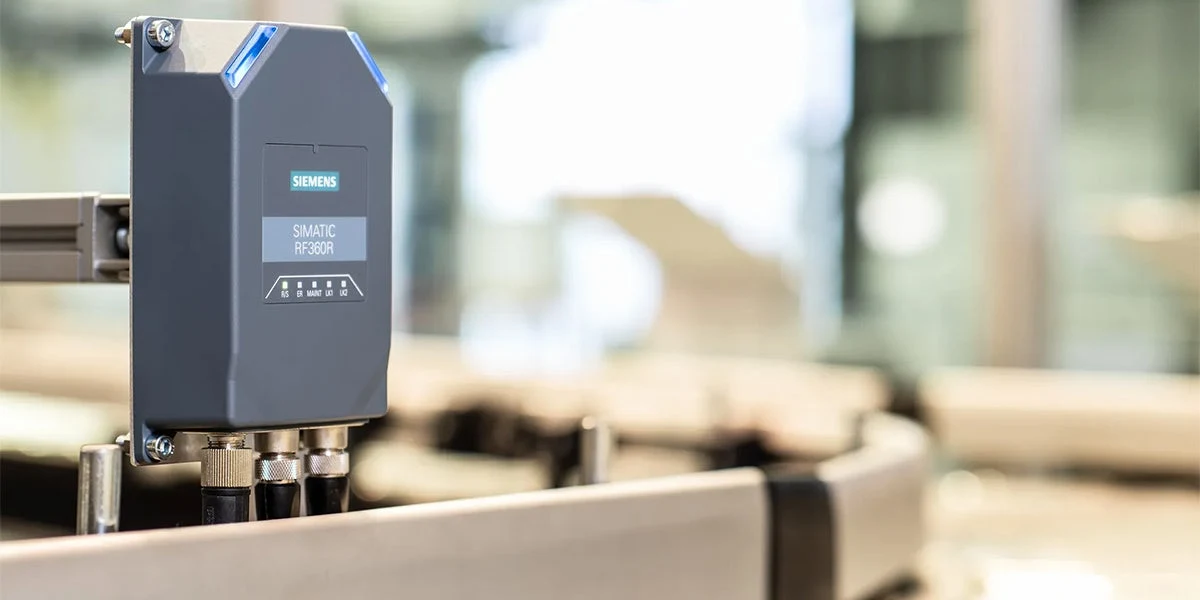
Some modern readers integrate their communication functions within their own hardware. For example, the SIMATIC RF360R is listed on Siemens’ product page as a compact HF reader with integrated PROFINET and OPC UA capabilities. This architecture may reduce the need for separate communication modules; however, the number of ports, power requirements, environmental conditions, and software version still need to be confirmed. The term “integrated” does not imply that the device automatically establishes its own control logic or communicates with higher-level systems.
First decide between HF and UHF
HF and UHF differ in more than reading range. Field geometry, tag size, object material, the number of tags to read simultaneously and national radio requirements also affect selection. HF may suit a narrow, controlled reading zone on a production carrier, installation close to machinery or individual-part identification. UHF can offer advantages over larger areas, such as logistics portals, warehouse passages, pallets and bulk tag detection.
Reading range is not determined by the reader alone. The reader/antenna, transponder, mounting orientation, metal, liquids, temperature, adjacent reading points and electromagnetic environment all influence actual performance. Siemens RF300 documentation likewise relates operating distance to the reader–transponder pairing and environmental conditions. At quotation stage, define the minimum and maximum required reading zones, specify acceptance criteria for false-positive reads and conduct field trials instead of quoting a single range such as ‘two meters’.
| Family | Main task | Strong use case | Point to verify in the quotation |
|---|---|---|---|
| SIMATIC RF200 | Compact HF read/write technology | Identification within the machine, limited data and a controlled reading point | Reader interface, ISO 15693 transponder, distance and environmental conditions |
| SIMATIC RF300 | High-performance HF identification technology | Faster data processing, a wider range of memory options, and the ability to operate in demanding production environments. | Reader-transponder matching, memory capacity, speed, and mounting tolerances |
| SIMATIC RF600 | UHF: long range and multiple tags | Logistics doors, pallets, conveyors, and mass detection systems. | Regional frequency variant, antenna range, tag orientation, and unintentional readings. |
| SIMATIC RF100C | Connecting the reader to the automation network | Moving one or multiple reading points to the PLC and IT layers. | Reader compatibility, number of ports, protocol, and firmware. |
SIMATIC RF200 and RF300: controlled HF identification near production
The SIMATIC RF200, together with compact readers and ISO 15693-based transponders, is designed for entry-level and mid-range high-frequency applications. Siemens’ portfolio also includes IO-Link options, enabling suitable readers to be integrated into automation systems via an IO-Link master in simple machine applications. However, it should be noted that not all RF200 readers feature the same connection interfaces; details such as the M12 connector, IO-Link support, RS422 compatibility, or integrated network interfaces are specific to each model.
SIMATIC RF300 offers improved data performance, transponder options with larger memory capacities, and enhanced solutions for demanding industrial environments. When it is necessary to store recipe information, process results, or quality data on the tag during the component handling process, the memory capacity becomes particularly important. However, reading the entire large amount of data in each cycle may unnecessarily prolong the processing time. The data fields should be categorized accordingly: fixed identification information, small blocks of data required for the specific process, and historical data to be stored in the higher-level system.
When designing an HF reading point, define the facing surfaces of the reader and transponder, direction of travel, speed and mechanical tolerance between them. A tag embedded in metal behaves differently from one attached to a plastic carrier. The RF200/RF300 portfolio includes different housings and environmental ratings; verify resistance to heat, chemicals, impact and washdown against the exact product documentation. A high enclosure protection rating does not guarantee equivalent protection with incorrectly installed cable connections.
When does RF360R simplify the architecture?
The RF360R combines the communication module with the reader in a single device, thereby reducing the number of internal components and connections required within the control panel. The ability to transmit data to the control system via PROFINET and to the corresponding IT layer via OPC UA is particularly useful for two different types of users. However, control traffic and IT traffic should not be subject to the same security policies. The certification process, user roles, network segmentation, data access permissions, and update procedures must all be clearly defined. Simply enabling OPC UA access does not automatically ensure that data context and traceability records are generated accordingly.
SIMATIC RF600: UHF for logistics and multiple tags
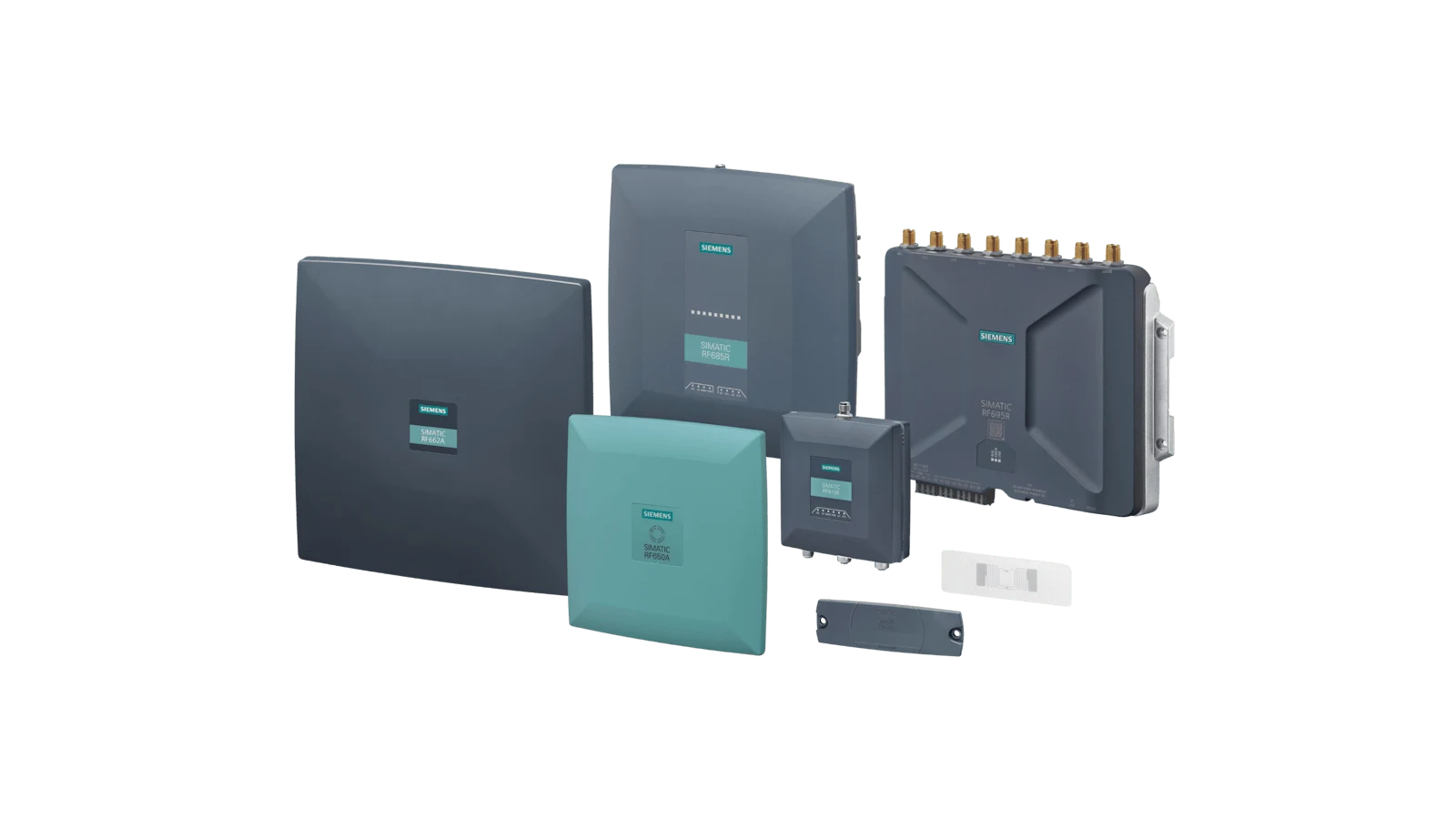
The SIMATIC RF600 is Siemens’ high-performance UHF RFID product family. Its features, such as long range, fast detection, and the ability to read multiple tags simultaneously in the same area, make it ideal for applications in goods reception, shipping, conveyor systems, warehouse doors, and production logistics. The portfolio includes various reader, antenna, and transponder options. When designing an UHF system, selecting only the reader model is not sufficient—the number of antennas, polarization type, gain level, cable loss, mounting angle, and RF power settings all play a crucial role in determining the system’s performance.
On its official website, Siemens presents the SIMATIC RF680R for use in internal logistics, the SIMATIC RF650R for antenna arrays and OPC UA communication, and the combinations of SIMATIC RF685R and RF680A for applications in manufacturing and metal processing environments. These examples serve as guidelines for implementation and are not fixed product configurations. The reader should verify the regional radio frequency approval, antenna port, external/Integrated antenna design, IP class, and interface specifications based on the specific order code. Since UHF frequency and transmission power regulations may vary by country, regional variants should not be used interchangeably.
Reading multiple tags does not guarantee that every detected tag belongs to the work order. An adjacent pallet, reflections or a tag behind an open door may also enter the reading zone. Increasing reader power often enlarges the zone and can increase unwanted reads. Combine antenna placement, physical shielding, trigger sensors, read windows, measurements such as RSSI and the expected tag list. Define the expected repeat-read count per passage and the criteria for a successful read at the PLC/MES interface.
Pre-engineered passage solutions and the CB Gate approach
Siemens also offers the pre-configured CB Gate solution for multi-directional UHF detection within the RF600 range. Such a solution can reduce installation time; however, parameters such as gate width, transport direction, surrounding metals, simultaneous passages, and the facility’s network configuration must still be tailored to the specific project requirements. The “ready-to-use” status does not eliminate the need for on-site acceptance testing. Scenarios such as incorrect readings from the wrong gate, double readings, reverse movements, and the transport of items without labels must be tested separately.
SIMATIC RF100C: the bridge between readers and control systems
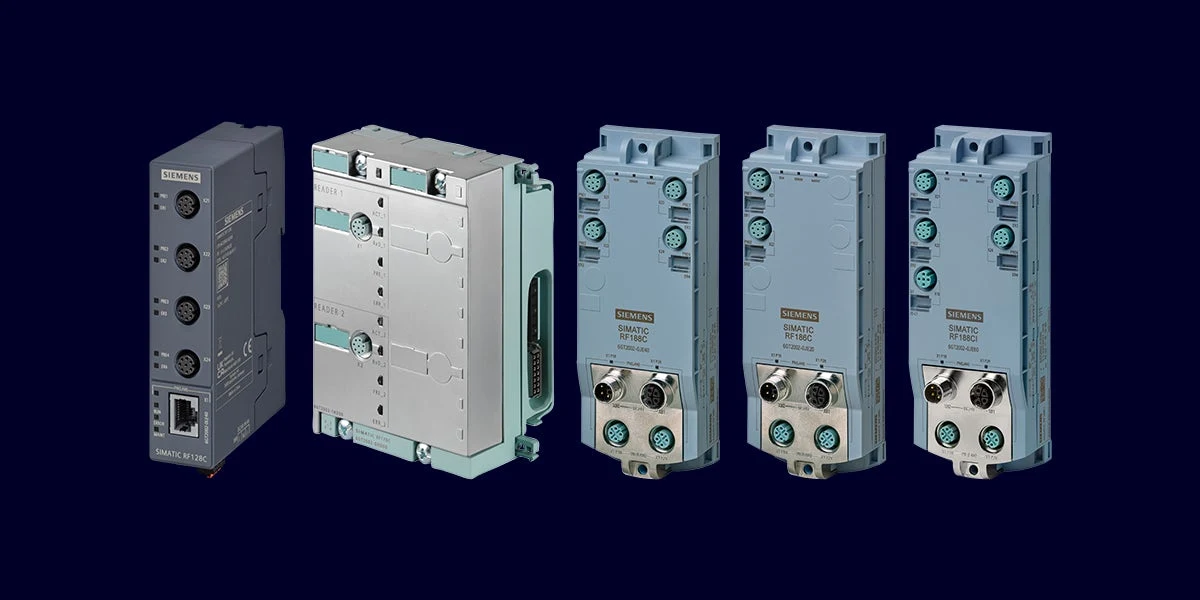
SIMATIC RF100C communication modules are used to connect SIMATIC Ident readers to Siemens’ own automation systems or third-party systems. The current product range includes interfaces such as PROFINET, PROFIBUS, EtherNet/IP, OPC UA, and XML; however, not all of these protocols are available in the same device. When selecting a model, it is essential to consider factors such as the number of readers supported, the Ident family being compatible, the physical connection method, the control protocol used, IT accessibility, the environmental classification of the device, and the required function blocks.
Siemens’ 2025 application example explains that SIMATIC RF120C connects one RF200, RF300 or RF1000 reader, while SIMATIC RF128C connects up to four RF200/RF300 readers. The example configures RF340R, RF128C and S7-1200 G2 together over PROFINET. This reference architecture is not universal approval for every reader and firmware combination. Check the current Ident Configuration Guide compatibility matrix for the reader, cable, communication module and controller at quotation time.
Suitable RF100C variants may offer parallel PROFINET control and IT/cloud access over OPC UA, or an additional diagnostics-only channel. Parallel data paths do not imply parallel write authority. Define command ownership: while the PLC manages the production sequence, specify which fields the higher-level system may only read, which services are reserved for maintenance and how conflicting commands are rejected.
TIA Portal and the SIMATIC Ident software workflow
Siemens TIA Portal Library provides function blocks that adopt a common command approach for SIMATIC Ident, RF200, RF300, and RF600 systems. Executing read, write, and status commands through a standard interface simplifies program maintenance. The library version must be compatible with TIA Portal, as well as the CPU firmware and communication module support. However, the successful compilation of a sample project does not guarantee that the field addresses and error handling mechanisms are correct.
In the RF128C application example, a separate technology object is created for each reader. The hardware identity, parameters, and command context of one reader differ from those of another reader; it is also explicitly stated in official documentation that these technology objects must not be copied. In the program, status codes such as “busy,” “done,” and “error” must be processed consistently, and no new command should be sent before the previous one has been completed. In the event of communication errors, unlimited and rapid reattempts can potentially overload both the network and the readers. It is necessary to define the maximum number of attempts, the delay between attempts, and the mechanism for triggering alerts for operators.
Transponder selection: physical decisions beyond memory capacity
- Carrier material: Select a suitable tag for metal, plastic, glass, wood or liquid-containing products; test the mounting substrate.
- Geometry: Determine the orientation, inclination, visible surface of the label, as well as the tolerance between different product variants, based on the requirements of the reader device.
- Temperature and process: Assess oven, washdown, chemical, pressure, impact and vibration cycles beyond the maximum temperature alone.
- Memory: Match the unique identifier, user memory, write cycle duration, and data retention time to your specific business model.
- Installation: Plan the mechanical lifespan and replaceability of components using methods such as adhesive bonding, screwing, embedding, or hanging.
- Life cycle: Distinguish the cost and durability requirements of disposable logistics tags from production carriers that cycle for years.
Data models and the traceability boundary
An RFID tag typically contains a reliable identifier rather than all the details related to a product’s production history. Information such as the product identifier, carrier identifier, recipe version, and specific process steps can be stored on the tag, while the more extensive historical data is managed in a central database. In cases where network connectivity is lost and production must continue, it is essential to specify which data should be retained locally. To ensure the accuracy of the information on the tag, fields for version number, data length, status, and, where possible, data integrity should be included.
Repeatedly reading the same tag within a short interval does not mean that multiple products have passed. Software should use a deduplication window, station trigger information and transaction status. Read-back verification may be required after writing. If writing fails, decide whether the product stays on the line, is retried or is quarantined according to process risk. RFID identification can inform a quality decision, but cannot by itself prove that the physical product is correct.
Cybersecurity and data ownership
RFID devices that support PROFINET, OPC UA, XML, or web-based management are computers connected to the control network. Default accounts and unnecessary services should be reviewed, network access should be restricted based on specific tasks, and firmware updates as well as Siemens security alerts should be monitored closely. The use of OPC UA certificates and security best practices must be integrated into operational procedures; it is also essential to understand how certificate expiration may affect production processes. Remote maintenance access should not be an indefinitely open feature, but rather a process that is strictly authorized and logged.
If tag identity is linked to personal or commercially sensitive data, apply retention and access policies in the higher-level system. Raw tag values need not be available to every user. Device reading capability and application data-access permissions are separate layers. Network security does not replace functional safety: if hazardous motion depends on RFID readings, separately design a safe process response to an incorrect, delayed or missing identity.
Field testing and acceptance criteria
- Product verification: Please match the complete order code of the reader, antenna, transponder, cable, and communication module with the current compatibility guidelines.
- Static field testing: Read the label within the expected range of positions, in various directions, and on the actual product material; also record any blind spots.
- Dynamic testing: Measure the success rate at the lowest and highest transportation speeds, across different product ranges, and with actual trigger timing in place.
- Negative scenario: Test for situations such as adjacent products, dual labels, products without labels, damaged labels, metal objects, and liquid levels.
- Communication test: After a cable break, network interruption, or fluctuations in the reader’s power supply, verify that the system has recovered and the PLC has restarted successfully.
- Data testing: Use traceable records to accept reading, writing, read-back verification, duplicate suppression, queue management and database matching.
- Maintenance testing: Perform the steps of replacing spare devices, restoring parameters, adjusting antennas, and interpreting alarms in conjunction with the maintenance team.
Information required for quotation preparation
For an RFID solution, it is necessary to provide information such as product or carrier images, material details, label mounting areas, maximum temperatures, line speeds, the distance between the reader and the label, the number of labels that can be read simultaneously, and the network standard used. The length of the data to be stored, the processing capacity per cycle, the protocol of the upper-level system, and the acceptable error rate should also be specified. Oskon matches Siemens SIMATIC Ident components with this information and verifies the final performance based on the actual combination of reader and transponder, the plant environment, regional approvals, and field tests.