





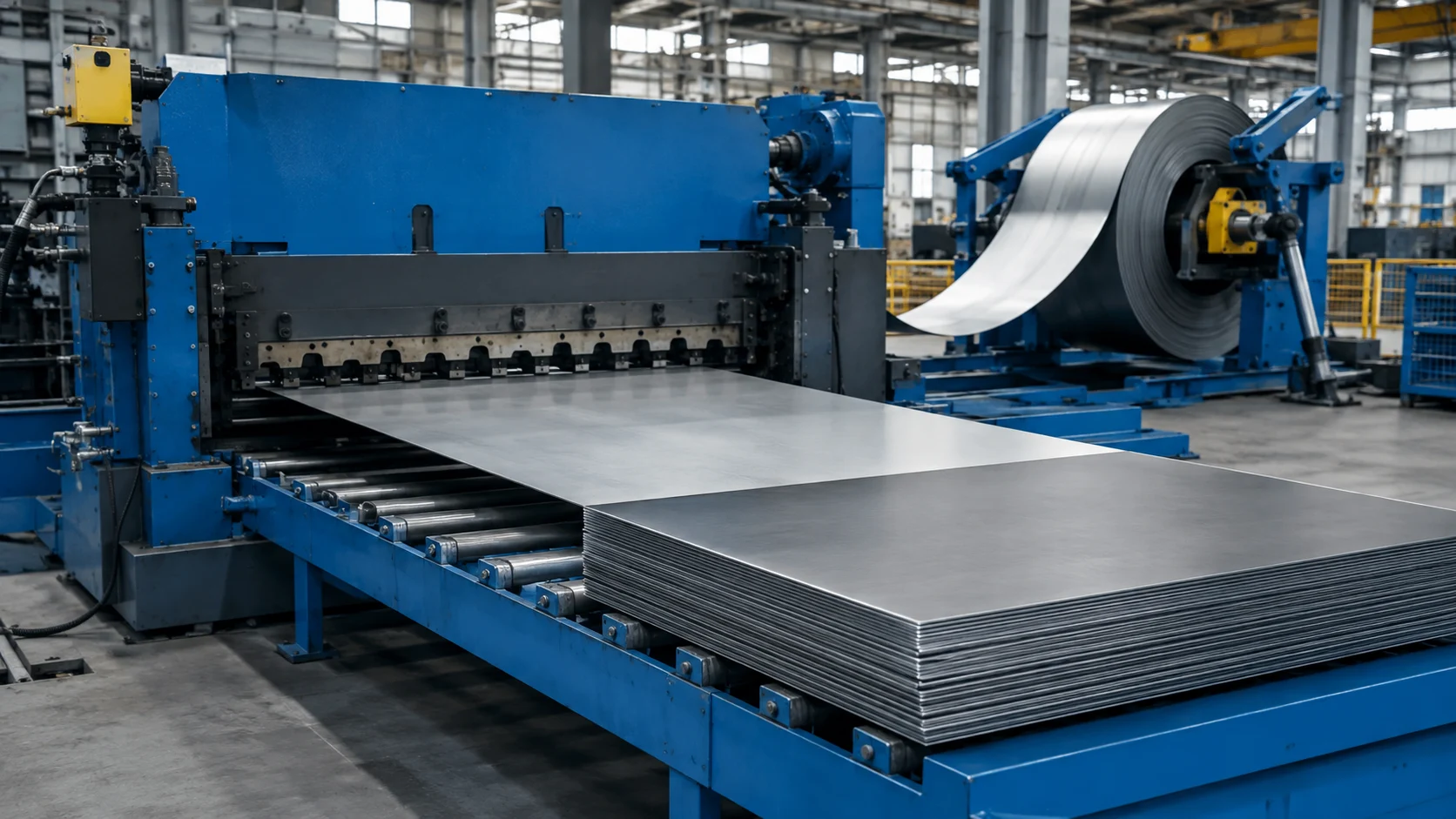
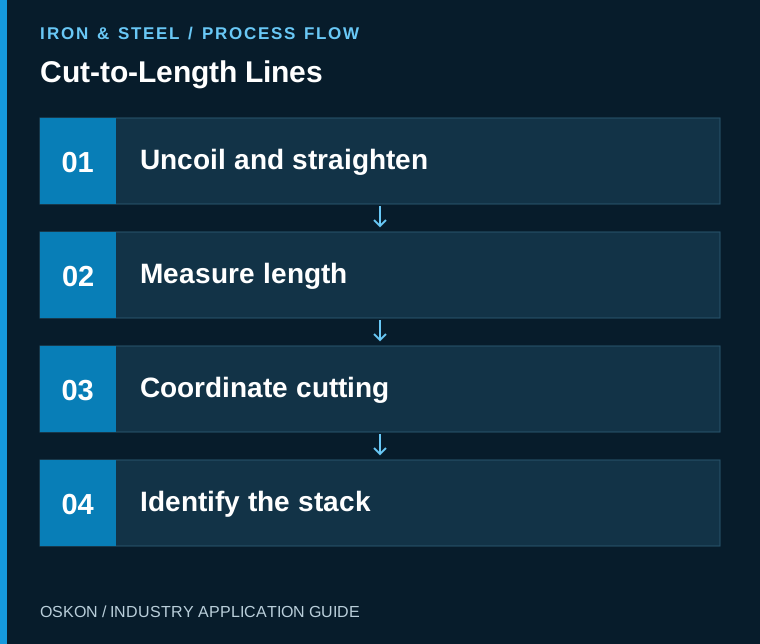
Manage uncoiling, levelling, length measurement, cutting and stacking within a shared product record on cut-to-length lines. Verify cutting accuracy by measuring the actual sheet.
Define each line function separately
The cut-to-length line converts the strip material unwound from the coil into sheets of predetermined lengths. The processes of unwinding, straightening, cutting, and stacking are coordinated throughout the line. In each project, the sequence of equipment and the cutting method may vary. The input material, target dimensions, surface requirements, and stacking arrangement must be defined in advance.
How is length information generated?
The motion data obtained via the measuring wheel, encoder, or another selected method is transmitted to the cutting control system. Factors such as slippage, mechanical gaps, and the condition of the measuring component can affect the accuracy of the result. The length value displayed on the screen is compared with the actual measurement of the sheet metal. The calibration and control procedures are determined in accordance with the instructions provided for the equipment being used. The measurement resolution is not the same as the cutting accuracy of the entire line.
Levelling and feeding work together
The flatness of the material coming from the coil, the settings used for straightening it, and the conditions during transportation can all affect the quality after cutting. The settings applied, depending on the material thickness and properties, can be recorded in the recipe. Physical setting verification and inspection of the first piece produced are essential steps at the beginning of the manufacturing process. When new material arrives, instead of automatically applying the previous recipe settings, the product is checked to ensure proper matching.
Manage cutting timing according to the line type
Drive and cutter coordination differs between stop-start and flying-cut arrangements. Manage cutter readiness, material position and stacker capacity within the shared flow. Distinguish the cutting command from confirmation that cutting is complete. Product status must remain clear following communication or position loss. Restarting may require inspection of the first sheet.

Stack identification preserves product history
Link sheet quantities, dimensions and the parent-coil relationship to the stack or pack ID. Keep nonconforming first pieces and scrap separate from the good-product count. Labels must remain correct for partial packs and order changes. Design the line's waiting behaviour when the stacker is full to suit the product surface and handling arrangement.
Acceptance testing includes both measurement and counting
Carry out cutting trials with different lengths, speeds and material types. Check actual dimensions, flatness and the relevant edge criteria. Compare the package quantity and label against the production record. Test loss of measurement, cutter-not-ready and stack-full scenarios. Report the results so they show which conditions were verified for each product range.
Key information to monitor in the automation system
| Control point | Monitored information |
|---|---|
| Length measurement | Comparison of motion data with the actual sheet |
| Cutter status | Ready, cutting and completion status |
| Stack record | Relationship between quantity, dimensions and parent coil |
Three questions to ask at the start of the project
- Is length verified on the actual sheet?
- Are scrap and first-piece counts tracked separately?
- Is the partial-pack label updated correctly?
Explore related applications
Explore related processes in Slitting Lines and Tension Levelling Lines. Browse all Iron & Steel articles or visit Iron & Steel solutions.