






An unprotected single point
One non-redundant component in the distribution, transfer, UPS or cooling chain can reduce the entire room to its availability level.
For data-centre projects, our team delivers electrical and automation design, panel production, cooling and energy automation, BMS/DCIM monitoring, OT cybersecurity, testing and commissioning, coordinating specialist subcontractors where required for turnkey delivery.
Explore the solution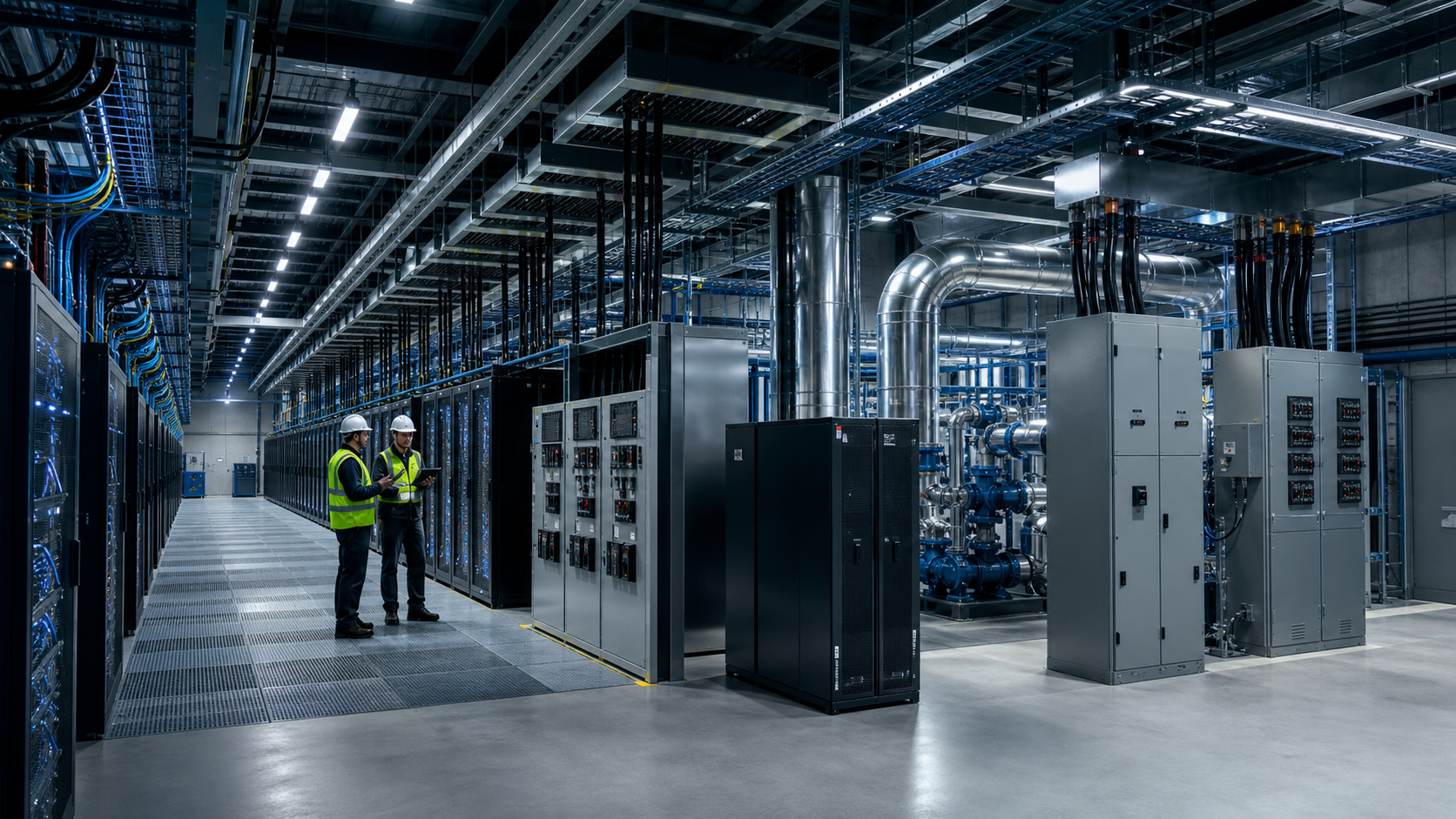
One non-redundant component in the distribution, transfer, UPS or cooling chain can reduce the entire room to its availability level.
Without one monitoring layer for temperature, humidity, current, load and energy, both remaining capacity and growing risk become visible only when failure occurs.
When electrical, mechanical, network and security work progresses independently, system interfaces remain unresolved until commissioning.
Electrical and automation engineering is our core responsibility: design, panels, field installation, monitoring software, commissioning and operational support are delivered by our team. Architecture, mechanical equipment and structured cabling can be coordinated through specialist subcontractors while contract and site coordination remain with us. Your single point of contact does not change as the scope expands.
Specifications, supplier selection, site programmes and acceptance testing remain within our project-management discipline.
Cooling behaviour affects energy consumption, while power outages determine cooling recovery. We therefore design all five layers within one control and monitoring architecture.
Cabinets, row power distribution, precision cooling, aisle containment and security are engineered together. Standard building blocks accelerate expansion and reduce site integration risk.
Power, cooling and IT space can be planned as separate capacity blocks. Initial investment follows real demand while new loads are added in a controlled way without stopping operations.
Compact, remotely monitored installations for factories, warehouses and remote sites are protected according to dust, temperature variation, moisture and unauthorised-access risks.
Rack-PDU metering, circuit or outlet load tracking, temperature and humidity sensing, door access and cable management make remaining capacity visible.
Utility intake, distribution panels and uninterruptible power; precision cooling, cabinets, cable routes, physical security and central monitoring are parts of the same operational scenario. Design decisions consider how these components interact during normal operation, maintenance and failure conditions.
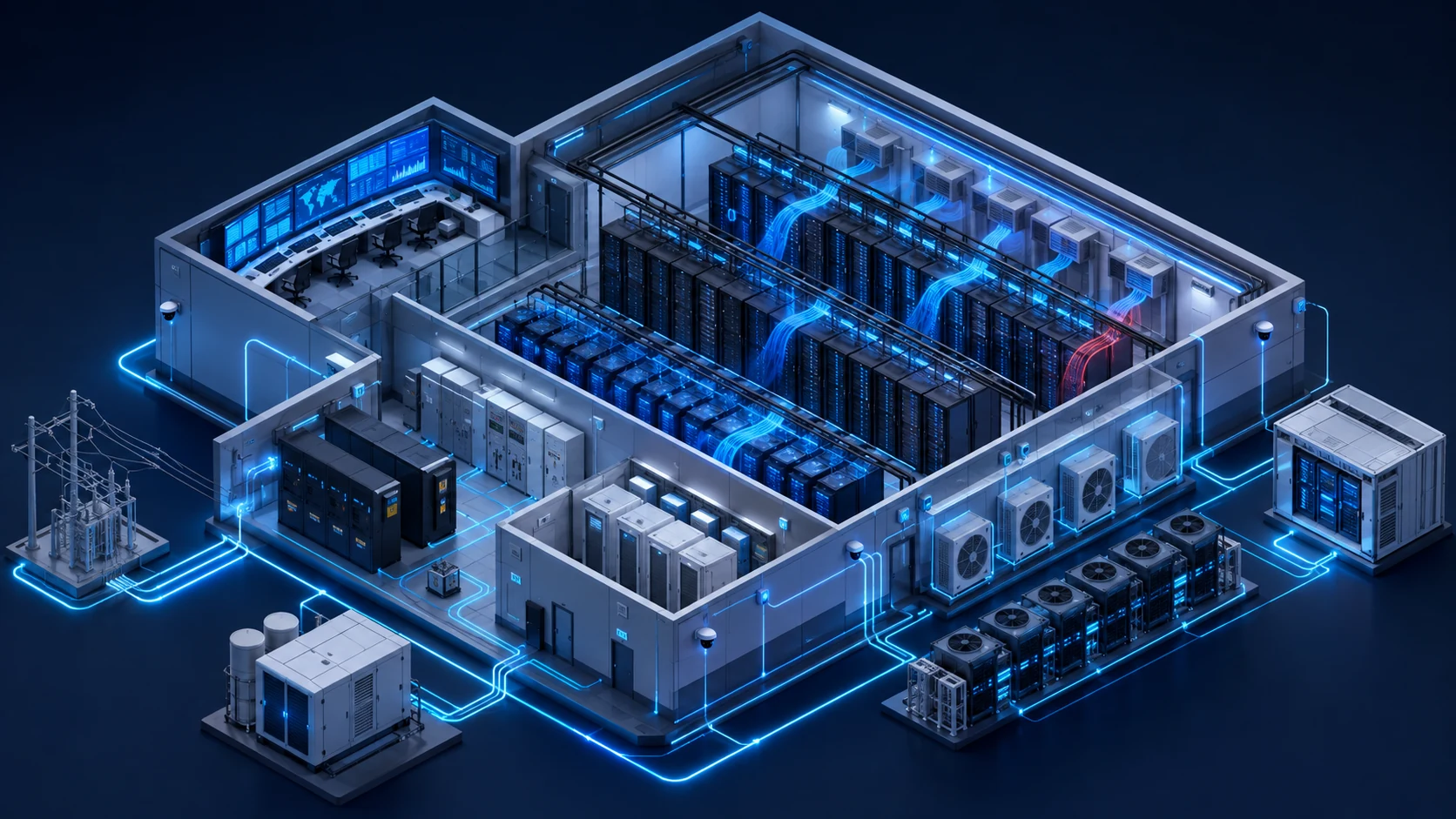
The same team designs the project, builds the panels, develops the software and commissions the site.
Load analysis, single-line diagrams, short-circuit and selectivity calculations, schedules, layouts and routes.
Distribution, UPS-output and automation panels with routine tests, installation, cabling and labelling control.
Cooling sequencing, standby activation, free-cooling transitions and stable aisle conditions.
Unified environmental, energy and equipment data with alarms, trends, capacity and efficiency reporting.
Network segregation and authenticated, recorded remote-maintenance access.
FAT, SAT, integrated systems tests, outage scenarios, alarm validation and handover documentation.
Power analysers, environmental sensors and equipment communications share one data model, allowing cabinet load, aisle temperature and facility efficiency to be compared on the same timeline.
Cabinet, power-distribution, cooling and sensor assets share one inventory, keeping location, connection, maintenance and lifecycle records current.
Before adding a cabinet or high-density load, its combined impact on power, cooling and physical space is assessed to identify constraints before investment.
Related alarms are correlated, prioritised and presented with equipment history. Response time shortens and alarm fatigue is reduced.
Maintenance, moves and capacity changes follow recorded workflows. The effect of taking equipment offline is assessed across the power and cooling chain before work begins.
Cabinet count, power density, growth, availability target and acceptable downtime are defined.
Electrical, automation and monitoring architecture, redundancy, calculations and drawings are prepared.
Panel production, equipment supply and subcontracted scope follow one programme and specification.
Installation, cabling, labelling and communications are completed through controlled checklists.
Acceptance, redundancy, transfer, alarm and integrated systems tests are executed together.
Maintenance, remote support, capacity reporting and change management are activated.
These frameworks guide design and validation; certification can be coordinated separately with the relevant bodies.
New or comprehensively modernised power, cooling and monitoring infrastructure.
Infrastructure for automation, MES and historian servers integrated with production networks.
Small, unattended, remotely monitored installations close to operations.
Phased cabinet additions, panel renewal and monitoring modernisation in live facilities.
Customer and facility information has been anonymized to meet confidentiality obligations.
Share capacity, power, cooling and monitoring requirements with the infrastructure engineering team.
Request an infrastructure discovery Your request is routed directly to the relevant engineering team.
Engineering confidence with Oskon.
Leave your details and our expert engineers will contact you for a preliminary consultation tailored to your needs.