





Match product variants to work instructions, part verification and tool results on trim lines. Track assembly completion and quality approval separately to manage incomplete operations carried forward to the next station.
Variant information must reach the station in time
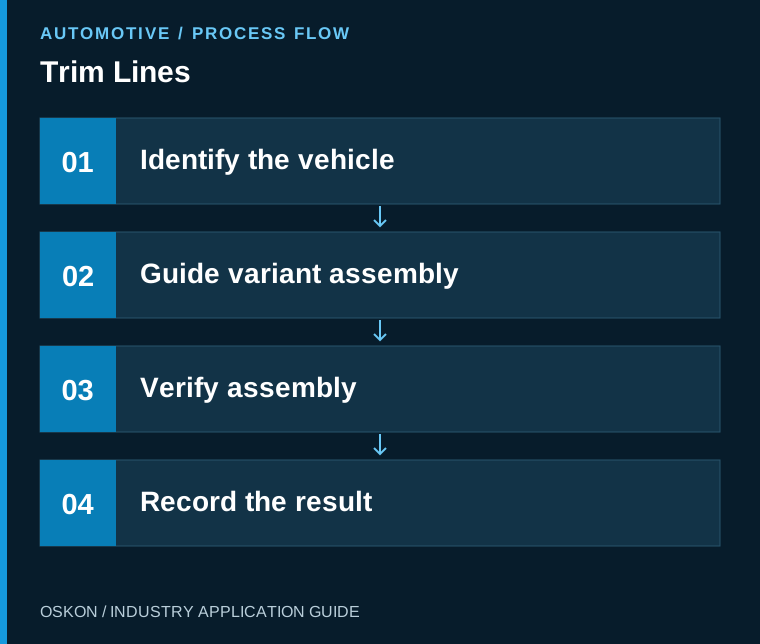
Vehicles with different equipment configurations may pass through the same station on trim lines, where interior fittings and related assembly operations are completed. Work instructions, parts lists and the required tool programs must derive from the correct product ID. When the product sequence changes, the screen must not retain information for the previous vehicle. Identity verification at the station entrance connects the production plan to the physical flow.
Design instructions around the operator's decisions
Rather than displaying a lengthy document on the screen, the specific steps to be performed in the current variant, the components to be used, and the inspection points are clearly indicated. The visual layout must be readable from the work area. Exceptions and rework instructions are distinguished from the normal workflow. It is ensured that the operator’s confirmation of each step is recorded without creating unnecessary approval burdens.
Select part verification methods according to the errors to be prevented
Barcodes, RFID, sensors, or visual inspections serve different verification purposes. The reading of a barcode alone does not prove that a component has been physically installed in the correct location. It is essential to identify the errors that each type of inspection can detect and the situations it may miss. The identity of the logistics box should not be confused with the traceability of the individual components it contains. The data structures for supply chain management and in-process control must be designed to work in coordination with each other.
Link tool results to the work order
Program selection and operation results from electric tightening tools or other controlled tools can be matched to the product ID. Successful communication and a successful process result are separate statuses. Incomplete fastening, repeat operations and authorised acceptance must remain visible in the records. After a tool change, verify program matching and result transfer again.

Create a controlled route for incomplete operations
If work left incomplete at a station must move to a rework area, the open task list travels with the product. Define authorisation for line transfer, quality approval and closing rework tasks. Hiding incomplete operations behind a general bypass signal weakens traceability. The screen should show why the product is waiting and which step remains to be completed.
Represent the product mix in acceptance testing
Testing a single model is insufficient to assess variant management. Test production sequences with different equipment configurations, incorrect parts and tool connection interruptions. Obtain operator feedback on screen readability and the practicality of the work sequence. Acceptance also includes checking that result records match the correct vehicle in the higher-level system.
Key information to monitor in the automation system
| Control point | Monitored information |
|---|---|
| Variant information | Matching the vehicle to its instructions and parts list |
| Tool result | Program, operation and retry records |
| Open tasks | Tracking incomplete assembly steps |
Three questions to ask at the start of the project
- Are the correct instructions supplied when the sequence changes?
- How is the scanned part verified against the installed part?
- Do rework records follow the vehicle?
Explore related applications
Explore related processes in Buffer Areas and Automatic Carriers and Telescopic Bars. Browse all Automotive articles or visit Automotive solutions.