





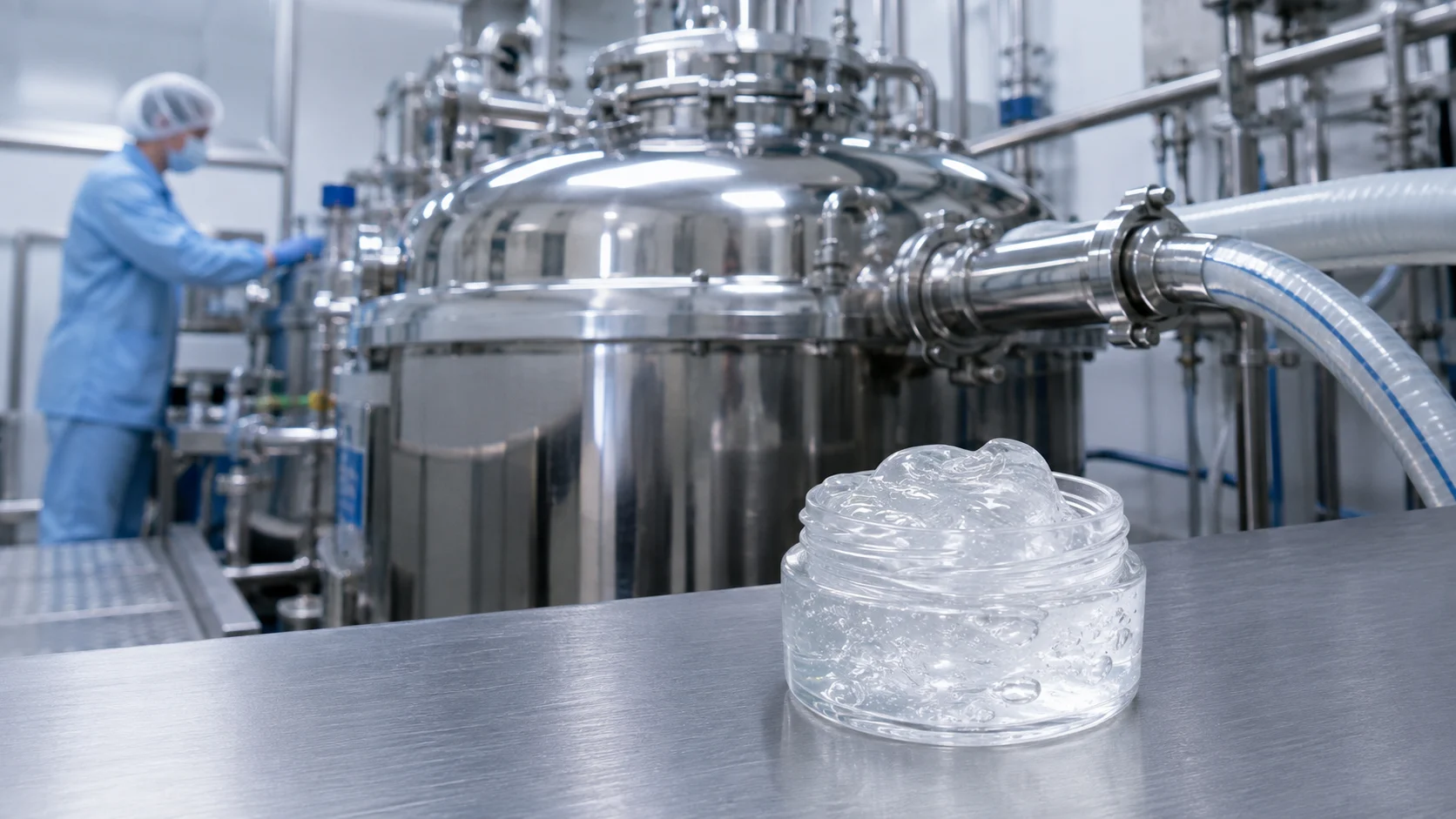
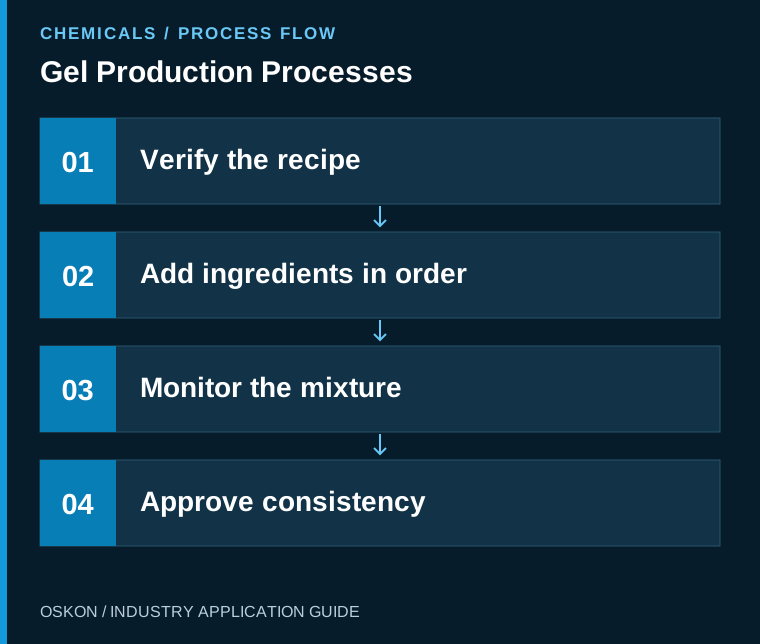
Manage raw material addition sequences, mixing conditions and quality holds through recipes in gel production. Products with the same appearance can have different process requirements.
Define the gel type before selecting the process
Gel products can involve different thickening agents, solvents and applications, so there is no universal production sequence. Technical information for the polymer or other thickener, target product properties and the approved formulation are inputs to process design. Support equipment selection with product trials.
Specify addition steps with clear completion conditions
Material feeding, distribution, waiting times, and other processes required for formulation are defined as separate recipe steps. It is specified which measurements or approvals are required to complete each step. Whether it is permissible to add subsequent materials while the previous step is still in progress depends on the approved process. Operator interventions, especially manual additions, should not be excluded from the batch record.
Mixing behaviour can change throughout the batch
As the product develops its consistency, its flow behaviour and equipment load can change. Assess mixer speed, fill level, duration and product temperature together. Higher speed or longer mixing does not improve every product. For shear-sensitive materials, validate the process method using manufacturer information and trials. Motor load must not serve as the sole substitute for quality measurement.
Assess the effects of air and transfer
Air entrained during production can affect appearance and filling behaviour. Examine mixing, tank connections and transfer equipment together from this perspective. Add deaeration or holding steps only where required by the validated product process. Select pumps according to actual product flow characteristics and cleaning requirements; a water-only test is insufficient.
Use sample results to determine batch status
In the measurement of consistency or viscosity, the method, temperature, and sample preparation all affect the comparability of the results. The measurement method approved by the laboratory is tied to the recording system. Batches that are awaiting approval, have undergone adjustments, or have been released are displayed separately. All adjustment details are added to the recipe history; the result of the initial test is not deleted. This enables the subsequent investigation of any production deviations.
Validate scale-up separately
The results obtained in a small pilot tank may not be automatically reproduced in a production tank under the same conditions and at the same speed. The geometry, feeding arrangement, and mixing circulation are different in the two tanks. The commissioning plan must include process and quality evaluation based on actual batch volumes. When the acceptance report includes information on the product family, equipment settings, and measurement methods, it serves as a valuable reference for subsequent changes to the recipe.
Key information to monitor in the automation system
| Control point | Monitored information |
|---|---|
| Addition sequence | Completion of the approved recipe steps |
| Mixer load | Equipment behaviour as it changes throughout the batch |
| Quality measurement | Consistency assessment using the defined method |
Three questions to ask at the start of the project
- Has the process been validated for the thickening agent?
- Are the measurement method and sampling conditions recorded?
- Has a trial been carried out at the actual production volume?
Explore related applications
Explore related processes in Detergent Production Plants and Paint Production. Browse all Chemicals articles or visit Chemicals solutions.