





In electrical distribution, control, and automation projects, the panel enclosure is not merely a casing that holds various components together. The installation method, available mounting space, cable entries, accessibility, environmental protection measures, and potential for future expansions all depend directly on the choice of the appropriate panel series. In Tempa Pano’s current catalog, the wall-mounted series include JB, TB, BK/BKP, KB/KBP, EKO, ETS, EDT, HDS, KDS, and ESE; the stand-alone series consist of AS, ASE, MS, MSD, GS, and CC. The web category pages may also include the BS series. This catalog guide explains the selection criteria for both types of enclosures, detailing the BK/BKP series for wall-mounted models and the AS modular series for stand-alone models as technical references. It also outlines the official position of other series within the product portfolio. The provided dimensions, material specifications, and protection information refer specifically to the official product documentation of these series and should not be applied interchangeably to other models.
The key difference between wall-mounted and freestanding enclosures
A wall-mounted enclosure allows a limited number of control or distribution components to be installed without the need for a separate standalone cabinet on the floor. In a project, factors such as the weight of the control panel, the structural capacity of the wall, the required opening size for maintenance access, and the cable routing must all be taken into consideration. Standalone solutions, on the other hand, are designed for applications that require a larger installation surface, modular expansion options, or the combination of multiple enclosures. The modular design of the Tempa AS series, along with its detachable side panels and multiple mounting options, perfectly accommodate these requirements. Therefore, the choice of enclosure type is not based solely on its external dimensions; factors such as the equipment layout, thermal loads, access requirements, cable specifications, base frame needs, and backup capacity are also carefully considered during the bidding process.
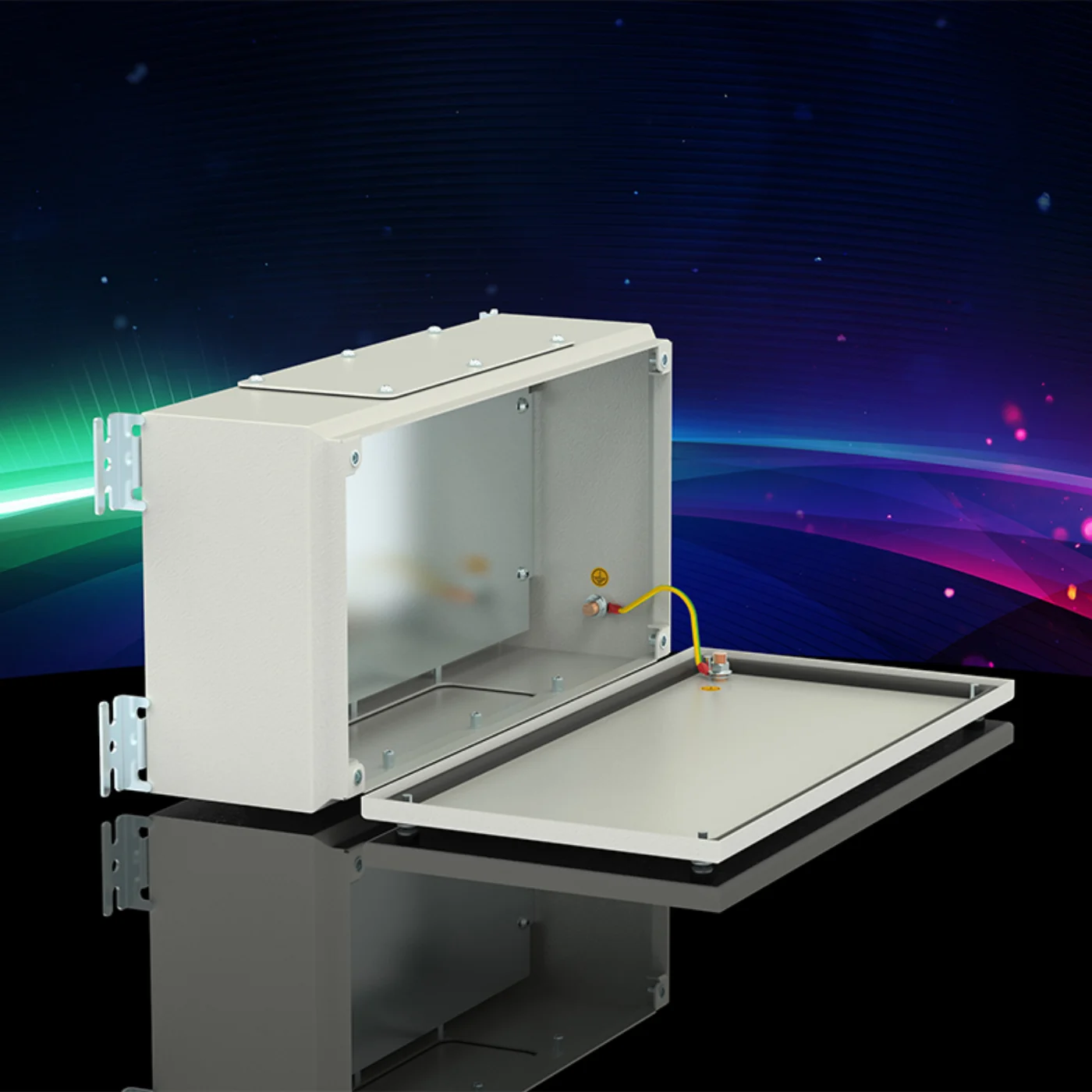
BK and BKP series: compact wall-mounted junction boxes
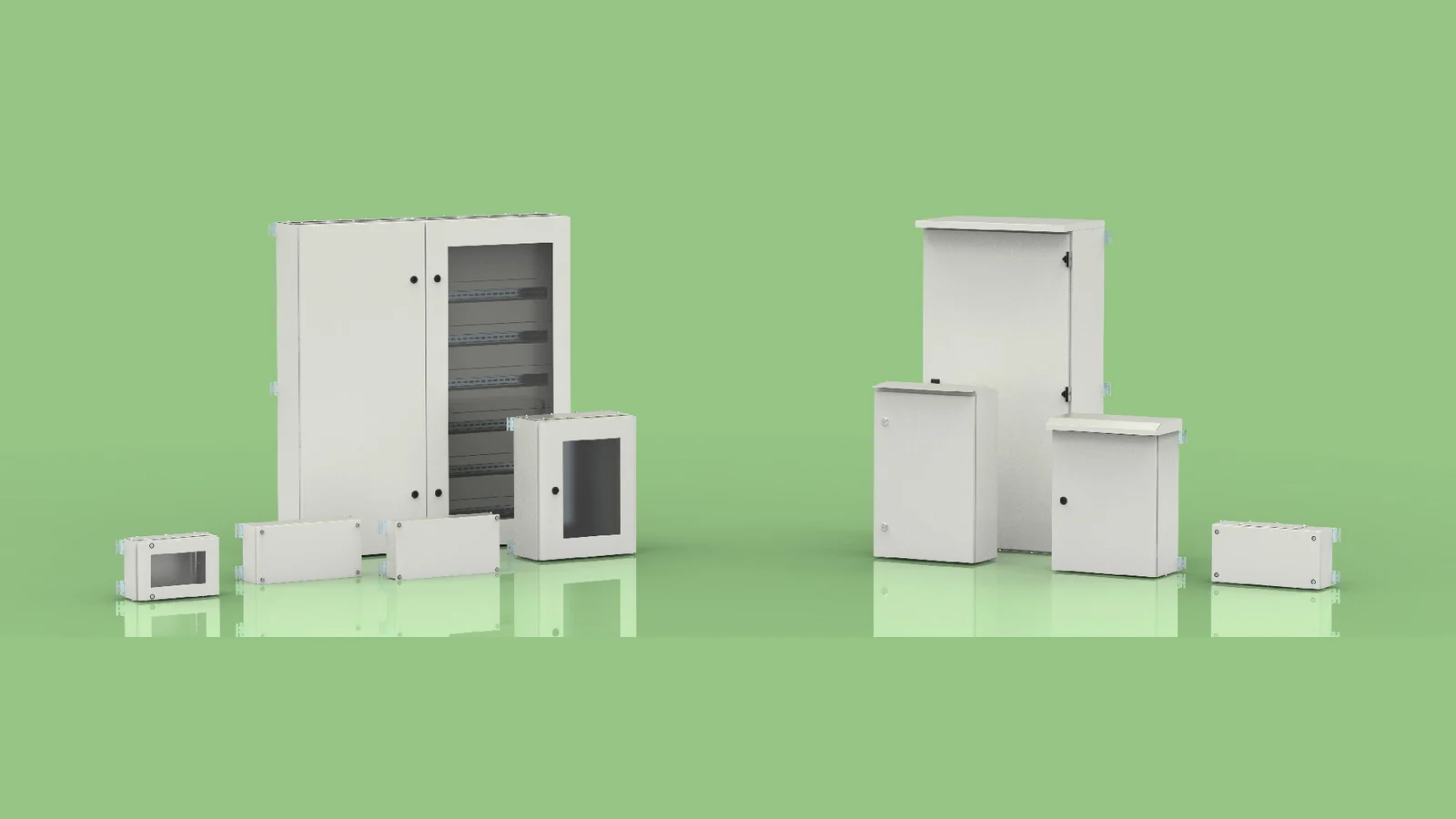
In Tempa’s technical documentation for the BK/BKP models, EN 10130 DC01 steel sheet is specified for both the body and the cover, with a nominal thickness of 1.2 mm. The optional mounting plate is made of EN 10346 DX51D+Z galvanized steel and has a thickness of 1.5 mm. The standard surface treatment is RAL 7035w powder coating. The protection class varies depending on the model: IP66 for the BK version and IP65 for the BKP version, in accordance with TS 3033 and EN 60529 standards. Therefore, the order code must clearly indicate not only the dimensions but also whether the BK or BKP version is required. The IP rating is relevant only when the standard construction specified by the manufacturer is followed and the correct installation conditions are met; any holes drilled on-site, as well as the type of cable glands and sealing elements used, can affect the final level of protection provided.
Both the BK and BKP models share the same design: a flat cover connected to the welded body via screws. The cover contains a polyurethane molded seal, and the body is equipped for DIN rail mounting. The BK version boasts IP66 protection, while the BKP version features IP65 protection. Only the BKP variant includes lower and upper cable entry plates, as well as a one-piece PE gasket. The standard BKP dimension table specifies either two or four cable entry plates, depending on the product size. Additional accessories such as DIN rails, mounting plates, related connectors, grounding wires, and four wall mounting components are also listed as supplementary items. This distinction is crucial when preparing a purchase list: it should not be assumed that the entire required mounting equipment is included in the standard package; instead, the necessary accessories must be matched accordingly with the product code.
Usable space when sizing BK/BKP enclosures
The official BK/BKP catalog specifies not only the external dimensions of width, height, and depth but also the usable area on the cover, the dimensions for wall mounting, the DIN rail connection specifications, and the dimensions of the mounting plate. For example, the product with the code BK 151512 listed at the beginning of the catalog has external dimensions of 150 × 150 × 120 mm; the usable area and connection dimensions on the same page are smaller than these external dimensions. This example demonstrates that merely checking whether the “box fits externally” is not sufficient. When installing components such as terminals, relays, power supplies, or field connection elements, it is also necessary to verify the cable bending radius, the DIN rail clearance, and any potential interference with the cover, in addition to the dimensions of the component bodies themselves. Special dimensions, custom colors, pre-treated surfaces, and glass-covered lids can be requested, but these are not standard features of the product; rather, they are options that must be specified in the order.
AS series: bayable modular freestanding enclosures
The Tempa AS series offers a modular platform within stand-alone control panels. According to the official technical specifications, the frames and panels are manufactured from EN 10130 DC01 steel with a thickness of 1.5 mm, while the doors and bases are made of 2-mm-thick steel. The mounting plates are composed of EN 10346 DX51D+Z galvanized steel, also with a thickness of 2 mm. The standard exterior surface is painted with RAL 7035w powder coating. The protection level is specified as IP55 in accordance with TS 3033 and EN 60529 standards. Key structural elements of this series include the welded frames, doors, polyurethane molded gaskets inside the back panels, concealed hinges, and handle-operated espagnolette locks with polyamide housings. The official documentation describes the lock as a three-point locking mechanism with a 333 key.
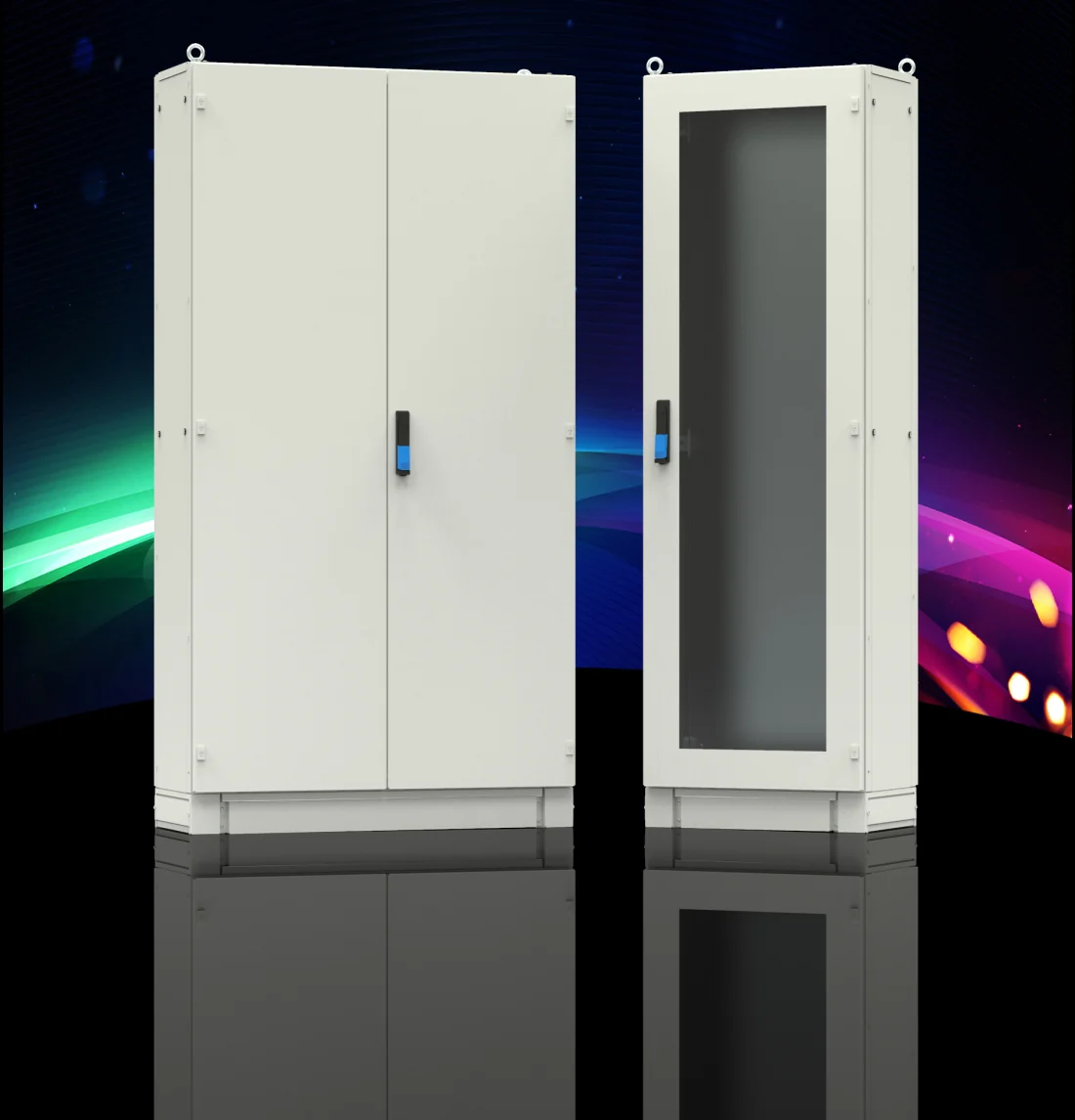
On the AS platform, it is possible to select either a door or a back panel for the rear side, allowing maintenance access to be arranged according to the specific project requirements. Multiple mounting plates can be used; side panels can be removed, and the enclosures can be combined in a modular manner. Options for the base and cover are also included in this modular design. The manufacturer’s hardware list includes front and rear frames, doors or back panels selected according to specific requirements, optional mounting plates, as well as bases, top covers, and four or six rails depending on the required depth, along with door-mounted mounting profiles. The terms “selection” and “option” used here must be clearly defined in the proposed configuration. In particular, for projects that require mounting plates and a base, placing an order using only the basic enclosure code may result in an incomplete configuration.
How modular design affects project planning
Bayable freestanding enclosures enable the separation of different functions such as power distribution, automation systems, drives, or field terminals into separate compartments. Accessories listed by Tempa for the AS series, including partitions and profiles, hinged partitions, short, segmented, or combined mounting plates, partitioning profiles, as well as L-shaped, U-shaped, and Z-shaped components, are all designed to support this layout. Additional options include busbar holders and stepped busbar holders, combination kits, sliding racks and stops, adjustable or telescopic perforated shelves, project pockets, cover plates for fuse holders, grounding conductors, and interlock systems. However, this wide range of accessories does not mean that every item is essential for every project; rather, it requires a mechanical design that is carefully coordinated with the electrical layout plan.
A brief guide to the wall-mounted enclosure range
Tempa’s current catalog addresses various wall-mounted enclosure requirements through dedicated series. In the EKO series, the standard configuration includes IP66 protection for single doors, IP55 for double doors, and IP65 for doors with glass panels. The ETS model is characterized by a welded frame, either solid or glass doors, a lower cable pass-through plate, and IP65 protection. The larger-sized EDT wall-mounted enclosures feature IP65 protection for single doors and IP55 for double doors. The HDS model complies with the EN 10088 1.4016 standard, featuring a 430-series stainless steel frame and IP66 protection. The compact JB series has a screw-fastened cover and IP55 protection. The ESE model offers an IP65/EMC solution, with an exterior painted in RAL 7035w and an interior with galvanized steel and EMC-sealed doors. On the KDS product page, flat and glass doors, as well as brushed upper and lower cable pass-through options, are listed; however, since the protection class is not specified, it should be confirmed separately during the ordering process for the KDS models.
A brief guide to the freestanding enclosure range
In the stand-alone category, the AS model features a welded frame and IP55-rated modular design. The ASE model is offered as an IP55-rated stand-alone EMC solution, equipped with conductive inner surfaces and EMC gaskets; however, since the name “BSE” may appear in some of Tempa’s documentation and PDF titles, it is necessary to verify the correct model code during ordering. The MS model features a monoblock body with ten bends and is rated as IP65 in current Turkish documentation. The MSD model comes with a double-door monoblock design, removable supports, and IP66 protection. The GS model is described as a large-series, modular stand-alone control panel with IP55 rating; the CC model, on the other hand, is characterized as a double-wall outdoor control panel, equipped with a rain cover and IP65 protection. The BS model, listed in the official website categories, is referred to as an IP55-rated modular series in older technical documents but is not included in the current Catalogue 10. For new projects, it is essential to confirm the availability and correct model code with the manufacturer.
| Selection criterion | BK/BKP wall-mounted | AS freestanding |
|---|---|---|
| Basic structure | Welded body with flat cover attached by screws. | Welded-frame, modular cabinets that can be combined. |
| Standard protection. | BK: IP66; BKP: IP65 | IP55 |
| Standard surface | RAL 7035w powder coating | RAL 7035w powder coating |
| Mounting approach | Wall mounting; DIN rail or mounting plate accessories | 2-mm galvanized mounting sheet; multiple sheet options available. |
| Cable inlet | BK: No cable transition plate specified; BKP: At the bottom and top, 2/4 plates as per the dimensions. | It can be designed with options for an upper cover, a base, and a closure. |
| Expansion | Special dimensions can be requested. | Side-by-side assembly and removable side panels. |
Technical checks for selecting the right product
The first step is to determine the equipment list, the external dimensions of the devices, and the connection directions. In the second step, the exact layout on the mounting plate or DIN rail is determined and verified against the available space information in the catalog. The third step involves examining the cable entry directions, the number of cable glands required, the cable diameters, and the bending allowances for the field cables. The fourth step focuses on the environmental conditions: the target IP level, the internal or external environment, the exposure to dust and water, and the ambient temperature must all be considered. The fifth step is to assess the thermal management requirements based on the power dissipation of the devices installed inside. The final step concerns service accessibility and future expansion possibilities—questions such as whether a compact box with a screw-on lid is sufficient, or whether a modular freestanding enclosure is needed, must be answered based on these data.
When comparing IP classes, it should not be assumed that a higher number always represents a more accurate choice for any given project. The degree of protection is determined based on the required environmental conditions; mechanical dimensions, accessibility, and thermal properties also need to be taken into account. In the case of BKP, the fieldwork required on the cable entry plates and the selected cable glands are essential components of the overall installation. For AS, the mating surfaces, side panels, top covers, and base configurations are equally critical. The grounding conductors and the connections for movable doors or panels must also be specified according to the project requirements. Since manufacturers often list these accessories as optional components, when comparing quotes, one should not rely solely on the price of the outer enclosure but rather on the overall mechanical configuration provided.
Custom manufacturing and order specifications
In the BK/BKP series, special dimensions, custom colors, pre-treated surfaces, and glass-covered lids are available upon request; in the AS series, these options also include special dimensions, custom colors, pre-treated surfaces, and flat-packaging options. When requesting a customized solution, it is insufficient to provide only the external dimensions. Additional details such as the door opening direction, type of mounting plate, cable entry surfaces, hole and cutting patterns, locking mechanisms, base height, layout of side panels, number of sections to be assembled, and surface color must all be specified in the same technical documentation. If pre-treatment is required, the reference points and tolerances for the device’s components must also be clearly indicated in the drawings. This ensures that while the standard series features are maintained, the need for on-site modifications is minimized, and it allows for verification that the ordered unit matches the specified layout requirements.
Information to include in a quotation request
When requesting a Tempa wall-mounted or freestanding control panel, it is necessary to specify in detail the series name and full product code, external dimensions, quantity, type of door or cover, mounting plate, DIN rail, base, options for side and rear panels, lock, cable entry arrangement, and any additional accessories required. The target IP class and the specific standard configuration used to achieve it must also be indicated. If special colors, hole patterns, or other custom dimensions are required, the revision number of the technical drawing must be included in the order. This approach ensures that the differences in IP ratings between BK and BKP models, as well as components specific to certain AS product codes, are clearly identified. Final compatibility must be confirmed by referring to the manufacturer’s current technical documentation, the selected product code, and the actual application conditions.