





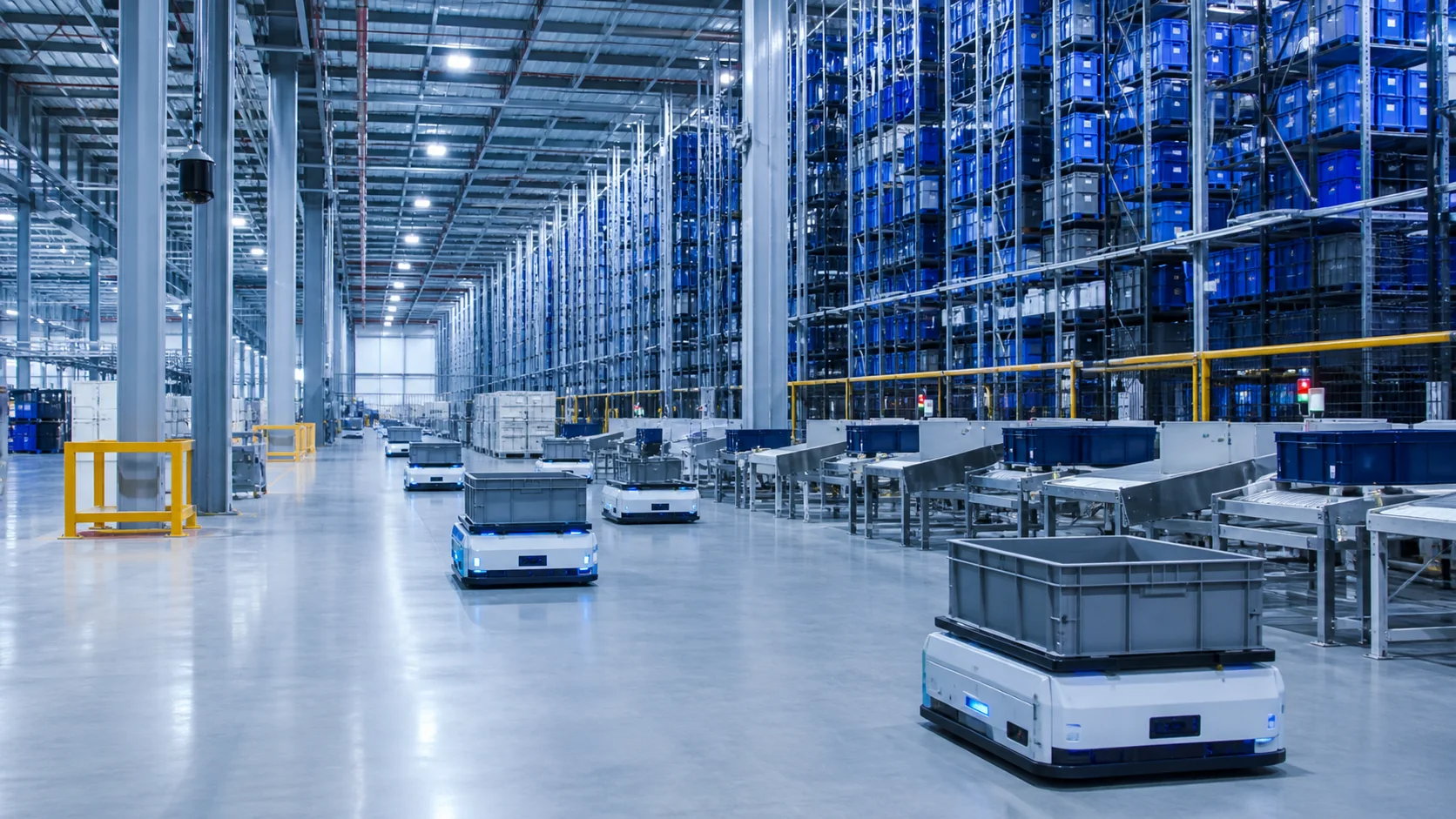















If logistics is defined as moving objects or products efficiently from point A to point B, intralogistics is a related but much broader concept. It covers both the optimal physical movement of goods within a distribution centre or warehouse and the optimisation and management of logistics information flows. Intralogistics is not a new supply-chain concept, but it now has a modern name. An intralogistics system can essentially be described as optimised warehouse logistics: conveyors, sorters and robots automate physical assets to achieve the best possible results. The benefits are those pursued by every supply-chain manager—lower inventory, faster time to market and reduced cost. Companies investing in intralogistics technology gain a clear competitive advantage, and such investments are rapidly becoming a necessity rather than an option.
A traditional supply chain consists of three main stages: sourcing products, the manufacturing process, and distributing finished goods through distributors and retailers. The intelligent supply chain described as intralogistics also introduces efficient inventory management and optimally coordinated processes.
Optimises transport routes between the warehouse, production and dispatch using operational data.
Centrally manages robot traffic, task allocation and charging strategies.
Connects WMS, MES and production equipment within one continuous logistics flow.
Optimisation is the key word in intralogistics. Building an intelligent supply chain generally involves implementing a technology-based solution, often a fully featured Warehouse Management System (WMS). Companies invest in these software platforms to improve fulfilment capabilities and create competitive advantage.
The principal reasons for adopting intralogistics can be summarised as follows:
The foundation of a successful intralogistics strategy is the collection and processing of reliable operational data.
Sorting is a critical part of warehouse management within the supply chain. When it works well, many operations become easier to manage; when it does not, it creates numerous problems. Sorting is the systematic process of categorising stored items by their characteristics, assigning suitable storage destinations and maintaining methodical records. Warehouses and distribution centres can achieve higher throughput through systems that turn random item flows into shipment-ready orders. The concept is straightforward, but execution is not always simple. Products can be lost when they are not classified correctly. Sorting parameters vary by application: retailers may sort products by store, while parcel companies may sort by postcode.
Intelligent sorting typically uses sensors whose data is processed by software acting as the brain of the system. Advanced algorithms distinguish objects within the material flow. Sorting equipment can automatically learn reference values during operation and optimise its performance rapidly. The software can also be configured quickly and precisely around your requirements to maximise throughput and accuracy.
The advantages of intelligent sorting systems and software in your warehouse include:
- Intralogistics reduces warehousing costs. By focusing on data collection and automation, warehouses can realise the long-promised benefits of Industry 4.0 through better connectivity. Real-time data enables real-time adjustments, helping warehouses remain agile and efficient as markets change.
- Intralogistics increases flexibility. Companies use data produced by advanced equipment to progressively improve supply-chain management. When a facility's internal supply chain approaches optimal performance, it becomes naturally responsive to changes in demand.
- Intralogistics prepares operations for the future. By automating core processes and improving overall agility, intralogistics warehouses can support micro-fulfilment activities without disrupting their primary operations.
- Intralogistics creates a safer workplace. One objective is to automate tasks that do not require people, including potentially hazardous work. People remain the most important component of a well-run facility; the purpose is not replacement, but removing unnecessary obstacles so employees can work as efficiently and safely as possible.
- Process thousands of items accurately in a very short time.
- Sort rapidly and efficiently regardless of product dimensions.
- Automate dispatch by routing every product to the correct destination.
- Increase efficiency by reducing opportunities for human error.
- Save time and enable greater operational throughput.
Oskon Automation provides solutions in:
- Sorting systems
- Management information systems
We provide engineering and implementation services across these areas.
Oskon Automation also has strong intralogistics references, including Berrmak.