





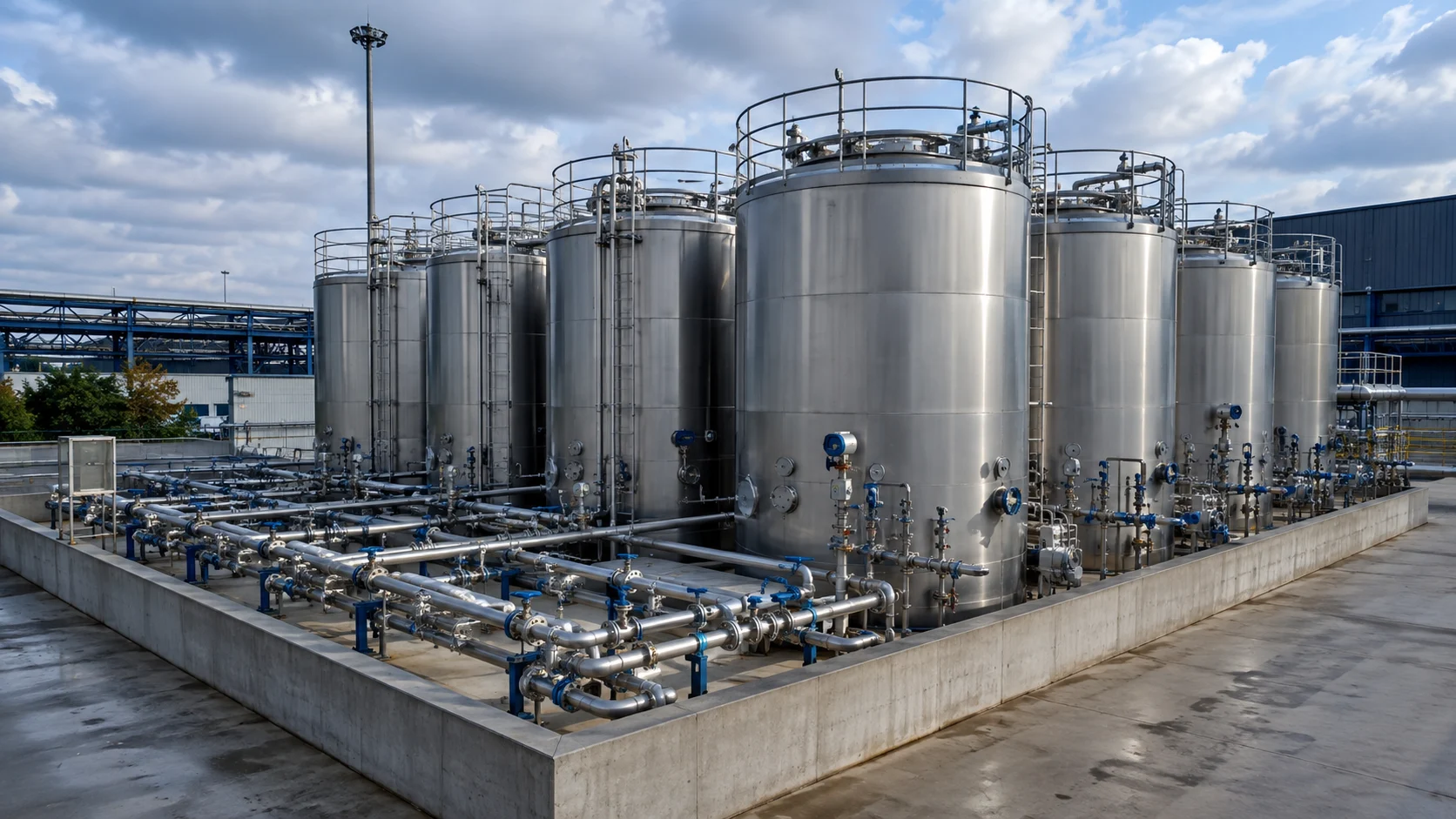
Manage product identity, available capacity and transfer routes together in silo areas and tank farms. Clearly distinguish inventory indication from protective functions that prevent overfilling.
Build the site inventory around product compatibility
Define each tank or silo's capacity, permitted products, material properties and connected transfer lines. Two vessels with the same nominal volume are not interchangeable for every product. Cleaning status, the previous product and maintenance status affect availability. Clearly distinguishing empty, clean, reserved and maintenance states on the operator interface helps prevent incorrect selection.
Understand what the inventory measurement represents
Level, weight and volume are different quantities. Assess measurement accuracy against product properties, tank geometry and installation conditions. If converting volume to mass, define the validity requirements for the product data used. After a measurement fault, prevent the last value from appearing current. The interface must show the value's quality and freshness as well as the value itself.
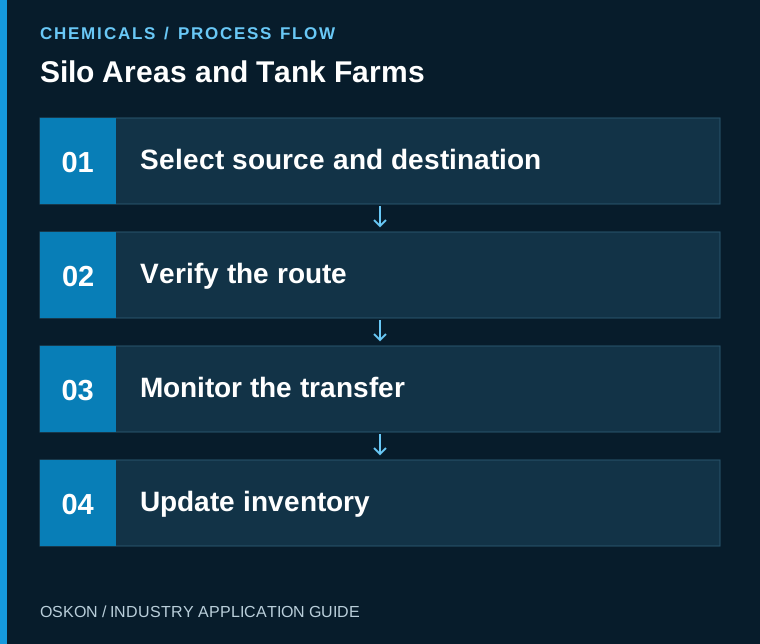
Verify the transfer route
Link the source vessel, destination vessel and intervening valve route to the transfer order. Check for conflicts between operations sharing the same line. Monitor valve commands separately from actual position feedback. An incorrect product or unsuitable destination requires a controlled decision. Include verification of any manual line connections in the workflow.
Separate overfill protection from inventory control
Normal inventory measurement does not automatically replace the required independent protective functions. The protection architecture is determined through expert evaluation, taking into account process risks, equipment, and operational requirements. Test and maintenance records help monitor the availability of these functions.

Maintain filling and discharge records
Start and end times, source, destination, product lot number, and the actual quantity processed can all be recorded in the transaction details. Any discrepancies between measured values are first examined in terms of the method and conditions used, rather than being directly labeled as losses. It must be clear what the remaining quantity of the transfer is and in which container the product is located. Any adjustments made by the operator are recorded along with the relevant reasons and identification information.
Test concurrent operations during acceptance testing
Scenarios such as multiple transfer requests, full targets, line maintenance, and measurement errors are tested. The accuracy of the correspondence between field labels and screen names is verified on-site. The validation of protective functions is carried out within the scope of the relevant expertise and test plans. It is also an essential part of the technical acceptance process that the operation team is able to select the correct line and understand the reasons for any delays.
Key information to monitor in the automation system
| Control point | Monitored information |
|---|---|
| Vessel status | Product, cleanliness and available capacity |
| Line configuration | Valve feedback and shared-line interlocks |
| Transfer record | Relationship between source, destination, quantity and lot |
Three questions to ask at the start of the project
- Are inventory measurement and protective functions separated?
- Has simultaneous demand on shared lines been tested?
- Are manual connections included in transfer authorisation?
Explore related applications
Explore related processes in Weighing Systems and Filling and Packaging Systems. Browse all Chemicals articles or visit Chemicals solutions.