






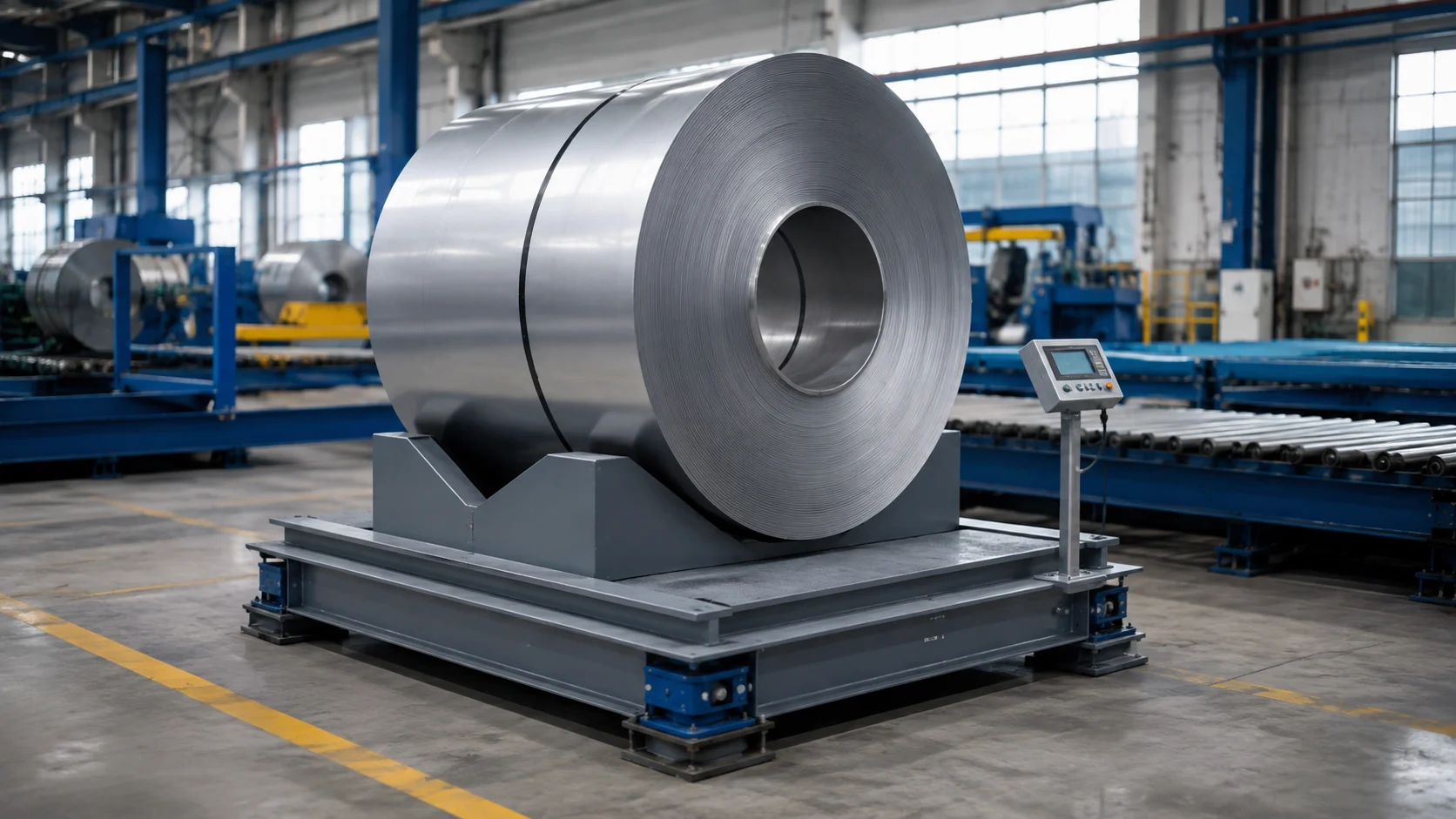
Verify mechanical positioning, measurement stability and product identity together when weighing coils and sheet bundles. The weighing result is meaningful when associated with the correct product and packaging information.
Clearly define the item being weighed
Weighing a coil, sheet bundle, product together with its carrier or another load involves different tasks. Keep gross weight, tare and net product quantity in separate fields. Siemens load cell solutions cover different industrial duties, including platform and handling applications. Capacity selection must account for the total load, dynamic effects and mechanical handling arrangement.
Check the platform's load path
The product must rest fully on the scale without additional forces from adjacent conveyors or supports. Assess stops, guides and cable connections too. Overload and impact conditions form part of mechanical design. Correct load cell installation is as important as the resolution of the weighing electronics. Recheck mechanical freedom and the reference condition after maintenance.
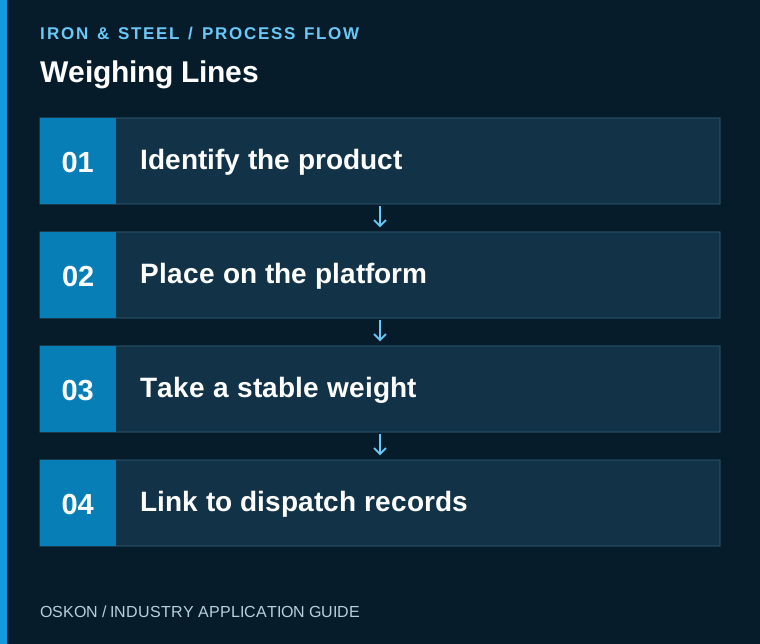
Design the cycle for stable measurement
After the transportation process is completed, the conditions under which the measurement results are considered valid are determined. Information regarding stability, range, and device errors can be transmitted to the control system. In the event of a timeout, the last recorded value should not automatically be accepted as the correct result. If the product needs to be repositioned, the necessary movement steps and the corresponding re-measurement process are defined. The operator screen indicates the reason for the wait.
Match ID readings to weighing results
Verify the coil or pack ID before measurement begins. If the label cannot be read, control manual entry through authorisation and checks. Prevent the previous product's weight from being recorded against the next product's ID. A transaction number, timestamp and scale ID support record integrity. Define local storage and later transmission behaviour when communication with the higher-level system is interrupted.

Reweighing must preserve the previous history
When the same product is reweighed, retain the previous result and reason for repetition. Packaging changes, product additions and measurement investigations are different cases. An authorised process determines which result is used for dispatch. Examine tare and measurement conditions before interpreting a difference between expected and measured weight as material loss.
Carry out acceptance testing with the actual handling arrangement
Assess repeatability with different loads and positions. Check product identity, result records and label information from end to end. Test unstable measurements, unreadable IDs and communication loss. Determine any additional conformity requirements for commercial weighing. Hand over a plan for periodic checks and verification after maintenance to the operations team.
Key information to monitor in the automation system
| Control point | Monitored information |
|---|---|
| Weight components | Distinguishing gross weight, tare and net weight |
| Measurement validity | Stability and device status |
| Product association | Package or coil ID and reweighing history |
Three questions to ask at the start of the project
- Is the product completely clear of adjacent supports?
- Could a previous result be assigned to a new product?
- Is the reason for reweighing retained?
Explore related applications
Explore related processes in Slitting Lines and Cut-to-Length Lines. Browse all Iron & Steel articles or visit Iron & Steel solutions.