




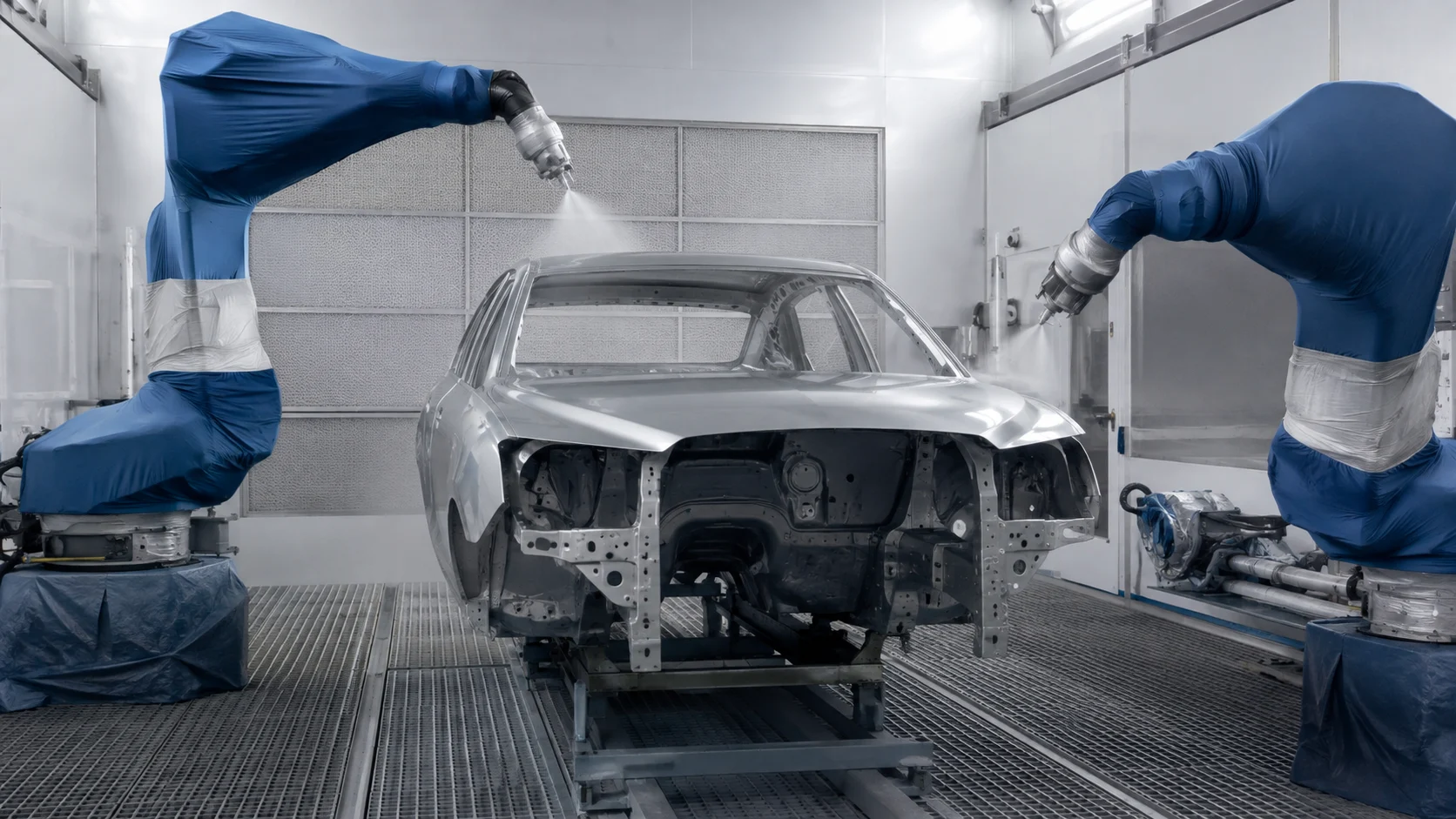
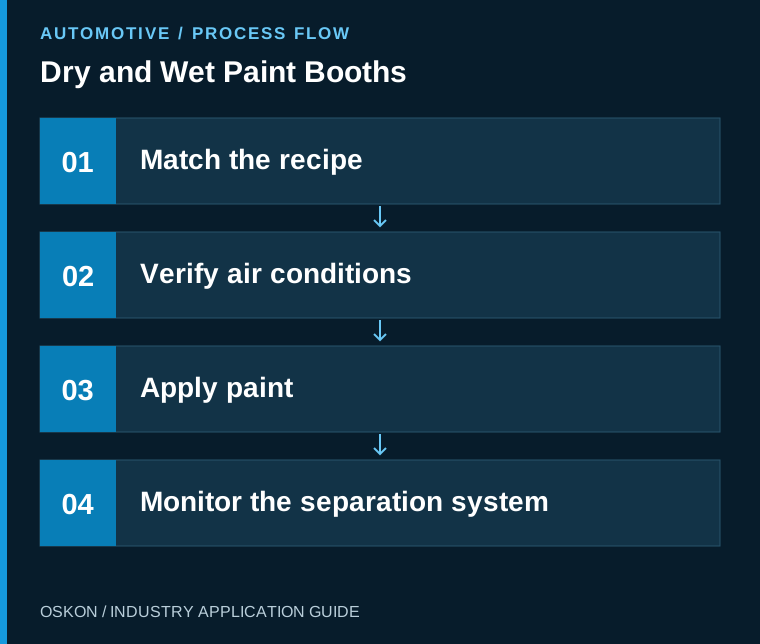
Assess air management, overspray separation and application recipes together in paint booths. Dry and wet separation technologies have different maintenance and utility requirements.
Specify the booth type accurately
The term “dry and wet paint booth” can have different meanings in various applications. In this context, it refers to the use of dry filtration or wet separation methods to remove paint particles that fail to reach the surface of the object being coated during the spraying process. Whether the paint used is water-based or solvent-based is a separate consideration. The specification should clearly define the separation technology, the type of paint used, and the application method in separate sections.
Consider airflow management and paint application together
Booth air distribution, supply/extraction balance, temperature and relative humidity requirements are project inputs that affect application quality. Target conditions depend on the coating system. Measurement locations, sensor accuracy and the calibration plan are as important as the control algorithm. Verify through on-site measurements any assumption that one sensor represents every area of the booth.
Monitor filter condition in dry separation systems
In dry systems, the condition of the separating elements used, as well as air flow and maintenance requirements, are monitored continuously. Instead of relying solely on a schedule for component replacement, production volumes and measurement trends can also be taken into consideration. After replacing filters or separating elements, it is essential to reconfirm the sealing integrity and air balance of the system. The type of waste generated and its disposal methods are determined based on the materials used and the specific operational requirements of the facility.
Auxiliary circuits matter in wet separation systems
In wet separation systems, liquid circuit operation, pump feedback, levels and maintenance conditions form part of the production readiness checks. Separation performance should not be inferred solely from a pump being energised. Circuit chemistry, sludge removal and water quality must be planned with the relevant process specialists. Automation supports tracking these activities and making deviations visible.
Link recipes to booth operating permissives
Establish a consistent link between body identity, colour information and the application program. Painting start conditions include the relevant booth and equipment readiness signals. Clearly distinguish colour changeover, cleaning and maintenance modes from production mode. Alarms must not hide different problems, such as an incorrect recipe and deviations in air conditions, behind the same general message.
Use quality and operating data for acceptance testing
Trials assess different products, colour changeovers and recovery after planned stoppages. Review surface quality results, booth conditions and separation system records on the same timeline. Record energy consumption, consumable use and maintenance time as a baseline. Improvement targets must rely on these measurements; do not assume unconditional savings percentages for the selected technology.
Key information to monitor in the automation system
| Control point | Monitored information |
|---|---|
| Air conditions | Temperature, humidity and the air measurements specified for the project |
| Separator status | Filter or liquid circuit feedback |
| Product recipe | Body, colour and program matching |
Three questions to ask at the start of the project
- Is dry/wet separation clearly defined in the specification?
- Is the air balance measured after maintenance?
- Are colour changeovers tracked through quality records?
Explore related applications
Explore related processes in Sanding Booths and Body Filler Booths. Browse all Automotive articles or visit Automotive solutions.