





Flexible and Scalable Line Feeding with a Mobile Robot Fleet
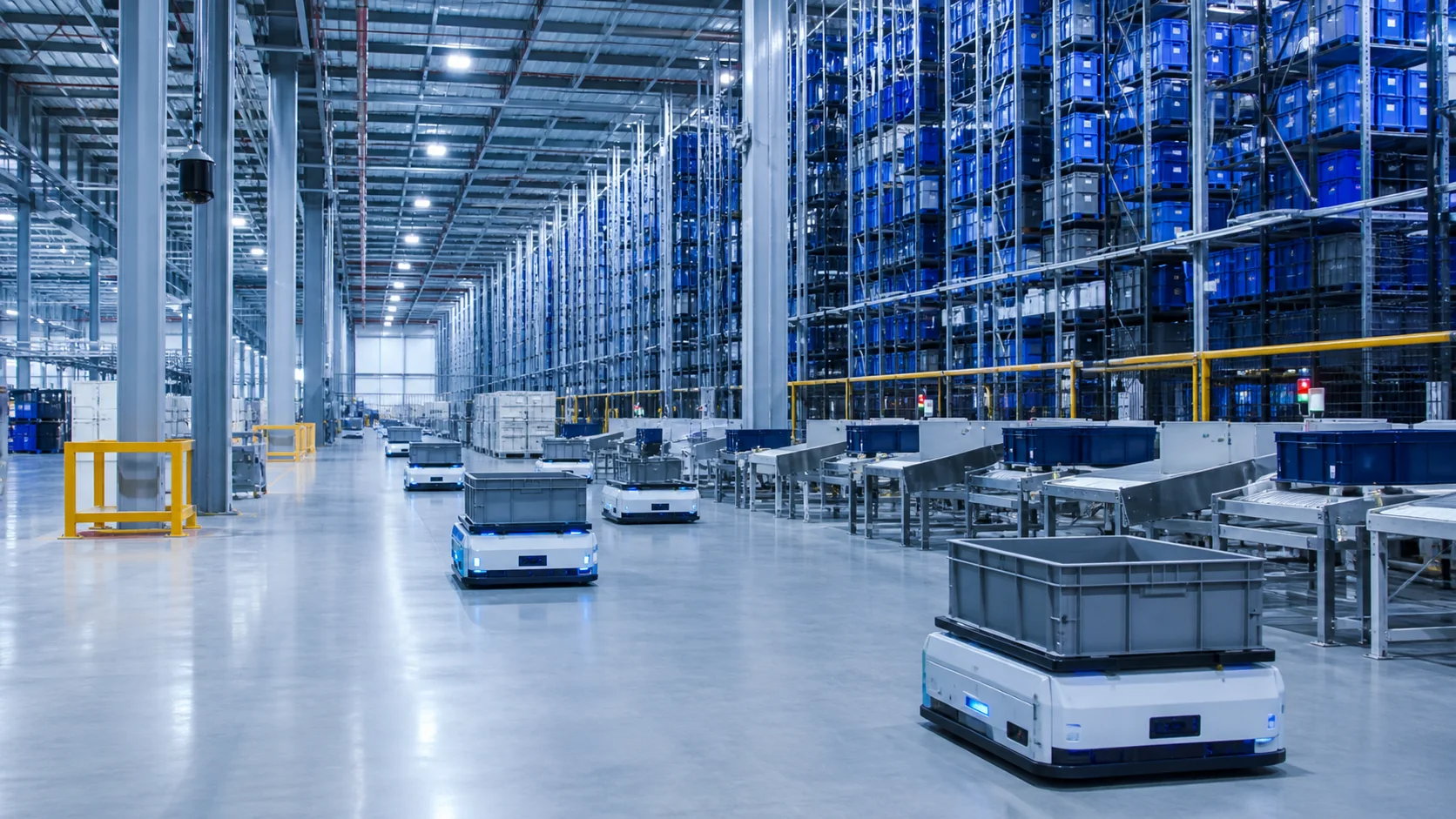
Different mobile robot types were coordinated through fleet software and standardized field interfaces.
Company names, facility locations and identifying information have been removed. Performance values are presented as rounded ranges to protect customer confidentiality.
Flexible and Scalable Line Feeding with a Mobile Robot Fleet
Pallet, tote and conveyor transfers used separate vehicles with fragmented traffic, charging and priority decisions.
The objective was to create a sustainable operating model rather than automate an isolated task.
Operational consistency
Pallet, tote and conveyor transfers used separate vehicles with fragmented traffic, charging and priority decisions.
Integrated architecture
We orchestrated robot selection, task priorities, routes, charging, doors, conveyors, lifts and delivery stations in one platform.
Scenario-based acceptance
Normal operation, exceptions, recovery and critical safety scenarios were tested with operations teams.
Engineering approach
From requirement to system behavior
- Field requirements and operating constraints were modelled before implementation.
- Equipment, software and data interfaces were designed around a common operating context.
- Operator guidance, alarms and recovery scenarios were included in the design.
Controlled implementation
- We orchestrated robot selection, task priorities, routes, charging, doors, conveyors, lifts and delivery stations in one platform.
- Changes were verified through traceable test and acceptance scenarios.
- Operations and maintenance teams participated in commissioning and handover.
Measurable operational outcome
Individual robots became a scalable fleet that assigns the right vehicle and adapts to changing production demand.