






Stable Production with AI-Assisted Recipe Optimization
Historical batch and quality data were turned into bounded, explainable parameter recommendations under engineering approval.
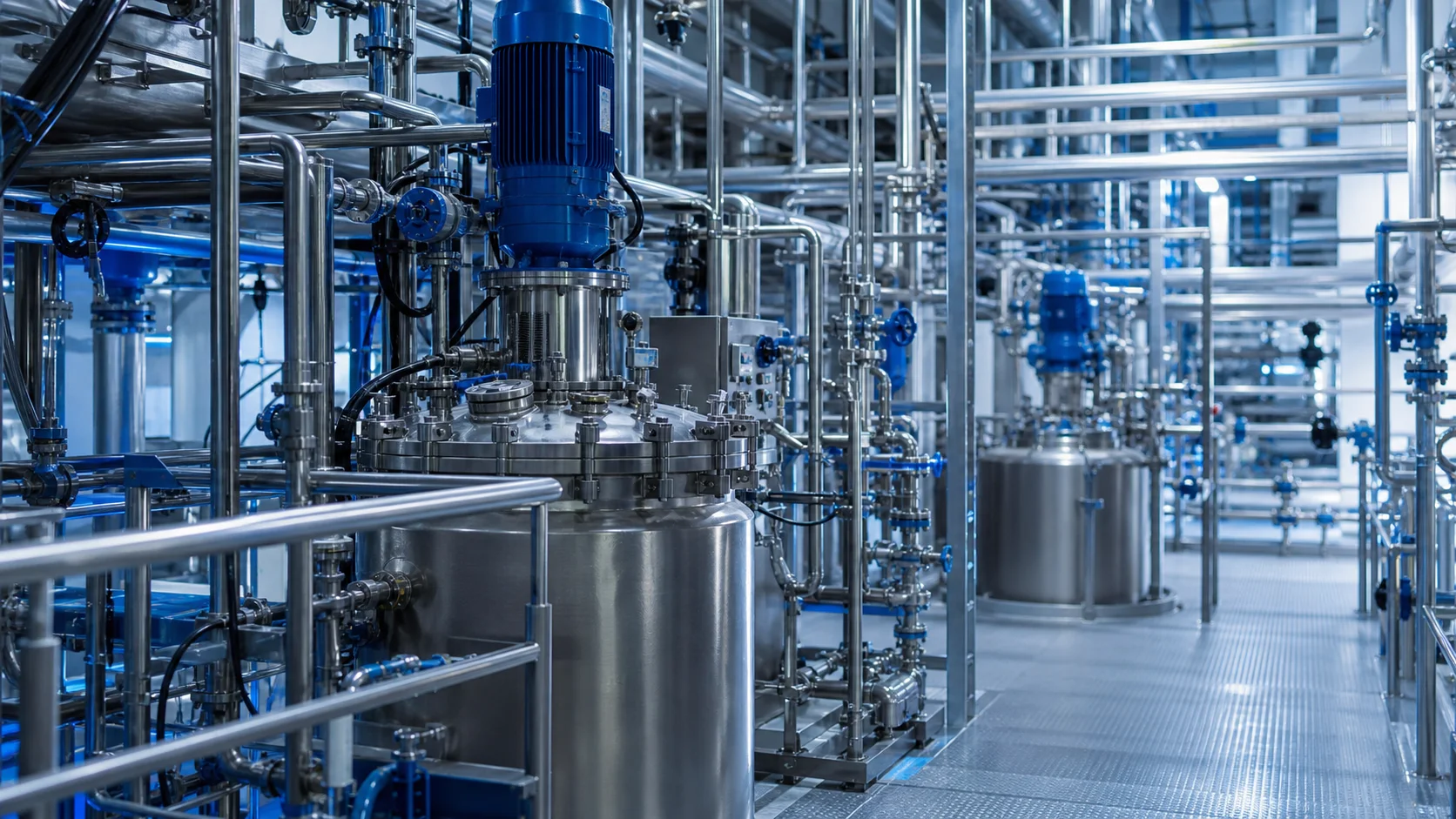
Company names, facility locations and identifying information have been removed. Performance values are presented as rounded ranges to protect customer confidentiality.
Stable Production with AI-Assisted Recipe Optimization
Fixed recipes produced varying results as raw-material and process conditions changed, while operator adjustments remained tacit knowledge.
The objective was to create a sustainable operating model rather than automate an isolated task.
Operational consistency
Fixed recipes produced varying results as raw-material and process conditions changed, while operator adjustments remained tacit knowledge.
Integrated architecture
We built a trusted batch dataset, selected process-relevant features and validated recommendations in shadow mode within safe operating limits.
Scenario-based acceptance
Normal operation, exceptions, recovery and critical safety scenarios were tested with operations teams.
Engineering approach
From requirement to system behavior
- Field requirements and operating constraints were modelled before implementation.
- Equipment, software and data interfaces were designed around a common operating context.
- Operator guidance, alarms and recovery scenarios were included in the design.
Controlled implementation
- We built a trusted batch dataset, selected process-relevant features and validated recommendations in shadow mode within safe operating limits.
- Changes were verified through traceable test and acceptance scenarios.
- Operations and maintenance teams participated in commissioning and handover.
Measurable operational outcome
Recipe improvement became a controlled, data-driven and human-approved optimization cycle.