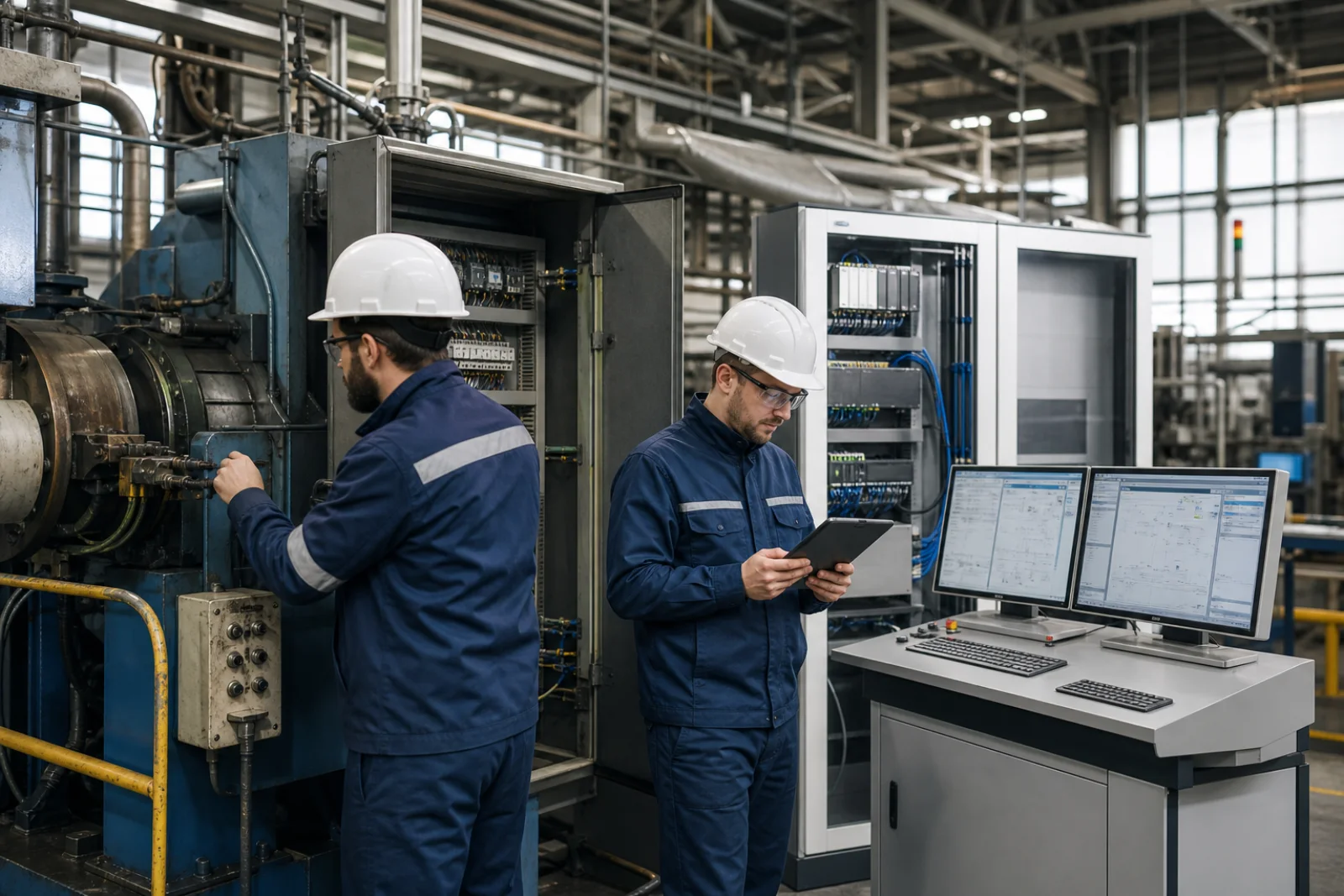






From a human perspective, today's factory environments are becoming increasingly solitary places. In the past, the most productive factories were filled with workers; today, many are dominated by robots and other machines. This is one of the most visible outcomes of factory automation.
So, what is factory automation? Factory automation is a category of digital transformation in which technology-driven processes replace human-centred manual processes within a manufacturing facility. When processes are automated, businesses either reduce labour requirements or reallocate their workforce to other value-added activities.
Factory automation covers a broad spectrum: from improving a single manual process along the production line to implementing a full-scale “dark factory” transformation in which human intervention is almost entirely eliminated. The stages along this automation spectrum are as follows:
1. Partial process automation
An element of automation is incorporated into a factory process for which a human worker remains responsible. Simple, repetitive tasks are automated, but responsibility for the final outcome—such as ensuring that work leaving the station meets quality assurance standards—remains with the human operator.
2. Stand-alone automated machines
Machines designed to perform a specific, repetitive task take the automation process to the next level. These tasks may include robotic operations such as cutting, welding and packaging, or even defect detection using machine vision.
3. Automated production lines
Combining automated machines—each performing a specific task and typically connected by a conveyor system—further reduces the need for human involvement on the factory floor. With an automated production line in place, the workforce shifts from carrying out the manufacturing process itself to supervising, monitoring and maintaining the equipment.
4. Fully automated/end-to-end automation
At the furthest end of the automation spectrum is the “lights-out” or dark manufacturing environment, where a fully automated installation enables production to continue 24 hours a day, seven days a week, without human intervention or supervision.
Which of these methods should you choose, and how should your business approach factory automation?
Factory automation offers substantial benefits, but it can also require significant expenditure. Before beginning an automation programme, organisations should therefore develop a robust strategy that addresses the following considerations:
- Understand your objectives
The return on investment from an automation project will vary according to how it is implemented across the factory, because automating some systems produces a stronger and faster return than others. It is therefore vital to identify which factory processes should be automated first. When assessing the automation spectrum, determine which incremental steps—such as introducing stand-alone automated machines—will provide the best return for your specific operational needs.
- Align all stakeholders
Once the automation plan has been drafted, the initiative must gain support from stakeholders across the organisation. The evidence behind the automation strategy should be clear to every party. A board concerned about capital expenditure is more likely to support the project when the resulting productivity gains—and therefore profitability—are demonstrable. Similarly, employees may fear that automation will lead to job losses, while an effective strategy can actually deliver better health and safety outcomes and provide opportunities to upskill personnel for more rewarding roles focused on supervising new automated processes rather than performing labour-intensive work.
- Evaluate tools and technologies
Take the time to evaluate fully the available tools and technologies required to achieve the desired automation outcomes. Organisations can easily over-specify and overcomplicate the journey towards their objective, spending considerably more than necessary in the process. Finding the right balance begins with a sound understanding of existing production systems.
- Measure the impact on productivity
Invest in the tools needed to measure the effect of organisational changes and ensure that automation initiatives realise their potential. Measuring productivity improvements over time is essential for obtaining a complete picture of the return on your digital transformation investment.
Given the productivity and quality advantages it delivers, factory automation is inevitable across every area of manufacturing. Like any significant evolution, however, it must be planned carefully to be implemented effectively.