






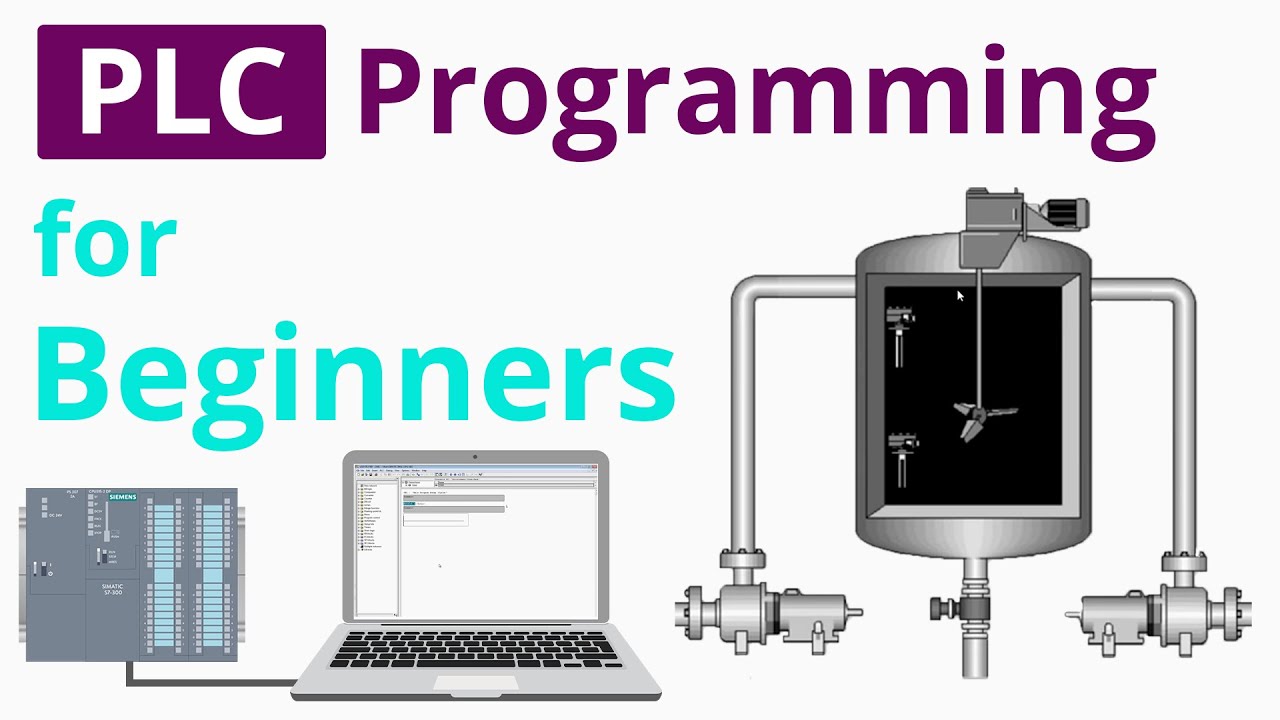
PLC Programming Is a Widely Used Skill in Industrial Automation Systems. So, How Is a PLC Program Developed?
Efficiency, safety and precision have become more important than ever in industry. Industrial automation systems play a central role in meeting these demands by optimising manufacturing processes and minimising human intervention. At the heart of these systems are PLCs (Programmable Logic Controllers). What is PLC Programming, and how is it performed?
PLCs are fundamental components of industrial automation. They receive input signals, apply defined logic or algorithms, and then send the appropriate signals to output devices. This makes it possible to control complex industrial processes automatically. PLC Programming is the essential discipline that gives these devices their functionality.
PLC Programming
PLC (Programmable Logic Controller) programming is a widely used industrial-automation skill. A PLC receives information from input devices, executes predefined logic or an algorithm, and sends the appropriate signals to output devices. PLC programming is used to automate the control of many industrial processes.
How Is PLC Programming Performed?
PLC programming is an important part of industrial automation and is used across many sectors, including manufacturing, energy, water and wastewater, and transportation.
Following the steps below will help you create, test and commission a PLC program successfully. Each stage should be completed carefully, with support from experienced specialists or reliable technical resources when required.
Project Analysis and Requirements Definition
Define your needs and understand the system requirements:
- The first step is to define the requirements and objectives of the project. Which process do you want to control? Which input and output devices are required?
- Identify the inputs—such as sensors and switches—and outputs, including motors and valves.
- Understand the logic and control operations. Under which conditions should each output be activated?
Selecting the Programming Environment
PLCs generally use a dedicated programming language or graphical programming interface. Ladder Logic, for example, is one of the most widely used PLC languages.
- Select the software to be used for PLC programming. TIA Portal may be used for Siemens PLCs, for example, while RSLogix supports Allen-Bradley PLCs.
- Install the software on your computer and open the application.
Configuring the PLC Hardware
Use the selected programming environment to create a program that implements the required logic. The program processes input signals and generates output signals according to the defined conditions.
- Define the PLC hardware in the programming software. This includes configuring the input and output modules, network settings and other hardware components to be used.
Ladder Logic Programming
Ladder Logic is the most commonly used PLC programming language. It uses a graphical format similar to the ladder diagrams of electromechanical relay systems.
- Create a Ladder Logic program using contacts, coils, timers, counters and other elements to execute the required logic.
- Build logic conditions that process input signals and control the outputs.
Testing and Validating the Program
Test the completed program and verify that it satisfies the system requirements. Simulation tools or the physical system itself are commonly used at this stage.
- Test the completed program on the actual system.
- Confirm that input signals produce the expected behaviour and that outputs are controlled correctly.
Downloading to the PLC and Commissioning
To download and commission the PLC program:
- Download the approved program to the PLC.
- Connect the PLC to the physical system and begin commissioning.
- Verify PLC functionality and make adjustments where necessary.
Ongoing Support and Maintenance
Finally:
- Perform regular maintenance while the system is in operation.
- Modify the program or introduce improvements when required.
- Create backup and recovery plans to support a rapid response in an emergency.