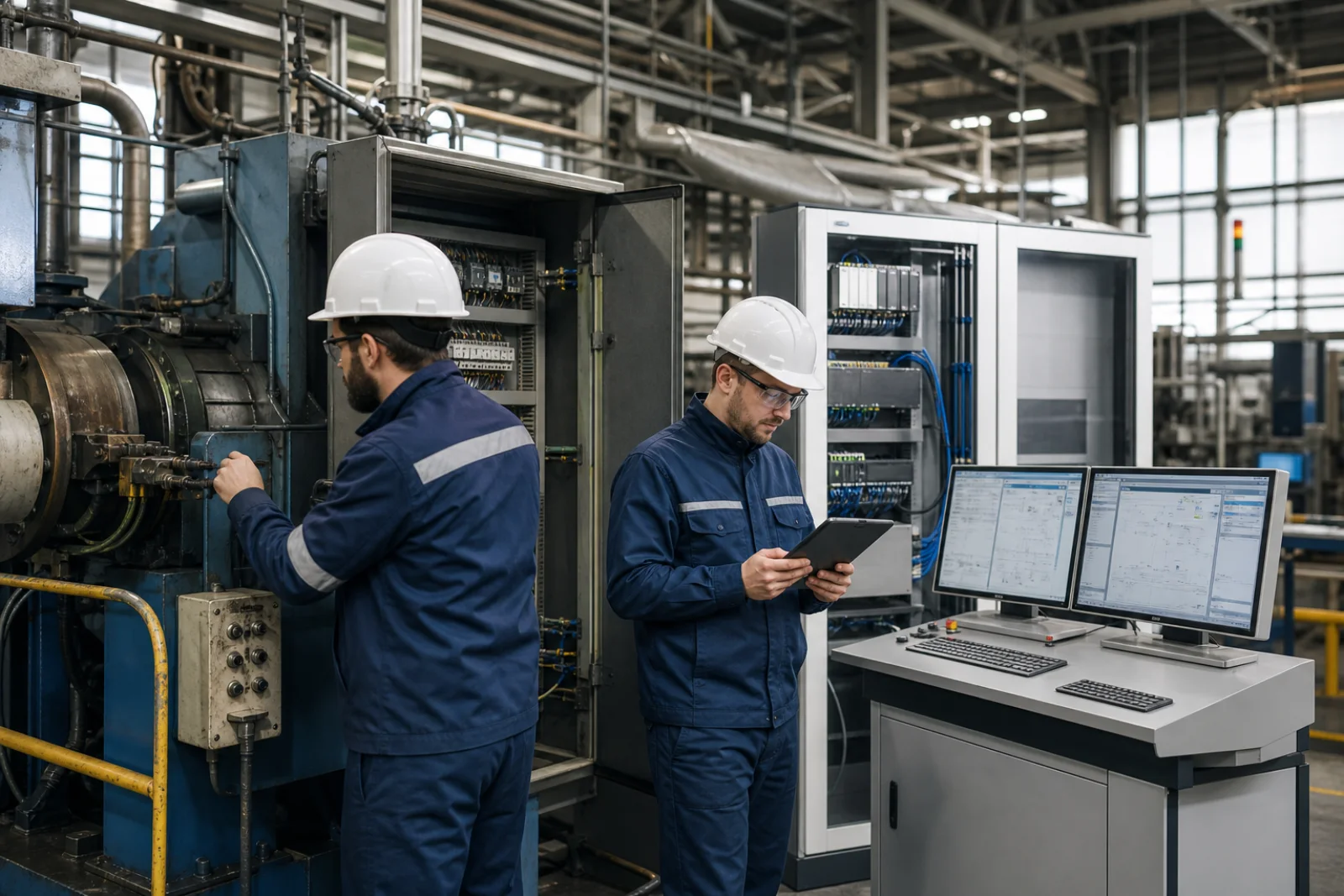







What Are Automation Robots, the Foundation of Industrial Automation? Learn About Automation Robots and Industrial Robotic Systems.
Industrial automation plays an important role in today's rapidly changing and developing industries. Automation Robots, in particular, are being used increasingly to optimise workflows within manufacturing facilities and improve efficiency and competitiveness.
Automation Robots
Automation robots are robotic systems used in industrial automation processes. They generally operate on factory production lines or in other industrial environments and are available in different forms, sizes and functions:
- Industrial Robots: These robots operate on production lines and perform tasks such as assembly, welding, packaging and material handling. Industrial robots are generally programmable and provide flexible movement capabilities.
- Collaborative Robots (Cobots): These robots can work alongside people. Cobots are generally known for being more flexible and mobile and are designed to reduce safety risks when sharing a workspace with human operators.
- Rapid Prototyping Robots: Robotic systems such as 3D printers are used in industrial design and prototype manufacturing. They can produce a component by adding material layer by layer from 3D model data.
- Logistics and Warehouse Robots: Robots used in warehouses and logistics centres can perform tasks such as material handling, high-bay placement and order picking.
- Cleaning Robots: Robots designed for industrial cleaning automate cleaning operations across large areas such as factories and warehouses.
Automation robots are widely used to improve manufacturing efficiency, release employees for higher-value work, enhance occupational safety and execute repetitive tasks.
Industrial Robotic Systems
Industrial automation technologies continue to develop, and many advanced robotic systems are now used in industrial environments. Some of the leading advanced automation robots are described below.
Manufacturing Robots
Manufacturing robots are specialist robotic systems used in industrial production. They generally automate assembly, packaging, welding, material handling and other manufacturing operations in factories. These robots are usually flexible and programmable and can perform repetitive tasks consistently and without error.
Manufacturing robots improve productivity, reduce costs and optimise manufacturing processes by lowering manual labour requirements. As an important part of industrial automation, they are used widely in modern production facilities.
Artificial Intelligence Robots
Robots enhanced with artificial intelligence (AI) and machine learning (ML) can perform complex data analysis, make decisions and integrate with intelligent systems such as predictive maintenance platforms. They can make manufacturing processes smarter and more efficient.
AI robots are robotic systems equipped with artificial-intelligence technologies. They can perceive their surroundings, make decisions and interact with their environment and are generally designed to operate in complex and variable conditions.
The characteristics of artificial intelligence robots include:
- Perception and Sensitivity: AI robots are equipped with sensors that perceive their surroundings. They collect environmental data through different sensing capabilities, including vision, hearing, touch and, in specialised applications, chemical sensing.
- Learning and Application: These robots improve their tasks by learning from experience and datasets. Machine-learning algorithms enable them to process new information and apply it to future decisions.
- Decision-Making and Planning: AI robots analyse the data they collect, make decisions based on that information and plan their actions.
- Interaction and Communication: Artificial intelligence robots can interact with people and other machines.
Some areas in which artificial intelligence robots are used include:
- Manufacturing Industry: They can perform tasks such as complex assembly, quality control and logistics management.
- Healthcare: They can be used in patient care, surgical assistance and diagnostic support.
- Service Sector: They can support customer service, hotel reception, retail and many other applications.
Artificial intelligence robots are an important component of industrial automation and technological progress and are expected to become even more widespread in the future.
Assembly Robots
Assembly robots are specialist robotic systems used in industrial manufacturing. They perform operations such as joining components and completing assembly tasks and are generally designed to automate repetitive assembly work on production lines and improve efficiency.
The characteristics of assembly robots include:
- Flexibility: Assembly robots can be programmed flexibly to join different components, allowing the same robot to assemble different products.
- Speed and Precision: These robots can operate at high speed and with high precision.
- Machine Vision and Perception: Assembly robots can use machine-vision and sensing technologies to identify components and position them at target locations.
- Collaborative Capabilities: Some assembly robots can work safely alongside people.
Mobile Robots
Mobile robots can perform tasks such as material handling, product placement and inventory management within factories and warehouses. They can generally navigate autonomously and complete assignments by following planned routes.
The characteristics of mobile robots include:
- Autonomous Navigation: Many mobile robots can move autonomously and determine routes by detecting obstacles or using map information.
- Environmental Perception: Mobile robots use various sensors to perceive their surroundings. Equipped with technologies such as cameras, ultrasonic sensors and radar, they can detect environmental obstacles and prevent collisions.
- Task Diversity: They can perform material handling, inventory management, cleaning and safety-inspection tasks.
Industrial Drones
Industrial drones are unmanned aerial vehicles designed for industrial applications. They are generally equipped with cameras, sensors and other specialist equipment.
The characteristics of industrial drones include:
- Imaging and Inspection: Industrial drones are generally equipped with high-resolution cameras, enabling areas to be viewed and inspected from the air.
- Geographic Information System (GIS) Applications: Industrial drones can support geographic information system applications. They can create terrain maps and perform land analysis using high-resolution cameras.
- Site Monitoring and Security: Industrial drones can perform safety inspections and site-monitoring tasks at construction sites and industrial facilities. They can monitor an area from the air, identify potential hazards and support rapid response in emergencies.
- Inventory Management: Industrial drones can be used for inventory management in warehouses and logistics centres. They can scan warehouse racks, monitor stock quantities and automate inventory-counting processes.
- Agricultural Applications: Industrial drones can survey agricultural land, monitor crop health, identify irrigation and fertilisation requirements, and optimise farming practices to improve yield.