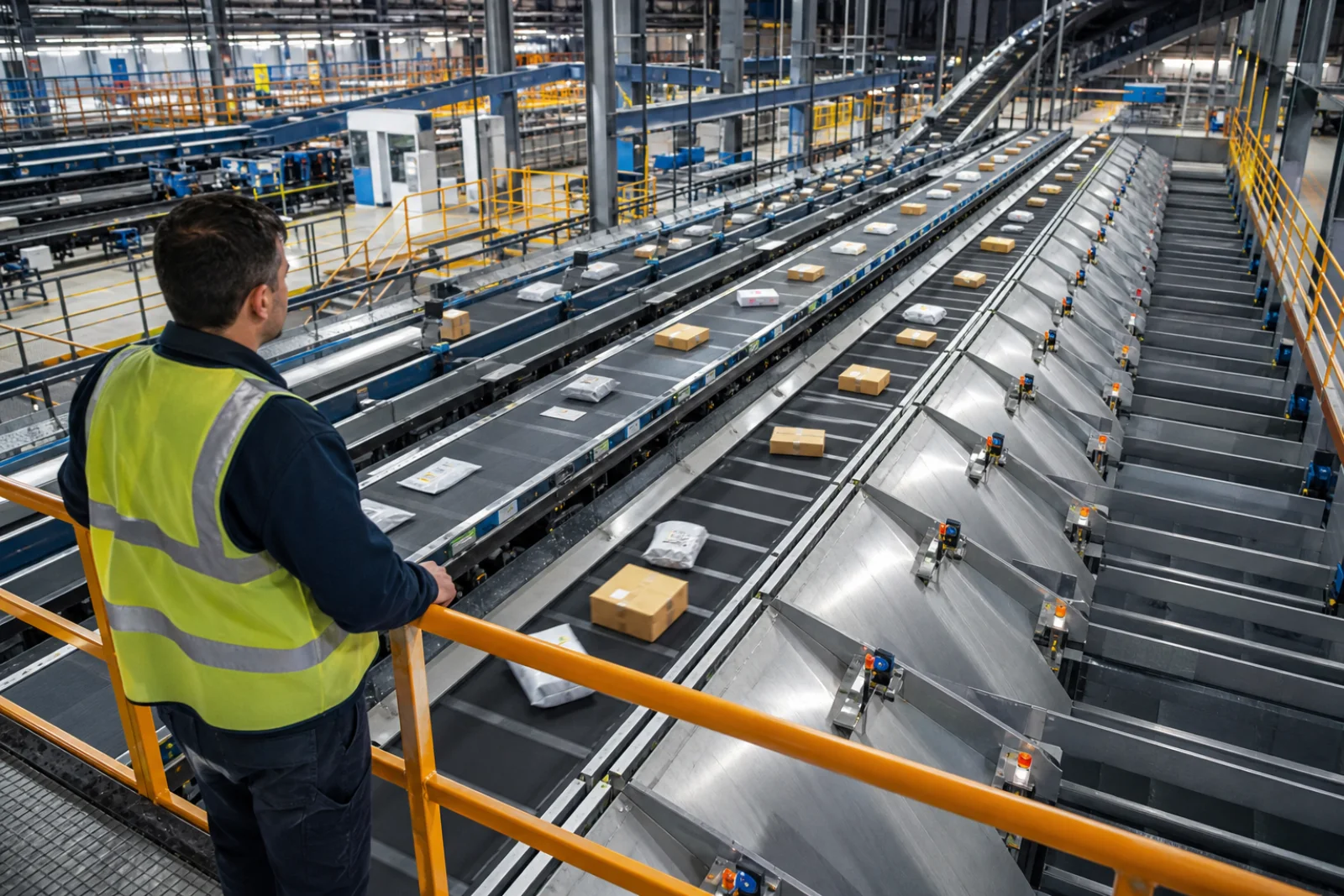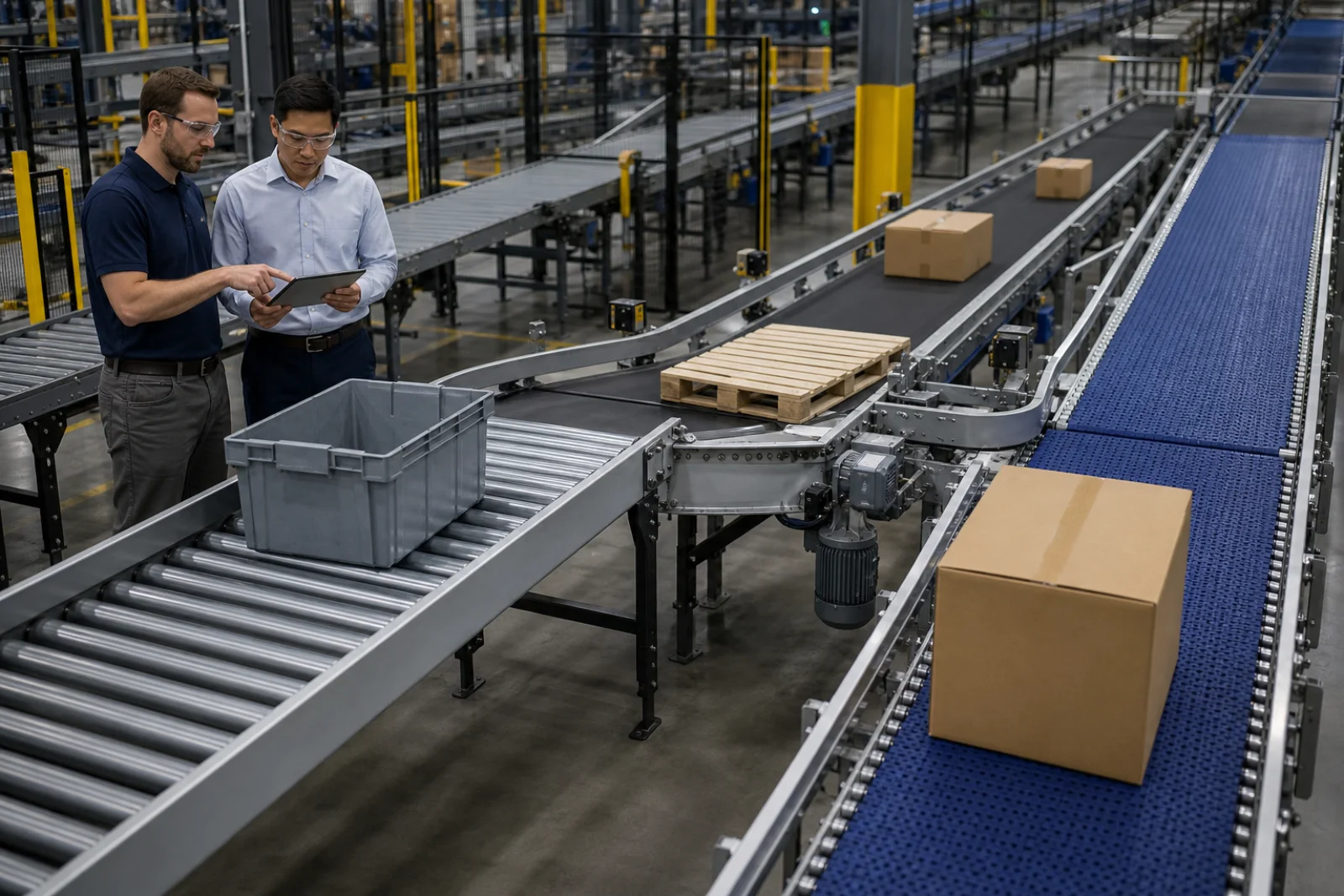







ASRS Solutions Improve Warehouse Efficiency and Accelerate Processes across E-Commerce, Food, Pharmaceutical, Automotive and Retail Operations while Evolving with Emerging Technology Trends.
Rapid technological development has brought transformational change to warehouse management. Automated warehouse-management systems are at the forefront of this shift. Designed to optimise warehouse processes and improve efficiency, these platforms integrate particularly effectively with automated storage and retrieval systems, widely known as ASRS.
How do ASRS solutions operate, and what role do they play in intralogistics? This article examines the future of automated warehouse management and the impact of ASRS technology in detail.
What Are ASRS Solutions?
ASRS—Automated Storage and Retrieval Systems—are integrated technology solutions that automate and accelerate warehouse processes. Robotic systems and software perform storage and retrieval operations without direct human intervention. These systems use a range of equipment and technologies to store products in the correct locations and retrieve them rapidly on demand.
The principal components of an ASRS can be listed as follows:
- Storage Areas: Areas in which products are stored systematically and efficiently. They generally comprise racks, totes or modular storage structures.
- Handling Systems: Systems that place products into storage or retrieve them. These may include transfer belts, conveyors or robotic arms.
- Software: Software platforms ensure that the ASRS operates correctly. They direct and optimise storage and retrieval activities.
The Importance of ASRS in Intralogistics
Intralogistics refers to the management and movement of materials within a warehouse or facility. The role of ASRS in intralogistics is to provide solutions to common warehouse-management challenges. Manual handling, storage and retrieval in conventional warehouses can be time-consuming and prone to error. ASRS technology performs these operations rapidly, accurately and safely.
The contribution of ASRS to intralogistics can therefore be considered under four headings:
- Higher Efficiency: ASRS moves products rapidly within the warehouse. This supports more efficient use of space and reduces time losses.
- Lower Error Rates: By eliminating errors associated with manual handling, the technology improves warehouse-process accuracy.
- Space Savings: Warehouse volume is used more efficiently. High-density ASRS solutions allow more products to be stored within a smaller footprint.
- Inventory Management: ASRS can monitor inventory levels in real time and provide greater transparency across the supply chain.
The Future of Automated Warehouse Management and ASRS Technology
Warehouses will become increasingly automated, while technological advances will make their systems more efficient. Innovations including artificial intelligence, robotics and the Internet of Things (IoT) will further improve ASRS performance.
Integration of Artificial Intelligence and Robotics
Artificial intelligence can optimise warehouse processes further. While robots execute storage and retrieval movements, for example, AI algorithms can determine the most efficient product locations. An ASRS integrated with robotic systems can also manage a broad range of warehouse workloads rapidly and effectively.
Industry 4.0 and ASRS
The Industry 4.0 transformation is also reshaping warehouse management. Through intelligent machines, sensors and connected networks, ASRS solutions can automate every stage from product storage to retrieval. This produces substantial gains in both speed and efficiency.
Advantages and Limitations of ASRS
Although ASRS technology can improve warehouse processes significantly, it can also present certain limitations. Organisations should therefore evaluate both the advantages and potential constraints carefully before selecting a system.
Advantages of ASRS:
- Products are stored and retrieved more rapidly.
- Errors caused by manual handling are eliminated.
- Warehouse space is used more efficiently.
- Automating warehouse processes increases overall efficiency.
Potential limitations of ASRS:
- ASRS installation may require a substantial capital investment.
- Regular maintenance and an appropriate spare-parts strategy are necessary for reliable operation.
- Some ASRS configurations may be unsuitable for environments that require exceptionally high process flexibility.
Applications of ASRS Technology
ASRS solutions serve a broad range of industries and provide particular value in operations with high storage volumes. E-commerce organisations must process large order volumes rapidly. ASRS technology enables fast, accurate order fulfilment and gives e-commerce businesses a significant operational advantage.
Food and pharmaceutical products often require controlled conditions such as strict hygiene and temperature management. ASRS solutions optimise warehouse management in these sectors and support the safe storage of sensitive products.
In automotive and retail operations, ASRS improves processes such as spare-parts management and inventory control. It makes automotive spare-parts storage more efficient while substantially improving inventory management in retail distribution.
Future Trends in ASRS
Continuing technological progress will make future ASRS solutions even more capable. IoT integration will add intelligence to these systems and provide real-time data for every product in the warehouse. Inventory management and process monitoring will consequently become far more efficient.
ASRS platforms will also use big-data analytics to optimise storage processes. Bottlenecks within the warehouse will be identified more rapidly, enabling continuous efficiency improvements.
Finally, next-generation robotics will combine with ASRS technology to deliver faster and more efficient solutions. These technologies will support end-to-end warehouse automation, reduce manual labour requirements and accelerate operations.
Conclusion
ASRS technology is one of the fundamental building blocks of automated warehouse management. It accelerates warehouse processes, improves efficiency and minimises error rates. As these systems continue to develop, faster, more efficient and safer warehouse-management operations will become possible.
ASRS already plays a major role in warehouse management and is expected to become even more capable as the supporting technologies advance.