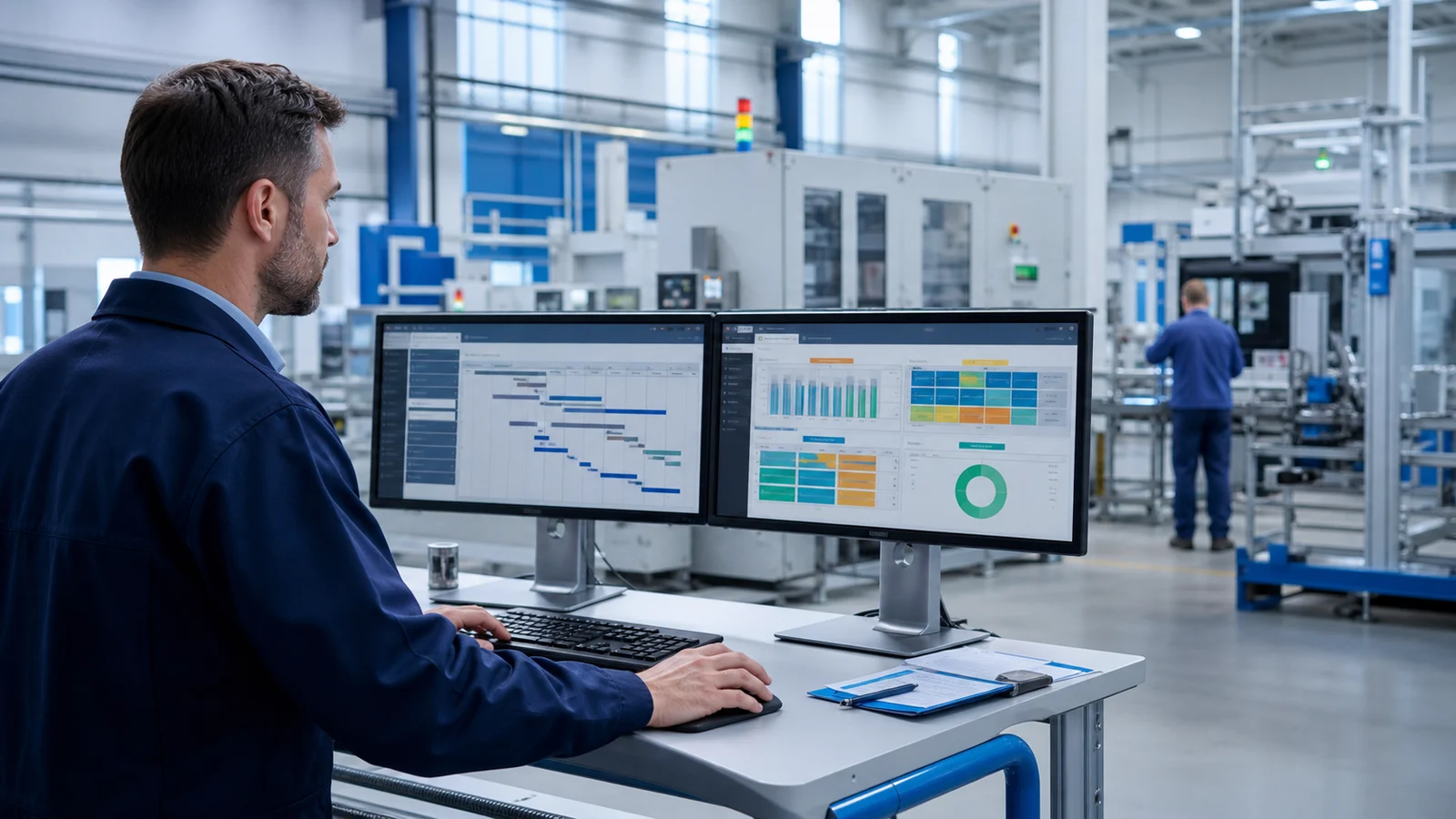






Recipe, Material Tracking and Process Safety in a Chemical Plant
Manual recipe execution was transformed into a controlled batch operation combining material identity, equipment conditions and process safeguards.

Company names, facility locations and identifying information have been removed. Performance values are presented as rounded ranges to protect customer confidentiality.
Recipe, Material Tracking and Process Safety in a Chemical Plant
Transfers, dosing steps and equipment preparation were distributed across manual records and separate operator screens.
The objective was to create a sustainable operating model rather than automate an isolated task.
Operational consistency
Transfers, dosing steps and equipment preparation were distributed across manual records and separate operator screens.
Integrated architecture
We implemented an ISA-88-based recipe model, traceable source-to-destination transfers and process permissives tied to the active batch.
Scenario-based acceptance
Normal operation, exceptions, recovery and critical safety scenarios were tested with operations teams.
Engineering approach
From requirement to system behavior
- Field requirements and operating constraints were modelled before implementation.
- Equipment, software and data interfaces were designed around a common operating context.
- Operator guidance, alarms and recovery scenarios were included in the design.
Controlled implementation
- We implemented an ISA-88-based recipe model, traceable source-to-destination transfers and process permissives tied to the active batch.
- Changes were verified through traceable test and acceptance scenarios.
- Operations and maintenance teams participated in commissioning and handover.
Measurable operational outcome
Production became repeatable and traceable, with critical material movements and process risks controlled by system logic.