





Plan an automation project: assess return on investment, machine safety, standards and training needs, with answers to frequently asked questions.
Machine safety and functional safety
Machine safety is not an optional addition to automation projects; it is an integral part of the design. The process begins with risk assessment: hazards that may arise throughout the machine lifecycle are identified, and the severity of harm, frequency of exposure and possibility of avoidance are evaluated for each hazard.
The first step in the risk-reduction hierarchy is eliminating the hazard through design. Where that is not possible, protective measures are introduced. Fixed and interlocked guards, light curtains, safety mats, two-hand controls and emergency-stop circuits fall within this scope. Warnings and training are used for the residual risk.
Safety functions must meet a defined reliability level. Safety circuits use self-monitoring architectures that do not move to a dangerous state when a single component fails. Mixing safety and production logic in the same program is one of the most common design errors; the safety chain must remain independent and verifiable.
The point most often overlooked in practice is that safety measures must not prevent operators from doing their work. A guard that makes the task difficult is soon bypassed, creating a machine that is safe on paper but unsafe in the field.
How is an automation project delivered?
An automation project is a methodological undertaking before it is a technical one. We explain how this method is established on our project management and consultancy page. The process begins by defining the requirement correctly. Technology is not selected at this stage; the current state is measured, the bottleneck is identified and the objective is expressed numerically. “Increase efficiency” is not an objective; “reduce end-of-line packaging stoppages by forty per cent” is measurable.
Alternative solutions are compared during feasibility and conceptual design. Automation consultancy can provide an independent perspective at this stage. The same requirement can often be met at different investment levels. A robotic cell and a simpler mechanical arrangement must be compared not only by initial cost but also by operating cost, flexibility and commissioning time.
Electrical engineering, mechanical design and software architecture proceed in parallel during detailed engineering. Manufacturing, factory acceptance testing, site installation and site acceptance testing follow. Testing in the factory substantially reduces time spent on site because most issues are resolved in a controlled environment without interrupting production.
Commissioning is the project’s most intensive and visible stage. Operator training, documentation handover and spare-parts planning are often postponed, even though the system’s reliable operation throughout its lifetime depends on these three areas. The after-sales support and maintenance period following commissioning is when the investment’s real return emerges; open requests are tracked through the support channel.
System integration and supplier selection
System integration is the process of combining hardware and software from different manufacturers into one functioning whole. Facilities built with a single brand are rare; machines are purchased from different suppliers at different times. The integrator’s task is to make this heterogeneous structure communicate through a common data model and control logic.
Continuity is as important as technical competence when selecting a supplier. A system expected to operate for five years after commissioning needs a team capable of modifying its software. Source-code handover, documentation standards and guaranteed response times must be clarified during contracting.
Return on automation investment
The return on an automation investment is usually calculated through labour savings, although the main benefit in many projects comes from other items. Reduced scrap, lower rework costs, prevention of customer losses caused by quality rejection and fewer unplanned stoppages are often worth more than labour savings.
Capacity gains must also be included. Producing more with existing equipment postpones the purchase of another machine, and the financial value of that postponement can significantly shorten payback. Lower energy consumption and reduced occupational accident risk are harder to monetise directly but create some of the most lasting long-term effects.
A realistic assessment must use total cost of ownership. In addition to initial investment, it should include spare parts, maintenance, software updates, training and the cost of possible capacity expansion. The cheapest quotation often becomes the most expensive option over five years.
Industry applications
Automation requirements vary by industry. Traceability, cycle time and zero-defect targets lead in automotive manufacturing and its supply chain. Hygienic design, washdown capability and recipe management are decisive in food and beverage manufacturing. In pharmaceutical and cosmetics production, validation and data integrity become requirements that take precedence over the technical solution.
High temperatures, heavy loads and demanding environments shape equipment selection in iron and steel, metal and foundry facilities. Hazardous-area classification and safe shutdown systems are central in chemicals and petrochemicals. Line speed and tension control lead in packaging, cable and textiles, while order density and seasonal variation require flexible, scalable systems in logistics and e-commerce warehouses. Field conditions and project-based production are decisive in shipbuilding and marine applications.
Remote monitoring, central management of distributed sites and uninterrupted operation lead in energy and infrastructure facilities. Every industry has its own standards, audit requirements and acceptance criteria; an automation solution cannot deliver the expected benefit unless it is adapted to the language of that industry. See our references for completed projects across different industries.
Standards, regulations and certification
Automation projects are delivered within a legal and technical framework. Machine-safety standards define how risk assessment is performed, the reliability level at which safety functions must be designed and how validation must be documented. Separate families of standards apply to electrical installations and panel manufacturing, while hazardous areas are governed by specific classification rules.
For machine manufacturers, a declaration of conformity and a technical file are prerequisites for placing a product on the market. For operating companies, ensuring that existing machines comply with current safety requirements creates a direct responsibility during occupational health and safety inspections. The fact that a machine was purchased many years ago does not remove today’s obligations.
Certification is not merely a formality. A well-prepared technical file may be the only reliable source for understanding how a system was designed when it is modernised years later. Drawings not updated during commissioning create cost during every subsequent intervention.
Team competence and training
The human element is the most frequently overlooked component of an automation investment. When a new system is commissioned, maintenance teams must be able to trace faults, operators must use the interface correctly and production planning must benefit from the new data. Systems delivered without training soon remain frozen at their initial settings and are gradually bypassed.
Competence planning must begin at the start of the project. Who may intervene in each part of the system, where external support is required and how knowledge will be transferred should be determined in advance. Systems dependent on one person’s knowledge become a business risk when that person leaves.
Current documentation is part of this risk management. When electrical drawings, program backups, parameter lists and commissioning notes are kept up to date, maintenance depends on the organisation rather than an individual.
Where should you begin?
Automation is a broad subject, and the right starting point differs for every facility. There are three ways to clarify the appropriate next step: choose automation consultancy if you want to measure your current state and establish priorities; review our solution families if you are looking for a specific solution; or explore our industry pages to discuss industry-specific requirements.
If you would like us to evaluate your project directly, complete the quotation form or reach us through our contact page. Our blog and webinar archive remain available for current applications and technical guidance.
Frequently asked questions
What is the difference between industrial automation and factory automation?
Industrial automation is the overarching discipline and covers every industrial field, including manufacturing, process operations and logistics. Factory automation is its application in facilities performing discrete manufacturing. Process automation is the equivalent application in facilities performing continuous manufacturing.
What knowledge is required to learn PLC programming?
Basic electrical knowledge, number systems and logic gates are sufficient for a starting point. The next subjects are at least one IEC 61131-3 language, sensor and actuator technologies, industrial communication protocols and safety circuits. Practical experience is more decisive than theoretical knowledge in this field.
What is the difference between MES and ERP?
ERP plans resources and manages commercial processes such as orders, inventory, purchasing and costs. MES concerns the moment when manufacturing actually takes place: executing work orders on the shop floor, collecting manufacturing data, and recording stoppages and quality. They do not replace one another; they supply information to one another.
What is the difference between an AGV and an AMR?
An AGV follows a route defined on the floor and operates on a fixed path. An AMR perceives its environment, calculates its own route and can find an alternative path when it encounters an obstacle. AGVs are advantageous for predictable, fixed flows with dense traffic; AMRs suit environments where layouts change and flexibility is required. See our mobile robot page for a family-level comparison.
How long does an automation investment take to pay back?
The payback period varies according to the application, number of shifts and scale of current losses. Applications that directly address a bottleneck and operate across multiple shifts have significantly shorter payback periods. A sound calculation must include not only labour but also scrap, rework, downtime and capacity gains.
Can I adopt automation without replacing my existing machines?
In most cases, yes. In this approach, known as a retrofit, the mechanical structure of the machine is retained while its control, drive and data-collection layers are renewed. If the machine still has mechanical life remaining, a retrofit can provide similar capabilities at a substantially lower cost than investing in a new machine.
Does automation make sense for small and medium-sized businesses?
Automation is more closely related to repetition than scale. A low-volume task performed frequently is easier to automate than a high-volume task performed rarely. For smaller businesses, a phased approach focused on one bottleneck keeps both risk and initial investment low instead of automating the entire line at once.
How should automation system maintenance be planned?
The maintenance plan is based on system criticality analysis. Components that stop all production when they fail require stocked spares and regular inspections. On the software side, taking regular backups, maintaining version records and testing restoration procedures are as important as mechanical maintenance.
What is the difference between SCADA and HMI?
An HMI manages one machine or station as the operator panel at the machine. SCADA is an upper-layer application that collects data from multiple machines and provides facility-wide monitoring, alarm management and historical records. An HMI may be sufficient for a small application, while SCADA is required at facility scale.
Where should warehouse automation begin?
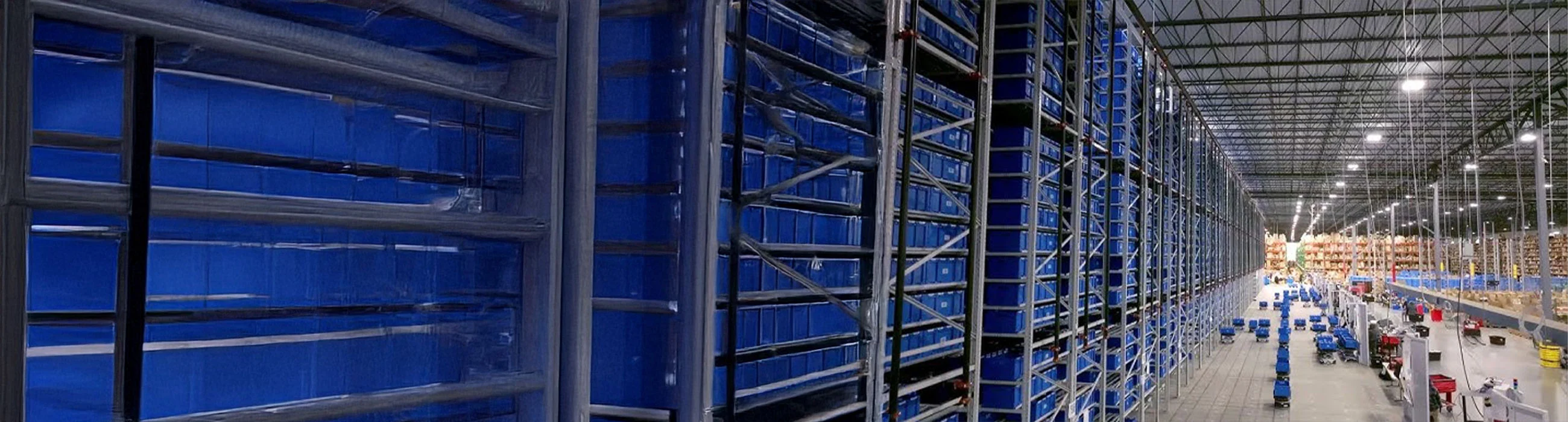
The starting point is measuring the existing material flow. Equipment should not be selected until it is known which products move most often, where picking time accumulates and which step creates the bottleneck. The greatest gain is usually achieved through partial automation targeting the picking process for the fastest-moving product group. Sorting lines and vertical storage solutions are typical components of this step.
Is machine-vision quality control suitable for every product?
The defect must be visually distinguishable. A crack inside a component or a deviation in material composition cannot be seen by a camera and requires other inspection methods. Surface defects, dimensional inspection, presence verification and code reading are areas in which machine vision is particularly strong.
What is the first step in an Industry 4.0 project?
Begin with data. In a facility where reliable, time-stamped machine data cannot be obtained, every analysis layer built above it rests on assumptions. The first step is usually collecting core indicators from existing machines and classifying stoppage reasons correctly. See Solution 4.0 and our digitalisation page for roadmap guidance.
Does automation reduce employment?
In practice, automation usually changes the nature of work. Repetitive and physically demanding tasks decrease, while system monitoring, maintenance, data analysis and process-improvement duties increase. Many companies adopt automation to fill positions where skilled operators cannot be found.
What should be done first for OT security?
Create an asset inventory. Protection cannot be planned without knowing which devices are present on the manufacturing network, which software versions they run and with whom they communicate. Network segmentation and controlled remote access follow the inventory. See our OT cybersecurity page for details.